A little more than a month ago, I came across a report prepared by the National Conference of State Historic Preservation Officers (NCSHPO). NCSHPO formed an Advisory Committee, called the National Historic Designation Advisory Committee (NHDAC), in 2021. Its stated intent was “to examine the intent, history and implementation of the NHRP with an eye toward fostering greater access and inclusion. I would recommend that anyone who is involved with the National Register of Historic Places read it.
I have been engaged with the National Register most of my professional career, mainly assisting PennDOT in navigating the Section 106 process. Since retirement, I have served on the State’s Historic Preservation Board, whose primary responsibility is reviewing National Register nominations. (This gives me one more opportunity to state for the record that the views in this pieces are wholly my own and do not represent the view of the PA SHPO or any other organization.) So this report is of great interest to me professionally and personally.
For the rest of this commentary, let’s assume that you have read the article and are familiar with its points. I do wish to recapitulate its main points, since I believe the report appears a bit more disorganized than it needs to be. Perhaps that was due to the number of individuals involved and the number of sub-committees responsible for weighing in.
The report does a good job of identifying the crucial issues. This is important. Identifying the wrong problems usually leads to the wrong solutions.
Properties that have a great history but there’s nothing left

Properties eligible for listing cannot get there on significance alone. A property must be able to convey its significance. How then can a property that has been blitzed (my technical term) be able to have sufficient integrity to convey its significance? It can’t. And so it can’t be listed.
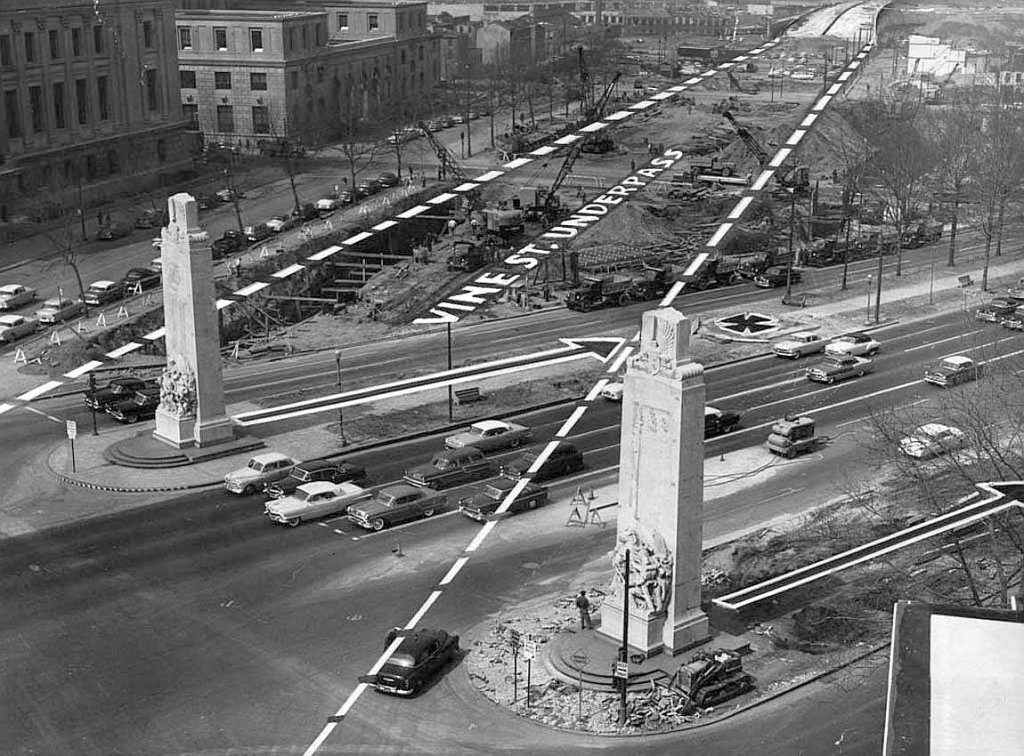
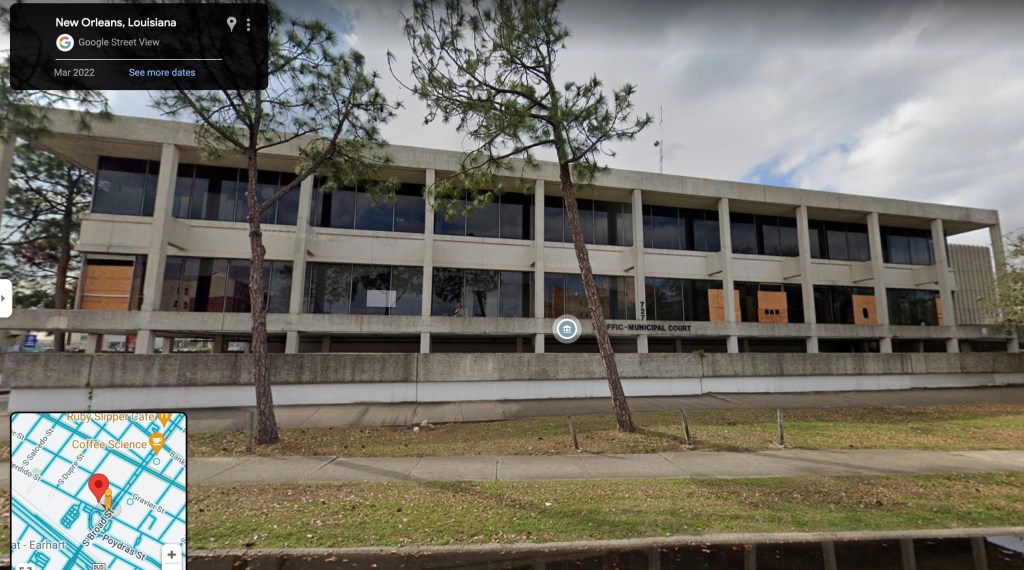
This eliminates from consideration many places that could be listed otherwise. I am thinking about Louis Armstrong, probably the most important American musician in the 20th century (not hyperbole, really). His birthplace was on Jane Alley in Storyville in Nawlins. All that remains is a historical marker, his childhood home having been razed for a traffic court and police headquarters in 1964. Over and over again, urban renewal and development of the interstate system have obliterated homes and neighborhoods, many of which contain the history of America. Closer to home you have the Hill District in Pittsburgh, or the Chinatown neighborhood divided by the Vine Street Expressway in Philadelphia. Even accumulated neglect of individual homes, exacerbated by lack of capital as a result of redlining and banking, led to their demolitions at a much higher rate than in resourced neighborhoods.
For Black communities especially, what often remains as culturally important places are churches and cemeteries, two property types that have by definition been typically excluded from the National Register. Taking a step back, one might be tempted to see all of this as piece to erase the history of black and brown people, blocking them from the National Register through multiple means. But correlation is not causality, and the low percentages of eligible properties requires no more than a casual indifference to any properties not fitting the western European colonial narrative.
THE NCSHPO working groups are clear that the ability for a place to convey significance is a big problem. Their proposed solutions, whether closely embraced or just spit-balled out are not really workable. If you’re going to have a National Register of Historic Places, you cannot get around the need for the place to have sufficient integrity. That is as close to immutable as you can get.
The entire NR process is much too complicated
I’ve had a front row seat at 14 Historic Preservation Board Meetings to discuss many more National Register nominations. The average nomination is 100 pages long, more frequently than not with 2 dozen plus photographs, plus maps, diagrams, and other exhibits. A non-insignificant fraction of those nominations submitted are done for expected tax credits. Almost all of the nominations have: 1) been prepared externally to the PA SHPO; 2) have been exhaustively reviewed by PA SHPO staff before coming to the Preservation Board. We read them, discuss them and then (usually) recommend they be sent to the National Register for approval for listing. The PA SHPO staff has been excellent in making our work easier. I firmly believe the Board looks closely at each nomination. Most elicit some comments, often minor points, occasionally major points. I think the success record in Pennsylvania for listing has been pretty good.
Running the gauntlet though, takes many months, is labor intensive, and when prepared professionally, can be expensive. A professional’s understanding of what goes into the nomination is valuable, but I question whether those professionally prepared nominations have forced the rest to clear a higher bar than is necessary. It is a phenomenon I’ve seen among many environmental and engineering consultants over the years. I’m not sure it has a name, but it is a cross between mission creep and kitchen sink. A consultant is largely measured and paid by results delivered. If the nomination is sent back, that’s a delay. If the consultant missed something, there’s a client ready to tear them apart. From the consultant’s point of view, the whole process is a black box. The consultant preparer has a supervisor or reviewer. The reviewer has a quality control check person. Mix all this with anxiety and the resulting soup demands that any crumb of information, any possible argument for eligibility has to be jammed into the nomination. These professionally prepared documents, like some stuffed crust pizzas, set the bar for what everyone else needs to do. Too much is not enough.
And it trickles up to review staff. They want the nomination to get approved by the National Register in DC for all the reasons you can imagine. And let’s face it. The lack of clarity at the NR, the rotation of review staff there, all keeps the state SHPO staff guessing on what are that day’s rules. So again, the black box and anxiety pushes the SHPO to make sure the nomination misses nothing, point by point, paragraph by paragraph, section by section. I don’t think we prepare this carefully for open-heart surgery.
I might at this point bring up the whole issue that the documentation in the nomination is often the only organized and accessible written history of the property, so there is some need to get the facts right and to tell the full story. My complaint here is not about telling the full story, it’s about what is necessary to tell any story.
Under NHDAC (Section VIII), specifically with regard to National Register Documentation, Survey and Training, the following is recommended:
The NPS should develop videos and/or webinars that provide more detailed information regarding documentation expectations and requirements—and also specifically addressing what is not required. This webinar would ideally be presented to each state review board individually by its assigned NPS NRHP reviewer, providing an opportunity for Q&A and conversation.
Further on, NHDAC recommends:
Consider developing unified, simplified, and streamlined eligibility determination processes for public use that helps set expectations up front and allows both applicants and SHPOs to identify and prioritize historic resources. The use of “determined eligible” designations can aid in Section 106 and local development projects and foster greater protection and consideration of historic resources across the board, and not as a “showstopper” far down a project timeline.
If it were up to me, I would marry the two and focus on getting documentation expectations and requirements to the lay public, using as many media tools as possible. The NPS put out a series of short YouTube videos about 8 years ago, called the National Register Toolkit. I found it general and accessible, but not really all that informative. Many state SHPO’s have made forays into public education and training and a simple Google search shows their efforts. I suspect some are quite good. But here’s my question. The NR has to be aware that state SHPOs are starving for guidance. They are aware their NR guidance is outdated, but it doesn’t seem the National Register is up to the task. Perhaps it’s simply lack of resources or federal government inertia. The individual state efforts are admirable, but appear to me to be inefficient. First, they are doing the work that the NR should be doing. Secondly, although each state has a SHPO office, there is at the end only one National Register, not 50 Registers plus territories and DC.
If this work is truly important and it appears the NR is not capable of completing it, then maybe the NCHSPOs as a group should underwrite a single effort that could serve all of them. It would seem more efficient to have a small sliver of each SHPO appropriation put into a pot to provide the resources to create this training, and have a NCSHPO panel oversee the contracts and product. (This is really no different from the TRB’s NCHRP process, so I am not taking credit for having invented anything.)
Surprise! A Process built for Euro-American architecture and communities doesn’t work as well for anything else

Archaeologists know what I’m talking about. No matter how hard you squint, it’s difficult to see how the corn field in front of you conveys the pre-contact Native American village you have before you. So, the NR gives you Criterion D, the dumping ground for properties significant not for important events, nor people, nor architecture. We comfort ourselves that these sites contain information important in prehistory, and, since it is not frequent that all of the site is excavated, enough of the site remains to likely have the potential to yield important information. This, of course, reduces all Native heritage, history, and cultural value to data points.
Things tend to break down when all that remains of the site is the collection, sitting on a shelf in some museum. Here, the NR provides some form of refuge, under Criterion A. The hitch is the data must be important, but what does that mean to an archaeologist, who would tend to think of the totality of all archaeological data from all regional sites is taken together to be important? This gambit also kind of blows up the notion of centrality of place and ability to convey a site’s significance.
The NR simply wasn’t built for archaeological sites and attempts to fit them into the NR frame sort of works, kind of. This probably is one of the reasons there are so few archaeological sites listed in the National Register, despite the fact that there are many that have been determined eligible by respective SHPOs.
Sadly, the limits of the NR are precisely at the juncture where tribal concepts of history and space begin. Property boundaries are an artifact of western land ownership law. Towns, counties, states, all artifacts of western history and development. History itself is a Greek concept adapted to western philosophical thought. A critical element of history is the written record. This leaves peoples without written history at a disadvantage in the history business, which may help explain the reticence to accept orally transmitted story as history, including in NR statements of significance. If you are limiting your story sources to written materials only, how can you effectively tell the full story of properties that don’t fall into a western paradigm?
Although Traditional Cultural Properties are considered within the National Register, the bottom line is that any TCP still must meet the NR standards under one of the Criteria of Eligibility and have the integrity to convey significance. TCPs don’t have a new or different set of rules, just the shimmering mirage of a more open and expanded NR.
I’ve always thought the NR as extremely flexible. Only half-heartedly would I say that I would not hire a historic preservation specialist that couldn’t write a convincing nomination for a Dixon Number 2 pencil. The NR is flexible, but, like a rubber band, is not infinitely flexible.
Why should a property 51 years old be in play for eligibility but not a property 49 years old? Although it is appropriate to leave a certain amount of time for a place to be understood as historically important, the choice of 50 years is wholly artificial. My own theory is that when the National Register was established in 1966, 50 years before was right in the middle of World War I, a cataclysmic event that split everything that happened before it and after it into two different worlds, unrecognizable to each other. In 1966, 50 years made sense, not just in history but architecturally.
What’s to be done?
The NHDAC threw out a slew of recommendations, but did not favor one over another. I felt that some were certainly worthwhile. In particular:
- Outreach coordinators. Coordinators in SHPO offices can and should go out to under-resourced communities and work with stakeholders there to solicit properties, assist in preparation, and train, train, train.
- Diversity staff and boards. Simply going out into communities is not going to fix the problem, simply putting a band-aid on it. More effective solutions will be developed only when NR review committees and SHPO staff better reflect the demographics of the country. As important as this is, it is no simple matter. Blood, toil, tears, and sweat will be needed over a long period of time to build the necessary working relationships, trust, and pipelines.
- The National Register of Cultural Places? This actually makes sense to me. Opening recognition to culturally significant places, removes some of the straightjacketing that comes with the National Register of Historic Places. Whether NHRP should be folded into the NRCP is a larger discussion for another day. However, the square pegs of non-western historic properties shouldn’t be continually forced into the round holes of current NR rules.
- Multiple Property Documentation Forms are highly useful and I’ve seen their value here in Pennsylvania. They do take a lot of work to set up, but pay back in much simpler Nominations that fall under them. I do not understand why they aren’t used more.
Needless to say, there were some recommendations I found tepid and some that gave me heartburn. In particular:
- There is no magic wand to take a place that has been so altered as to be unrecognizable and declare it somehow eligible to the NR. Local landmarks, historical markers, giving CLGs more control over “not really eligible” properties won’t address this issue. Ultimately, we may have to accept that once gone, a property is gone. However, we do have the ability to tell and teach the story of erasure and work to recover the history of the place. The National Register is but one tool.
- Fiddling with integrity standards has unintended consequences. The standards for listing in the National Register are supposed to be the same as for determinations of eligibility (at least that’s my view). Many agencies grapple with Section 106 reviews of properties determined eligible and assess effects and “consideration” of adverse effects based on eligibility. Changing the bars on integrity could result in agencies having to consider every property before 1973 (as of today’s writing) a potential adverse effect under Section 106. I cannot think of any action that would get the National Register legislatively eliminated faster than taking this route.
SHPO staffs are historically and notoriously under-funded and under-resourced. Some of the better ideas will require substantial increases in funding, which does not appear likely in the current Federal authorization or State authorization models. Sadly, lack of understanding of what the National Register does in the current climate of erasing history is probably what is saving the NR and SHPO offices from much deeper funding cuts or elimination. It is a disheartening time to be a historian of any stripe, especially those interested in establishing some kind of equity in recognition of our Nation’s history.
More funding and more targeted funding will help greatly, but in the current climate where some politicians are fighting hard to get rid of the Departments of Education, Energy, and the EPA, where does history get its due? So, for the short game, all I can recommend is pushing regional inter-state or national partnerships among SHPOs, working to simplify and demystify the nomination process, heavy listening, and sharing best practices of nomination form preparation. That and maybe training AI to prepare the forms. The heart of NR nominations is convincing storytelling, but I don’t think even the Writers Guild would object here.
 I, Beckerman, not Robot