The views expressed here are entirely my own and do not represent any other group or organization.
At 3:05 PM on March 12, 2019, I received a disturbing e-mail from our Society for American Archaeology President, Susan Chandler.
SAA is aware of the disheartening termination of archaeological staff at the University of Kentucky. We have released a statement, available on our website, and sent emails directly to the University of Kentucky President, Provost, Dean of the College of Arts and Sciences, and Anthropology Chair. If you have a connection to the University, the Kentucky Archaeology Survey, or the Program for Archaeological Research, please consider also sharing your experiences.
I knew some of the staff in the UK Archaeology Survey. My recent experience working with Indiana University of Pennsylvania suggested something was odorous. Over the next few days, I took to my pen and dashed off a letter to the editor of the Lexington paper and a smidge more civil letter to the Dean of the UK College of Arts and Sciences. It made me feel good, but had no effect whatsoever. The News-Gazette did not run the letter and I received a canned response from the University, saying in effect, “We got this. Butt out.”
My indignant and ultimately useless letter to the editor of the Lexington News-Gazette, dated March 14th:
UK’s Plan to reorganize with William S. Webb Museum by eliminating the Kentucky Archaeological Survey is misguided and harmful to the citizens of Kentucky. For more than 20 years, KAS has provided its students with hands-on experience in Kentucky archaeology. KAS brought new finds to the public and assisted state agencies and numerous local nonprofits in carrying out their missions. KAS has saved taxpayers money and helped these organizations save the past for the future.
Land grant universities have a special responsibility to its citizens, to improve lives through excellence in education, research and creative work. Shortly, UK will be walking away from a program that does all of this. As a resident of Pennsylvania, I can tell you what your future holds. Pennsylvania’s land grant university abandoned its role in Pennsylvania archaeology 30 years ago. Its anthropology department now studies every place on the globe except ours and every people except Native Americans. As a practicing archaeologist, I can tell you now that any promises made by UK regarding the new research program for your history and heritage will be empty promises. And as someone who built partnerships between state agencies and universities that care about their public charge, I can tell you that Kentucky will be poorer for the change, both financially and in its heritage. William S. Webb spent his life working with TVA and the Civil Works Administration to bring Kentucky’s past to its residents. He would be appalled.
Some of us had various theories as to why this mowing had taken place, but I had my own ideas, as it brought flashbacks of my old, dear Alma Mater, Penn State University. UK was not acting irrationally within its own paradigm, its own bubble, which can be summarized as, “Research good. Cultural resource management bad.” This is the same sentiment as encountered at good, old State.
In the interest of full disclosure, I received my Master’s and Doctorate from Penn State, graduating in 1986. I had some fine professors, including James Hatch, who did not share the same disdain for practical research as some of his peers. I came to Penn State with a focus on Mesoamerican archaeology and an interest in state formation, two research areas I picked up while an undergraduate at Rice University, under Rich Blanton, Gregory A. Johnson, and Frank Hole then later at CUNY, Hunter College under Blanton and Johnson again. However, during the middle of my first year, I grew more interested in North America and the formation of ranked societies after discovering Lewis Henry Morgan.
I received a first rate education from Penn State from a group of fine professors who emphasized the 3- or 4-field approach to anthropological archaeology. They prepared me not one whit for my first and second real jobs, working for the Maryland Geological Survey and then at PennDOT, managing cultural resources programs that included archaeology. It was OJT all the way, learning one mistake at a time. At meetings, when encountering one of said professors, they uniformly gave me the same look a dog owner gives to a puppy that missed the paper.
I have a hard time disliking the professors* that poured knowledge into my head, especially with regard to cultural ecology. But over a career of 40 years, I have grown to feel that their biases against practical research were not only misguided, but harmful. The second issue I had with the Penn State Faculty (James Hatch partially excused) was a complete disdain for Pennsylvania archaeology. As Penn State is a land grant institution, and still the premier university in the Commonwealth, and still a recipient of at least some state aid, I find this lack of interest damning.
*with respect to academics and not some of their other behaviors
One incident should make my case. A few years ago, while at PennDOT, we had a vexing problem with one of our enhancement projects, a bike trail. It turns out the bike trail would adversely impact a significant archaeological site and there was really no way to design around it. A data recovery was called for, but the sponsor, in this case College Township in Center County, PA, had not budgeted for the extra work required to get these federal funds. Whether they had budgeted or not wouldn’t have made any difference as the cost of the archaeology would have been several times the total cost of the project and would have thus killed it in its crib.
We thrashed around for a solution for some time, but since the project was on the Penn State Campus, we decided to approach the Anthropology Department to see if they could mitigate the archaeological site that was on their campus for a project that would benefit mostly their students. After all, that’s where the archaeologists are. With a field school on campus, they could have had their cup of coffee and gotten in a few units before the first cigarette. WE WERE LAUGHED OUT OF THE ROOM!
Ultimately, we were able to arrange for Juniata College to do the same field school on the Penn State Campus for College Township benefit, and the project won a Governor’s Award for partnerships (but not with Penn State).
Which brings me to the trigger for this post, and it was not the University of Kentucky debacle. George R. Milner, a professor of anthropology at Penn State, was recently elected to the National Academy of Sciences. He has had a distinguished career at Penn State, the PSU press release noting 10 books, a hundred articles, service on numerous boards, and membership as a Fellow of the American Association for the Advancement of Science. Chopped liver, he is not.
However, in perusing his long curriculum vitae, in over 24 pages of single spaced entries for publications and meetings papers, he has exactly one presented paper on the subject of Pennsylvania archaeology, in 1996, and one book review, in press. No field work conducted in Pennsylvania, and not one graduate student who made Pennsylvania the subject of their thesis. It’s not nothing, but as close to nothing as you could get in a long and broad career at University Park, Pennsylvania.
I don’t know Dr. Milner well. We are not friends, barely acquaintances, and this is not a knock on his career or distinguishedness. His election to NAS speaks for itself. I have no reason to doubt he is a good person. But I do believe he is a symptom of a bigger problem that is rooted in hiring decisions at the “University” and reward criteria at the “Academy.” Until these are changed, the Dr. Milners of the world will continue to be nourished and rewarded, and the basic precepts of where and why to conduct archaeology will remain unchallenged.
At the Society for American Archaeology Meetings in April in Albuquerque, there was a side meeting of some very smart and very well meaning archaeologists representing the Coalition for Archaeological Synthesis.
The Coalition for Archaeological Synthesis (CfAS) promotes and funds innovative, collaborative synthetic research that rapidly advances our understanding of the past in ways that contribute to solutions to contemporary problems, for the benefit of society in all its diversity. This is accomplished through the analysis and synthesis of existing archaeological and associated data from multiple cultures, at multiple spatial and temporal scales.
Basically, these are archaeologists who think that the field can actually do something to better the world, especially if done together with other scientists. It is a worthy project that shows how archaeology actually adds value to collaborative problem solving, given that we can see the world broadly and through a ridiculously long time period. The subtext of the concept is that archeology is usually under attack as a field of study and that we all need to up our game to stick around.
Sitting here in Pennsylvania, far removed from the Annual Meeting, and only freshly removed from the State Meeting, I wonder if we are up to the job. After all, the State Meeting started yet another scrum over where the Monongahela Peoples came from and where they went. We are still working out basic chronology and culture history stuff here, let alone evolution and culture change. It’s been this way as long as I’ve been in Pennsylvania and I suspect it will continue for a while.
And why would this be so? Are the archaeologists that study Pennsylvania particularly stupid? I doubt it. Are they not trying hard enough? Don’t think that’s the problem. Is Pennsylvania such a backwater that there’s nothing worth studying here anyway? Lewis Henry Morgan didn’t think so and neither do I. What is missing from here that is not missing out in the Southwest (besides beautiful pueblo dwellings)?
My own theory stems from a brief discussion carried on during the CfAS meeting, specifically dealing with finding a permanent home for the CfAS institution, in other words giving it a place to be. The leaders of the discussion rattled off a number of premier archaeological research institutions. Penn State was not among them, not because they aren’t a premier research institution, but because the archaeologists there do not have a stake in the prehistory of their turf nor a desire to raise the flag for applied research to solve real problems. Note that this is not the case a few buildings down from Carpenter on the University Park Campus, where the College of Earth and Mineral Sciences has just established a dual title doctoral degree program in Climate Science. Thank you, Michael Mann.
Of course, I’m picking on Penn State and Dr. Milner. They are easy and familiar targets. The problem is much, much deeper. Going back 100 years, what higher educational institution has committed to a long-term program of research into the prehistory and archaeology of Pennsylvania? All of the heavy lifting had been undertaken by Museums, specifically the Pennsylvania Historical Commission and later the State Museum, and the Carnegie Museum. This is the quintessential early 20thcentury model – prior to the era of university trained archaeologists, the museums took the lead. Every so often, there is a flash of interest at a local university, which lasts a generation (one professor), then fades. Mostly state schools, by the way, and Temple occasionally, but not currently. The heavy hitters – Pitt, Penn State, Temple, Penn– are absent from the field of battle and have been absent since day 1. The long-term institutional commitment has simply not been there. Whether this is a chance artifact of history, it’s hard to say, but it still influences everything done today. This is critical, since real archaeological progress is expensive, requires people, not just one scientist, and long-term commitment from the administration, and I mean long-term by archaeological standards, not 2-3 years.
The future of American Archaeology is not pretty, despite recent advances in technology and DNA. Universities are churning out PhDs in record numbers despite a shrinking job market. The only field that has shown stability, if not growth, has been in cultural resources management, but most programs do not prepare their students for careers there. That was the case in 1986, when I got out, and sadly is the case 30 years later. The arms race in academic research rewards the exotic, the sexy, the new, not basic knowledge building and certainly not local prehistory. Students do not get the important hands-on practice that professional archaeology demands. I have hired my share of staff archaeologists. It is shocking the number of highly educated PhD’s I have reviewed and interviewed who are unable to perform the basic duties of the job.
The bottom line is that the hiring decisions by universities and the reward systems for tenure and recognition need to change radically. Local archaeology needs to be given the same respect as the highlands of some distant land. Cultural resources management needs to be the integral part of training for the jobs that will be out there.
Of course, all of this can be laid at the feet of Abraham Lincoln. He created the Land Grant Universities in 1862, but forgot to give them courage. He created the National Academy of Sciences in 1863, but forgot to give it a heart. The university administrators of the world appear to operate without a brain among them. The Imperial Wizard would be appalled.
The Penn State Alma Mater
by Fred Lewis Pattee
For the glory of old State, For her founders strong and great, For the future that we wait, Raise the song, raise the song.
Sing our love and loyalty, Sing our hopes that, bright and free, Rest, O Mother dear, with thee, All with thee, all with thee.
(Softly)
When we stood at childhood’s gate, Shapeless in the hands of fate, Thou didst mold us, dear old State, Dear old State, dear old State.
(Louder)
May no act of ours bring shame To one heart that loves thy name, May our lives but swell thy fame, Dear old State, dear old State.
Def – The interaction or cooperation of two or more organizations, substances, or other agents to produce a combined effect greater than the sum of their separate effects, i.e.,‘the synergy between artist and record company’ (English Oxford Living Dictionary)
Here we are in a country with more wheat, and more corn, more money in the banks, and more cotton, more everything in the world. There’s not a product that you can name that we haven’t got more of it than any country ever had on the face of the earth and yet we’ve got people starving. We’ll hold the distinction of being the only nation in the history of the world that ever went to the poor house in an automobile. – Will Rogers (1931)
Some weeks ago, I had the opportunity to attend professional meetings in Uniontown, Pennsylvania. Uniontown is a delightful old community, the seat of Fayette County and a waystation for the original National Road, now Route 40. Founded on July 4th1776, the town now has 10,000 inhabitants and a rich history which intersects with The French and Indian War, the underground railroad, coal and mining history and labor unrest. Arguably its most famous son was George C. Marshall, Eisenhower’s boss during WWII and the architect of the eponymously named Plan that saved Europe from economic catastrophe after said war.
The meetings were held at a hotel a few miles west of town and outside of the Route 119 belt in what could be best described as a 10-year old Miracle Mile-type development including a Walmart, shopping centers, chain restaurants, and two other hotels. At least that’s what I could see perched on the front entrance of the hotel overlooking US 40 below. (http://www.racfpa.org/news/2008/030808WalmartOpens.pdf)
I was on my own for dinner and decided in the interest of time to take a meal at the Applebee’s off in the distance to the right. I also thought I might get something for breakfast at the Walmart, which my laptop assured me was also a grocery store. Those of you that know me, know I am a stubborn person and in fear of having my 66-year old legs lock up during long meetings, I decided that I needed to walk. The total distance was only about a mile, so off I went.
Once I had left the lobby of the hotel, I discovered the sidewalks disappeared. No problem. I marched down the side of the potted and cracked entrance road, looking like a poor man’s I-78. Reaching US 40, I availed myself of both the crosswalk and the pedestrian signal crossing, reaching the other side of the road with no concerns and no knowledge of what awaited.
Our helpful signal crossingMy hotel on the upper left. Sidewalks anyone?
Oddly, the sidewalk I expected did not appear immediately, but about 20 yards ahead. Putting my feet firmly on concrete and off the road, I continued my foray toward dinner and groceries. Gazing ahead, there was a side road that seemed to be in the direction of my planned meal, along Synergy Drive. That sounded promising. After all, Synergy Drive is what Toyota calls their hybrid system we have on our Prius. As I made my turn into Synergy Drive, I searched for a sidewalk, or at least a path to be had. Actually, on the side facing traffic where you would normally walk, there was a guiderail protecting cars from driving into a ditch, but also protecting any perspective pedestrians from perambulating into that portion of the path. Stubbornness put me into an unsafe situation, so of course I pressed on.
Our Synergy Drive
In addition to walking in the road that had no shoulder, it was dusk, no lighting except for the businesses, and I wasn’t all that visible. Cars seemed to see me though and I made it to the crossroad with my destination and dinner on the other side. Crosswalks anyone? Nope. Traffic island? Nope. Cars zipping in both directions in and out? Yep. Patience bought me time to get across safely and take my meal. I have nothing against Applebee’s but that is not my usual choice. When placed against All-Star Asian Buffet, Arbys, Bob Evans, IHOP, and Sonic, it became my least worst choice. I was looking for a beer and something lighter, like a salad.
What passes for a sidewalk
Having eaten, I wormed my way further into the shopping center, toward the Walmart and breakfast foods. In addition to the Shopping Center having no sidewalks and no crosswalks, the roads had been neatly and carefully gridded so that each street was separated vertically from the next, much like the terraced fields in the highlands of Mexico. Each road had no shoulder, only a guiderail keeping you from a 10 foot drop. Thoughtful for driver safety, but not traversable on foot.
Because you are reading this after the fact, you can assume I made the trip to the Walmart and back to my room. Cheese, fruit, yoghurt. Mostly retracing my route, I did find remnants of worn grass where other adventurers had ventured.
I would summarize the trip as essentially impassable on foot. No pedestrian access, no sidewalks, no crosswalks, no shoulder, no lighting. This was surprising as there were two other hotels in the same complex as the shopping center. On the trip down and back, I saw exactly one other pedestrian on foot. Actually it was a teenager on a skateboard and therefore not a pedestrian. How did any of the other guests get their meals? Were they all hermetically sealed into the hotels? Were they on complimentary breakfast-only diets? I didn’t want to think that they would drive the couple hundred feet from their lobbies to these establishments.
And what establishments – chain restaurants notable for high sugar, high fat, high carbohydrate meals. When checking out potential places to eat near the hotel, I came across the Route 40 Diner, less than a mile from the hotel. Real diners are a gift from the gods and I had it penciled in for at least 5 of the 4 meals I had planned to take. A (historic) diner meal on the National Road. What the map failed to disclose was the most recent review was 5 months old and the place had closed, probably from competition from the chains.
For me, the whole episode equates to what we used to call a first world problem. I was minorly inconvenienced. But I do wonder what logic prevents groups of guests in the three neighboring hotels from being able to walk a short distance to their amenities, my polite choice for these chain restaurants and Walmart? And logic was in play as this was clearly not an accidental development. Everything was organized for vehicular traffic flow and I’m sure it never occurred to the planners and developers that people might want to not be in their vehicles 24/7.
Synergy – The interaction or cooperation of two or more organizations, substances, or other agents to produce a combined effect greater than the sum of their separate effects.
Nowhere in the definition does it require that the combined effect of synergy be positive. America has an obesity crisis (among many crises). In Pennsylvania, Fayette County is ground zero. 2015 health data has Fayette County’s obesity rate at 41%, highest in the state. Fayette Countians exercise less and smoke more. Should I add that Fayette County with a 17.9% poverty rate is the third poorest in the State. Only Philadelphia and Forest Counties have a higher poverty rate.
That same 2015 survey measured the Food Environment Index, which is a combined measure of access to healthy foods and food insecurity. Fayette County was second only to Philadelphia as having the worst Food Environment Index. Leaving aside the fact this new development was a “good food” desert, the Walmart grocery was completely packed. But the produce and dairy selections were somewhat limited, highly prepackaged, and non-organic, although I could find the basics.
So to address poverty, obesity, and food insecurity, the planners and developers in Fayette County throw out another strip mall development to accommodate visitors and offers service jobs for the locals. The same poor planning that fosters obesity, food deserts, and the low paying jobs that keep people poor. The Commonwealth of Pennsylvania also participated with almost $20 million in redevelopment funds and an extension road to connect the development to the Mon-Fayette Turnpike Road. Synergy Drive.
The tradition of screwing the poor is a long one. On the site of this 2008 shopping center development was the County Poor House and Farm, built in 1825. The imposing building appears to have been torn down, and the farm with it. The complex also contained a burial ground most likely for those unfortunate individuals who died at the Poor House or could not afford a decent Christian burial. Most of the graves were unmarked but this did not deter the County Redevelopment Authority, who owned the land from redeveloping it. Were all of these unmarked graves with no apparent descendants or advocates carefully located and reburied? As an archaeologist in Pennsylvania, I would say unlikely, especially referencing the cryptic statement from Larry Golden (see link below on US Cemetery Project). You might say that this redevelopment not only succeeded in creating jobs and putting Fayette County’s best foot forward, but also succeeded in erasing the past, specifically the history of the county poor.
Fayette County Home, early 20th CenturyFayette County Cemetery Memorial
The wealthy always have options, whether it’s eating at one of the good restaurants in Uniontown or having the time to drive to the better supermarkets. The poor will always be with us. But between the poor houses of the 19thcentury and the poor planning of the 21stcentury, why do we have to be so systematically and cooperatively oppressive? Synergy Drive, indeed.
Rural Agricultural Landscapes and the Bridges Therein
Pennsylvania is a large and old state with a sizeable agricultural presence, and loads of older bridges that connect these farms to market. As PennDOT attempts to maintain its infrastructure, the need to address these rural bridges is clear, but as historic resources they can be important not only individually, but as contributing to a larger rural historic landscape. This blog explores some of the issues related to considering rural historic landscapes (RHL) within the National Register, and how to parse out whether a rural bridge should be contributing or not contributing to that RHL, i.e., a large historic district. As a historical note, this was and I believe still is a live issue between PennDOT and FHWA, and the SHPO, which started over a woodlot up in Centre County. Although this discussion is focused on bridges and eastern rural historic landscapes, I think there may be some larger generalizations that can be drawn. Enjoy.
One of the partnerships that PennDOT, FHWA, and the SHPO entered was in the creation of a statewide rural agricultural context. Pennsylvania was and is an agricultural state, with agriculture and its associated industries provide a $135.7 billion annual economic impact, representing close to 18% of Pennsylvania’s gross state product. This massive multi-year effort was led by Dr. Sally McMurry, a Penn State History Professor with special expertise in the history of agriculture. She divided the Commonwealth into 16 distinct regions, each with its own agricultural signature. Dr. McMurry and the SHPO then developed Registration Requirements for both farmsteads and (smaller) rural historic districts, which form the Multiple Property Documentation Form (MPDF).
This MPDF has been in operation since 2012 and as would be expected from a MPDF has provided a roadmap to assessing eligibility, especially in application to individual farmsteads. It gives some guidance on how rural historic districts could be considered under Criterion A. (McMurry 2012a, 2012b). The MPDF describes a historic agricultural district as “a group of farms, which share common architectural and agricultural landscape features; are linked together by historic transportation corridors… and together express characteristic features of local historical agricultural patterns.” Registration Requirements statewide for Criterion A, Agriculture notes the following for individual properties:
…Criterion A significance should be assessed in relation to how a given property typifies a farming system, not in relation to whether a property is exceptional or unusual. A property should exemplify a farming system in all its aspects. The totality of a property’s representation in the areas of production, labor patterns, land tenure, mechanization, and cultural traditions will determine its National Register eligibility. (McMurry 2012b Section F:1)
Characterizing a Landscape
Unfortunately, the MPDF is better developed for individual properties or what appears to be McMurry’s conception of an archetypical district, i.e. a group of farms clustered together. When considering a rural historic landscape, however, a different set of rules may be needed. The National Register defines a Landscape as:
a geographic area that historically has been used by people, or shaped or modified by human activity, occupancy, or intervention, and that possesses a significant concentration, linkage, or continuity of areas of land use, vegetation, buildings and structures, roads and waterways, and natural features. (p. 3)
Eleven characteristics have been developed for “reading” the Landscape and understanding the forces that shape it – four of the characteristics are processes; the remaining seven are physical components. The processes link to the physical components to form a unified whole (p. 4).
The process of evaluating Landscapes entails “three major activities: defining significance, assessing historic integrity, and selecting boundaries” (p. 12). Furthermore, “significance, integrity, and boundaries depend upon the presence of tangible landscape features, and the evidence of the processes, cultural and natural, that have shaped the landscape” (p. 12).
Can we build on McMurry’s work to scale up what is defined as a rural historic district or further to a Landscape? It is reasonable to use the same Criterion A significance statement as the Registration requirement. [Obviously, there are 3 other main Criterion for significance than A, but this is our starting point. Perhaps at a later date, we can review RHLs under the other three frames.] The MPDF defines a farming system as the framework for understanding how agriculture in Pennsylvania evolved, each agricultural region containing a distinctive evolutionary trajectory for a farming system, with its own chronological development and distinguishing characteristics. In the same way that individual farms or McMurry’s district could express the farming system in its region, a Landscape could also express the region’s evolutionary trajectory, or story.
Significance
The majority of rural historic landscapes that would be considered here are significant for agriculture, under Criterion A (See p. 21 for Areas of Significance for Rural Landscapes). Significance for a Landscape under Criterion A is understood within the historic context of the region’s farming system trajectory through its landscape characteristics.
Many rural properties contain landscape characteristics related to agricultural land uses and practices. Eligibility for significance in agriculture on a local level depends onseveral factors:
First, the characteristics must have served or resultedfrom an important event, activity, ortheme in agricultural development as recognized by the historic contextsfor the area.
Second, the property must have had a direct involvementin the significant events or activities by contributing to the area’s economy,productivity, or identity as an agricultural community.
Third, throughhistoric landscape characteristics, theproperty must cogently reflect the period of time in which the importantevents took place. (McMurry 2012b:13)
When working within the MPDF, importance often hinged on productivity measures, i.e., was the farm successful. In the frame of a large rural historic landscape, is that even a useful measure? And if not, what would be?
The basis for significance for the farmstead is whether the production values were above average. This doesn’t really work in evaluating rural historic landscapes, but there may be a surrogate methodology that compares one valley against the next in terms of prosperity. When looking at a landscape as a potential historic rural agricultural district, if we bring forward the notion of the district as as system, then we can open a door to surrogate measures of prosperity. One is the richness of functions within the (agricultural) system. Does it have a grange, a general store, a mill, a saddlery, churches, a hotel? Is there a hierarchy of settlement within the district, i.e., does it have a village or town as well as crossroads communities? We would expect that the more prosperous historic districts would have these features and that the less prosperous ones have a stripped down functional environment, maybe reduced to single farms and a mill. It may be possible to set registration requirements for different landscapes within each of the agricultural regions and within each time period, to compare in a more effective and quantitative way one landscape to the next.
Integrity
McClelland, et al (n.d.) offers a reasonable and useful approach to assessing historic integrity (pp. 21-24). For rural agricultural landscapes, qualities of location, setting, and design are less likely to be affected by modern development, although design could be significantly altered by modern agricultural practices. Comparsions of modern and historic aerial photography can provide clues as to whether a landscape has undergone significant transformation.
Materials and association could also be vastly different from the period of significance especially if the farming systems have radically changed. In fact, the trajectory of the history of farming in Pennsylvania is one of several major transformations statewide, from regionalism and the local mix of crops and husbandry, to a 20thcentury modernization and homogenization and pull toward external markets, to an ever increased specialization and concentration as farms become less self-reliant for animal feed, pasture, fertilizer, and family provisions.
And of course, development in the form of farms subdivided for housing, resource extraction (such as natural gas), public utilities, and other industrial development can also diminish historic integrity. At the end, the landscape has the same challenge that smaller rural historic districts have. Can it retain the general character and feeling for its period of significance?
McClelland, Linda Flint, J. Timothy Keller, Genevieve P. Keller, and Robert Z. Melnick
n.d. Guidelines for Evaluating and Documenting Rural Historic Landscapes. National Register Bulletin 30. U.S. Department of the Interior.
McMurry, Sally
2012a MPDF Introduction and Overview. Agricultural Resources of Pennsylvania, c.1700-1960. Multiple Property Documentation Form, U.S. Department of the Interior.
2012b Agricultural Resources of Pennsylvania, c.1700-1960. Multiple Property Documentation Form, U.S. Department of the Interior.
Sebastian, Lynne
2004 What is the Preservation Payoff? Remarks presented in a session entitled An Alternate View of the Section 106 Review Process, Appendix D, A Working Conference on Enhancing and Streamlining, Section 106 Compliance and Transportation Project Delivery, Santa Fe, NM February, 2004. SRI Foundation
U.S. Department of the Interior
1991a How to Apply the National Register Criteria for Evaluation. National Register Bulletin 15. U.S. Department of the Interior.
1991b How to Complete the National Register Registration Form. National Register Bulletin 16A. U.S. Department of the Interior.
Steady, Podner, Steady: The Fourth and Fifth IUP Contracts (2012-)
On February 10, 2012, PennDOT and IUP renewed the partnership with another 5-year MOU (20120112). In most ways, this MOU mimicked previous ones in terms of scope, but added more formally a geomorphology component and a geophysical testing component. The geomorphology component was added to provide additional flexibility in choice of geomorphologist, in particular since Dr. Vento was particularly busy with PennDOT and other agency studies. IUP agreed to add additional geomorphologists to the Agreement with subcontracts. The geophysical component was new and rather exciting. As a feature of IUP’s Anthropology program, faculty and staff had acquired both the machinery and skill to conduct magnetic resistivity, ground penetrating radar, and other remote surveying technology. GPR was particularly useful for identifying cemetery situations and also buried historic archaeological foundations. We at PennDOT would not have been able to maintain the equipment and skill set on our own.
For the five years of this MOU, the chief focus of activities was on the PHAST program, geomorphological studies, and winding up the collections backlog. This period of the MOU was one of refinement and adjustment rather than innovation, as we perfected the PHAST program and managed the geomorphological assignments. The curation backlog was largely completed by 2012, but inevitably we kept uncovering old collections that had been missed in the original survey of outstanding collections. As our goal was to completely bring the older collections up to date and submitted to the State Museum, we continued to make adjustments in task assignments, largely wrapping up activities in 2013. Later we discovered that the Blue Route Collections, from the 1980s were still not processed. It was a large collection and we have since managed to put our arms around that problem working with Engineering District 6-0.
In 2017, we renewed the MOU again for another 5 years (MOU 201721), largely keeping the same terms and goals as MOU 20120112. This is the current MOU with IUP as of this writing (2019). As with the previous MOU, the current MOU is also one of adjustment and refinement on the tasks assigned, which are primarily the PHAST program and geomorphological studies. The Byways to the Past Conference, in its current form as part of the Statewide Heritage Conference, has been taken over by Preservation Pennsylvania, and is no longer a responsibility of IUP. The collections backlog program – it is worthy of the title “program” given the length of time it lasted and the total number of collections processed – had been concluded. Byways to the Past booklets are continuing to be published, and IUP remains the publisher of last resort, after first having the consultant be responsible for printing, and then considering PennDOT’s Graphic Services Unit to complete the printing. The CD series is coming to a close, as technological advances now permit these reports to be housed within the CRGIS as downloads. The IUP Agreement continues to be available for special assignments and is used for such. In addition, PennDOT’s cultural resources unit continues to send a representative to IUP annually to participate in the review of the MA program.
Lessons Learned from this Partnership
I will be participating in a roundtable on university partnerships at the Society for American Archaeology Meetings coming up in April. It is fair to ask with the distance of time whether there is anything to be learned from this particular partnership over the last 20 years? I had a front row seat at all of this and often was the individual making key decisions on strategy and direction, so you would think this would be easy. It is not. The simple route would be to create a totally revisionist history where each decision and step was brilliantly thought out in advance, with long-term strategic goals, inevitably ending up where we are today, gloriously successful.
It didn’t happen that way.
Having a front-row seat doesn’t necessarily give you perspective. Furthermore none of us were hovering over our heads thinking about what we were thinking. We kept trying things until something worked, but didn’t spend time conducting a post-mortem analysis. With the perspective of 20 years, I may be able to reconstruct what I felt and what I was thinking, but that doesn’t necessarily get you to interpretation and understanding. I can more or less spell out the emic in this partnership game, but I may or may not be able to get to the etic, where we could more broadly talk about generalizations that might be applied to any partnership. Here goes.
First, just what is a partnership? We can start with Merriam-Webster:
1: the state of being a partner: PARTICIPATION//scientists working in partnership with each other
2a: a legal relation existing between two or more persons contractually associated as joint principals in a business //began a legal partnership with his uncle
b: the persons joined together in a partnership //the partnership computes its net income … in a manner similar to that of an individual— J. K. Lasser
3: a relationship resembling a legal partnership and usually involving close cooperation between parties having specified and joint rights and responsibilities //The band has maintained a successful partnership for 10 years.
That’s what I love about dictionary definitions. They always throw you deeper into the thicket. Just what is a partner?
2a: one associated with another especially in an action : ASSOCIATE, COLLEAGUE//our military partners throughout the world
b: either of two persons who dance together
c: one of two or more persons who play together in a game against an opposing side //partners in card games
d: a person with whom one shares an intimate relationship : one member of a couple //Evan and his partner are going on a Caribbean cruise.
3: a member of a partnership especially in a business // partners in a law firm also: such membership
4: one of the heavy timbers that strengthen a ship’s deck to support a mast —usually used in plural
Now, we’re getting somewhere. I actually like all of these definitions and I think all are relevant. A partnership is a sharing relationship. Each party needs to feel that it is getting something out of the partnership. Partnerships are like a dance or a game, which is to say that they are not static relationships. Partnerships are always in motion because nothing ever stays constant. Working in state government, I also think of partnerships as playing against an opposing side, trying to make something work against the inertia of governmental mediocrity. Even definition 4 is relevant. Partnerships need to do things, whether it is to support a mast so the ship can sail, or support a program so it can fulfill its mission.
Partnerships solve problems. Yes, the first rule of seeking a partnership is that one is needed to solve a specific problem. Not all problems are solved with a partnership, but a partnership in search of a problem is in trouble out of the gate. Sometimes the problem is concrete, such as how to staff a new program. Sometimes the problem is more abstract, such as building credibility in the larger preservation community. It can even be the need for constant improvement. Edward Deming is the founder of the Total Quality Movement, which in the 1950’s brought Japanese manufacturing back into prominence, and has influenced business thinking in the US for decades. His 14 points are worth restating here, and they were on my cubicle wall during my entire career at PennDOT:
Create constancy of purpose toward improvement of product and service, with the aim to become competitive and to stay in business, and to provide jobs.
Adopt the new philosophy.
Cease dependence on inspection to achieve quality. Eliminate the need for inspection on a mass basis by building quality into the product in the first place.
End the practice of awarding business on the basis of price tag. Instead, minimize total cost. Move toward a single supplier for any one item, on a long-term relationship of loyalty and trust.
Improve constantly and forever the system of production and service, to improve quality and productivity, and thus constantly decrease costs.
Institute training on the job.
Institute leadership. The aim of supervision should be to help people and machines and gadgets to do a better job.
Drive out fear, so that everyone may work effectively for the company.
Break down barriers between departments.
Eliminate slogans, exhortations, and targets for the work force asking for zero defects and new levels of productivity. Such exhortations only create adversarial relationships, as the bulk of the causes of low quality and low productivity belong to the system and thus lie beyond the power of the work force.
Remove barriers that rob the hourly worker of his right to pride of workmanship. The responsibility of supervisors must be changed from sheer numbers to quality.
Remove barriers that rob people in management and in engineering of their right to pride of workmanship. This means, inter alia, abolishment of the annual or merit rating and of management by objective.
Institute a vigorous program of education and self-improvement.
Put everybody in the company to work to accomplish the transformation. The transformation is everybody’s job.
Number 5 is central to developing partnerships: Improve constantly and forever the system of production and service, to improve quality and productivity, and thus constantly decrease costsThe need for quality improvement cannot be achieved only by relying on internal resources in the work unit. I would argue that you cannot substantially improve a process or overall quality without engaging in partnerships.
In government, there is a natural tendency to stay in our lanes, to stay in our silos. Government is built for inertia. My first problem was that I couldn’t stand the notion of staying in the work situation outlined in Part I of the series. The very first partnerships formed in cultural resources were with the SHPO, in the form of a programmatic agreement to move us past the shoveling of dubious documents to another desk for approvals. In 1997, we had a problem with not having long-term staffing to support our newly minted programmatic agreement. We thought that IUP had the best ability to create staff, and as a university had the stability to honor a long-term commitment.
Seek best fit through mutual benefit. As clichéd as it may be, you can’t have a partnership without partners, but some partners are better than others. In approaching potential partners, it was necessary to visualize how the partnership would benefit them and to communicate that vision. Otherwise, why would the other party give you the time of day? IUP also had a problem to solve. They are a state agency and have a mission to provide assistance to other state agencies. They need to be relevant in today’s world, not just the Academy. Evidence of that need was the existence of Archaeological Services.
Partnerships take time to build. Our first meeting with IUP was in the Fall of 1997. The first MOU was executed May, 1999, almost 2 years later. Actually that was rather fast. Other partnerships we had usually took 3 years. Never expect to be able to enter into a partnership (at least not a meaningful one) quickly. Think about it. You have two different institutions, each with its own management and administration, rules, lawyers, etc. Each institution has to move outside of its comfort zone, and regardless of how often or how loud management says it is 100% behind innovation or whatever the current best new thing is, they usually don’t mean it. After going through Graduate School and working with IUP and other universities for nearly 40 years, I can safely say that universities are every bit as bureaucratic and administratively difficult as PennDOT. The only difference seems to be in the mission. At any number of occasions, I could have legitimately given up on the partnership as being simply too hard to execute. So could Bev Chiarulli, Phil Neusius, and the Anthropology Department. Commitment, constancy of purpose, and useful streaks of stubbornness brought us through.
Real partnerships add value. In building a partnership, we had to find a way to make 1 + 1 = 3, to create value out of the partnership that transcended the simple transactional nature of the MOU. At first, the added value was quite abstract, and the transactional nature of the MOU was right in front of us. Find and rent us QPs and we will pay you. As we crafted the MOU though, we made sure that the terms would allow us to engage in other mutually beneficial activities. One of the first was the joint Byways to the Past Conference held in 2000 on the IUP campus in the newly built Eberly Business School facilities. Benefits accrued to PennDOT for hosting a transportation conference, but also to IUP for same. In addition, IUP’s Anthropology Department could show to the Dean and Administration that it was working to serve another state agency, bringing in a little money as well, and furthering IUP’s educational mission.
The Second MOU, sans QPs, also created value, especially in the conduct of the legacy archeological collections project. This employed IUP students giving them hands on experience working with collections. It kept IUP’s lab busy, and Archaeological Services billable and important. PennDOT got necessary work completed at a fraction of the cost we would have incurred had we gone the private consultant route. Again, 1 + 1 = 3. This was repeated with the Third MOU that brought geomorphological services and PHAST to the table, and which was continued into the Fourth and current MOUs.
Partnerships transcend a business relationship. In building a partnership, it was important to find a way to let both partners feel that they were coming out ahead in the arrangement. In building and maintaining any relationship, whether it be a marriage or a partnership between two agencies, the same key ingredients appear over and over again: honesty, trust, communication, commitment. This is not surprising nor should it be. With IUP, we met early and often, exchanged a lot of phone calls and e-mails. We wrote out drafts of terms for the MOU and other supporting documents. Each of us had to work our management to sell the concept and get them on board.
Once the partnership was in place, it required care and maintenance. When IUP established a Master’s of Applied Archaeology Program, they invited us to sit on an advisory board to guide the program. We jumped at the chance and never missed a meeting. When I retired I made sure that there was someone in PennDOT who could continue. When we did task assignments, sometimes there was advance coordination to check to see what IUP could manage within their schedule. We wanted the assignments to be realistic and not onerous, a constraint we never applied to our engineering consultants. When we were holding Byways Conferences, there was also intense coordination on the program, on logistics. When the PHAST program was initiated, we reserved internships for IUP students, and we made sure that IUP students were considered for other internships in Harrisburg. We cowrote press releases when good things happened and made sure to give IUP as much credit on any success as we could manage.
Partnerships require adaptation. Over time, the partnership has evolved and should continue to do so. The types of ventures we undertook changed over time as our mutual needs and abilities changed. Our first MOU was for staff, plus some extras. Without the need for staff, the MOU evolved into other mutually beneficial initiatives, such as the legacy archaeological collection project. As geomorphology became are more important tool in our project studies, we managed to work that into the MOUs. Thankfully, we had the time to process changing circumstances and make necessary adjustments.
Timing and opportunity matters. Guy Raz has a podcast on public radio called “How I Built This, with various entrepreneurs being interviewed on how they built their businesses. One of the best questions comes at the end, when Guy Raz asks each one how much of their success was based on skill and work and how much on luck. The answers are fascinating. I think the same question can be asked here.
I know for a fact that my staff and I and Bev Chiarulli, Phil Neusius, and folks at the Anthropology Department worked very hard over the years to build this partnership and to sustain it. But I also know that a lot of people in PennDOT and in other cultural resources units also work equally hard or harder. And I consider myself a good salesman, but there are also many who communicate as well or better. Hard work alone doesn’t result in a partnership. You could say that luck also played a part, but what I would call luck is having the door open at times. When I came to PennDOT, my supervisors and managers, including Wayne Kober and Dan Accurti, were receptive to change and new ideas. It was most visible with the EMS re-engineering, where management, especially M.G. Patel, the Chief Engineer, actually sought out useful change. Our timing was excellent, as we had just executed the new programmatic agreement and were looking for ways to implement it.
You don’t get a chance to pick your managers or the timing of these agency-wide initiatives, but you also have to recognize when the opportunity exists and that the door is open. As stated earlier, working in government means that there is always a Department-wide initiative to increase productivity. Some are serious, but most are flavor-of-the month management speak. In an advanced seminar, we could teach you tools on how to tell the difference, but let it suffice that it is critical to know the difference before investing the work that would be required to actually produce a partnership.
Lefty Gomez once said, “I’d rather be lucky than good.” He also said his success was due to clean living and a fast outfield. So to my fast outfield of Kula, Russell, and Baker, I close with a sincere thank you.
Part II – Business Process Re-Engineering and the District-Based Teams
By the spring of 1997, some of the weaknesses of the BEQ-based QP teams were beginning to show. As noted above, there was difficulty in scheduling for scoping field views. The lack of communication with Project Managers and Environmental Managers limited trust. The QPs ability to have input into the creation of design scopes of work was also constrained, as was the review of consultants doing the work prior to their being selected for a consulting contract. Furthermore, the Adverse Interest Act put constraints on the types of projects our consultants could oversee. By contrast Jamie McIntyre could cut through those problems and work much more closely with the Environmental Unit and Project Managers. She was in the District, and as a creature of the District, was de facto part of the team. The archaeology portion of Section 106 worked better in District 4-0 than elsewhere.
That spring, the Department rolled out a large initiative under the initials EMS (Engineering Management System), which suggested that each work unit re-engineer itself to improve productivity and to try to work the golden triangle of Faster, Betters, and Cheaper. Our kick-off meeting was held April 11, 1997. The goals of our group were to:
Save the Districts time for smaller projects
Better value for our money
Take the guess work out
Preserve PA historic resources
Streamline the process
Cut design time researching historic resources
Improve predictability
Our cultural resources team had some advantages coming into this effort, as we had a newly minted PA, and established a team-based approach to Section 106, pairing above-ground specialists with below-ground specialists. The re-engineering effort became a lab for additional ideas and suggested process improvements.
Although the final EMS recommendations were far-ranging and ambitious, the most important recommendation was to solidify staffing for the QPs. Five options were developed, each with its own advantages and disadvantages.
Hire Qualified Professionals– In this scenario, all needed QPs would be hired by PennDOT. This was clearly the cheapest option from a salary perspective. All QPs could perform all needed duties, including preparing and review proposals, and had the highest potential for the long-term. The disadvantages were that the existing civil service classifications were not a good fit (see museum curators, above), the salary range might not attract the best candidates, and most importantly, it would require shifting complement within PennDOT. Shifting complement is a kind restatement of stealing vacancies from other units. It doesn’t make you popular, either.
Use consultants– We had been using consultants and in this option, we would continue to do so, filling all needed positions. We would be able to specify the skill levels we needed, and presumably we could get them on task faster. Also, as our needs changed, we could flexibly add or subtract consultants. On the downside, it was the most expensive option (overhead and profit could multiply salaries by 2.5x), did not address the issue with the Adverse Interest Act, and consultants could not perform all of the needed duties, such as reviewing contract proposals. In addition, there was a concern that consultants generally like to please their clients (us) and might make findings that unduly favor PennDOT, rather than making cold objective decisions.
Hire PHMC staff– In this option, we would enter into an interagency agreement with the SHPO to have them hire and dedicate staff to PennDOT projects. Some states already used this model. The SHPO could use their own PHMC classifications; it would not burden PennDOT complement; and, there was the potential for an instant sign-off from the field. Unfortunately, this option would not address a key Programmatic Agreement goal of increasing delegation of responsibility to the Department, instead regressing back to the old methods of pressing the SHPO for sign-off.
Hire University CRM Staff– Several DOTs had already established partnerships with universities, although in each case it was to provide field archaeological studies. Using a university in a slightly different way to provide QPs was conceivable, although we were more likely to find archaeologists than architectural historians on staff. This also had the potential to be a long-standing arrangement with the further advantage that being independent of both PennDOT and the SHPO, QPs could make independent judgments. The question was whether there were any universities in Pennsylvania that would be in a position to enter into such an arrangement.
Retrain PennDOT Staff– This final option would have existing PennDOT staff trained as QPs. While it would support the central EMS concept of doing our own work, and did not require additional complement, it would have required those individuals to undertake a 3-5 year program of education and training to meet the Secretary of Interior Standards for professional archaeologist and architectural historian that the PA called for. Furthermore, it was suspected if we did retrain and delegate staff (probably not engineers) as QPs, they would most likely leave the Department for better paying jobs elsewhere, plying their newly acquired specialies.
At a July 23, 1997 presentation of our EMS Re-engineering to upper management at PennDOT, we received approval to move forward with the option to hire university CRM Staff.
This year marks the 20th anniversary of the cultural resources partnership between the Pennsylvania Department of Transportation (PennDOT) and Indiana University of Pennsylvania (IUP). The partnership has served both agencies and over the years have provided staffing to PennDOT, helped move legacy archaeological collections toward curation, hosted conferences, launched and sustained a publication series, trained a generation of students in cultural resources management, and otherwise served as an exemplar to all state agencies in how they can play well together for mutual benefit. This is that story, as I see it. Please join me over the next several weeks.
The Bad Old Days
In 1993, I
joined PennDOT after a brief career managing the archaeology program at the
Maryland State Highway Administration. I
joined a small cultural resources unit in the newly formed Bureau of
Environmental Quality, my coworkers being Deborah Suciu Smith, Chris Kula, and
Dick Weeden. The Bureau was led by Wayne
Kober, who had formed it only a few years earlier. In 1993, District 4-0 (based out of Dunmore,
near Wilkes-Barre) also hired an archaeologist, Jamie McIntyre. Chris, Jamie, and I were hired as Museum
Curators, Archaeologist II, under the State Civil Service Classification. In my 26 years at PennDOT, I never did see a
PennDOT museum, nor did I every curate any collection other than pencils and
compact discs. Go figure. For a brief
period, from 1993 until June, 1994, we worked in the old Transportation and
Safety Building on the site where the current Keystone Building resides. After the 1994 fire, we were temporarily
housed then returned to the T&S building, until it was found unfit for
habitation. We then operated out of a converted parking garage at Forum Place
for about 4 years until in 2000 we moved into the Keystone facility.
When I joined
BEQ, the National Historic Preservation Act was 27 years old and PennDOT had
been conducting archaeological studies for about half as long. The Bureau for Historic Preservation, i.e.,
the State Historic Preservation Office (SHPO), was housed in the Pennsylvania
Historical and Museum Commission and was led by Brenda Barrett. We were aware of the Federal Highway
Administration, but in those days, FHWA was relatively disengaged with the day
to day activities of the environmental unit.
Our day to day activities were of one of two flavors. For smaller projects, PennDOT submitted a
Preliminary Cultural Resource Review Form (PCRRF) to the SHPO for their
sign-off. Usually, the PCRRF was stapled
to a 10 to 30-page report describing the project and potential non-effects the
project would have on historic resources.
Our job was to conduct a quality control check on the package and
shepherd it across the plaza to the State Museum, in which the SHPO offices were
housed. The second task we had was to
manage report reviews of historic resource studies. PennDOT project managers whose projects were
likely to affect historic resources had the design consultant and their
subconsultants prepare any necessary studies, i.e., historic resource surveys,
criteria of effect reports, Phase I and II archaeological surveys, etc. As these studies came into BEQ, they were
assigned to one of a pool of management consultants who actually reviewed the
reports and determined whether they were sufficient to hand off to the SHPO for
their approval and sign-off. Our job was
to manage the management consultants and act as intermediaries between the
management consultants and the engineers in the Highway Quality Assurance
Division, who would draft and send the cover letters to the SHPO. Given the pace of activities and the rate at
which reports came into BEQ, it was a rare event when one of us would actually
read the reports being sent over. Most
of the time we conducted the quality control on the comments prepared by the management
consultants. Even as I remember this
process and write about it here, I must assure the reader that what I have
presented was an oversimplification of the process, having left several
intermediate steps out.
By mutual agreement between BEQ and SHPO, the deadline for approval or comment on the submitted reports was 60 days, so a third task we had was to track review times religiously. PCRRFs was an expedited process, whereby a submission would return a response in 10 days. On average, the review times were around or just under 60 days, but as much as a third of the reports were reviewed in more than 60 days. Large reports such as data recovery reports might take up to 6 months for a review, although that generally wasn’t a problem as we had usually received a conditional letter of approval based on an executive summary and a field visit, so the project could proceed into final design. This being before 1999, archaeological impacts were treated as not adverse if there was a data recovery, so no agreement documents were required to finish NEPA and get to final design. PCRRFs were usually returned in 10 days; however, a more than insignificant proportion of them required resubmission due to incomplete information, so the Section 106 review for even minor projects could take several months.
In some ways,
tracking reports was simple. It came
into BEQ and was stamped in with a
date. When it was taken over to SHPO,
it was stamped in with a date. And when it was returned to BEQ with approval
or comment, it was stamped with a date. Each document was tracked on a Lotus
1-2-3 spreadsheet and we had a management consultant whose only responsibility
was to track the coming and going of reports.
The only problems with the system as designed was that reports were lost
being mailed or shipped from the District offices to BEQ, reports were lost at SHPO,
and there were frequent arguments over reports that were stamped in on a Friday
afternoon or a day before a holiday.
This being the land of engineers, every day was counted and tracked.
Jamie was hired
by the Engineering District and did not report to BEQ. Her duties were largely archaeological,
conducting studies and managing the archaeological contracts carried out under
the Prime consultants for various PennDOT projects. Although we coordinated on issues and policy,
she and the District operated largely independently from Central Office, which
was the general rule in PennDOT. PennDOT
was and remains a largely decentralized organization.
Pivoting
While our routine in the early 1990’s more resembled paper pushers than archaeologists or cultural resources managers, two initiatives were afoot that would change that. First was the development in Pennsylvania for a Programmatic Agreement (PA) to cover Section 106 activities for FHWA/PennDOT. Program-wide programmatic agreements had become popular in the late 1980’s as a tool to gain efficiencies on coordination with the SHPO and to provide predictability to agency programs. At the time the gold standard was the Vermont VTRANS Programmatic Agreement that delegated a lot of responsibility to professionals working for the Vermont Agency of Transportation. This was a far-ranging agreement that carried a lot of weight and was the envy of the transportation profession. Every DOT wanted one, but the problem was that Vermont was and is considered a “toy state” with a minuscule program and a very strong preservation ethic amongst it citizens. PennDOT was the 5th largest transportation program in the country, and it was unclear whether a Vermont-flavored PA could be executed here.
Apparently, it
could. On December 11, 1996 a statewide
programmatic agreement covering “minor” transportation projects was executed
between FHWA, PennDOT, and the SHPO. It
was limited insofar as it did not cover projects with adverse effects and was
limited to categorical exclusion level projects under NEPA. Still, it represented a leap forward and
covered a large share of the program.
The key features in this PA were:
It
established a class of activities that could be excluded from further Section
106 consultation by the nature of the activity.
They were small enough to be exempted.
It
created a class of PennDOT staff who could make exemptions under the PA, but
who weren’t historic preservation specialists.
The class required training and oversight, but were delegated to make
exemptions, as District Designees.
It
put the responsibility for making findings of eligibility and effect squarely
back on to the agency, with PennDOT acting as surrogate for FHWA. This is what the law intended and now it was
going to be the responsibility of PennDOT to own the program and not shrug its
shoulders, hand the decision to the SHPO, and then get angry.
Finally,
it created a class of historic preservation professional that were delegated to
make findings of eligibility and effect on behalf of PennDOT and FHWA. These Qualified
Professionals (QP’s, or kewpies, as sometimes noted) were not SHPO staff,
but PennDOT staff and its consultants.
Concurrent with
the development of the PA (which actually took three years between proposal and
execution) was the evolution of thinking regarding how and where these QPs
would be used once a PA was in place.
Ultimately, the line of thinking resulted in a district-based team
concept, with an archaeologist and architectural historian being placed in
neighboring Engineering Districts and working together as a team closely with
the design team and the environmental unit in the District.
Getting from
status quo to District-based teams was not a straight line by any means, but I
would like to try to recreate path we followed.
As noted above, a central premise of the PA was that PennDOT would be
providing qualified professionals to implement the Agreement, making findings
of eligibility and effect. First
question: should these QPs be Department hires, consultants, or something
else? Second question: where should they
be based? Third question: to whom should
they report?
As the PA was
moving forward and toward signature and execution, PennDOT had to make
decisions on how to implement, i.e., staff the Agreement. In 1996, available Department staff included
myself, Chris Kula, and Jamie McIntyre.
We were used to working with management consultants for the previous
three years and knew their capabilities, and there was no way that the three of
us could cover the Department, not including the fact that none of us were
architectural historians. As a matter of
practicality, we would be relying heavily on consultants to augment Department
staff.
The initial
iteration on implementation paired an archaeologist and an architectural
historian with each District.
Archeologists Jamie McIntyre, Chris Kula, Barb (Gudel) Shaffer, and Rod
Brown were matched up with Jerry Clouse and Sue Peters on the above-ground
side. Our management consultants were tasked with finding a third architectural
historian, but through 1996, had been unable to do so. By November 1996, three teams had been established
to cover 11 engineering Districts, with an expectation that the third
architectural historian would be provided by our management consultants. At this point, other than Jamie McIntyre
working out of District 4-0, there was no expectation that any of the teams
would be District-based, as all of the QPs other than Jamie were coming out of
Harrisburg. Later on, District 6-0 (King
of Prussia, near Philadelphia) hired Catherine Spohn in 1997 to serve as their
archaeologist for projects in District 6-0.
In 1998, BEQ hired David Anthony to be based in Pittsburgh and be a
staff architectural historian that would service the western Engineering
Districts. However, in 1996 and 1997,
the PA was implemented largely with Harrisburg staff.
Operationally,
it wasn’t elegant. PennDOT was a decentralized
agency, with environmental review, design, and project delivery coming from
each Engineering District. Although BEQ
was its own Bureau and reported directly to the Chief Engineer, each
Engineering District was autonomous and also reported to the Chief Engineer, so
that BEQ had no direct authority over the Environmental Managers or Project
Managers in any District. Our teams did
review technical reports produced by consultants and submitted by the Districts
to Central Office for coordination with the SHPO. So at the beginning, the teams were
intermediary between the project managers and the SHPO. One implicit premise of the PA was that
cultural resources expertise would be provided at the start of the project,
which was the scoping field view. To the
degree possible, the teams travelled to each Engineering District to
participate in these scoping field views and to provide input on what types of
studies were needed going forward in design.
Initially this did not work well, as Project Managers were accustomed to
establishing the scopes of work and handing the cultural resources off to the
prime or sub consultant for completion.
More often than not, that meant cultural resources consultants were
handed a soup-to-nuts list of studies to complete, with the assumption that a
scattershot approach would not bog down the process. It also meant that the cultural resources
teams often were handed completed reports for work that in their opinions were
not needed. This created more than a
little conflict.
As a
consequence of the creation of the cultural resources teams, gradually Environmental
Managers and Project Managers began to rely on their expertise, particularly
when they were able to expedite the project by getting to an effect finding more
quickly. Gradually, the quality of
reports submitted to the SHPO for comment improved as well, reducing the number
of resubmissions due to extensive comments.
Clearly, BEQ professional staff were beginning to gain hold of the
process and to actually fulfill the terms of the PA, moving from paper pushers
to adding value. Given that most of the
QPs were based in BEQ and worked closely together, it was also possible to
effect training and changes in policy or procedure very quickly, which is a
distinct advantage of having a closely working unit. And in addition to the QPs, the ability for
trained District Designees to exempt projects based on the types of activities,
also reduced the overall workload. Those
Stipulation C exemptions (made under the PA) largely took over the role that
PCRRFs had accomplished only a year before, but with much less paperwork and
much more accuracy.
Rummaging through my files as I was researching a panel presentation on university partnerships, I stumbled across this missive from the last century, 1997 to be exact. Although it is an artifact from the time, I did find it interesting that some of the concepts presented are still relevant today, in particular the need to put creative mitigation under an overall strategic plan. And although it has PennDOT firmly in the cross-hairs, I think it can apply to any agency that has Section 106 responsibilities. In that spirit, I am offering it for your amusement.
Archaeology and Historic Resources – Creative Mitigation and Integrated Program Management
Under NEPA and Section 106 of the National Historic Preservation Act, the Department of Transportation must ensure that its Federal-Aid projects consider their effects on historic sites and properties eligible for the National Register of Historic Places. Similar requirements are found under the counterpart State History Code and Act 120. In the 30 years that these laws have been in effect, PennDOT has aggressively fulfilled its responsibilities and can take credit for much of what is known archaeologically in Pennsylvania, as well as numerous examples of sympathetic design with the historic built environment.
The Challenge Ahead
Despite a strong effort in compliance – reflected in the approximately 250 cultural resource studies conducted each year, dozens of archaeological and historical mitigation efforts, and expenditures of $6-12 million a year – there are some notable deficiencies. Most archaeological sites are eligible for the National Register for the importantinformation they contain, yet most archaeological mitigation projects, i.e. data recovery excavations, do not yield knowledge and understanding commensurate with the efforts made to gain that information. Second, valuable information that is gleaned from individual sites and individual projects is not being fully communicated to either the technical community or to the public at large. Third, a site-specific or project-specific focus on archaeological or historical resources generally fails to support a regional perspective or context, so that all of the history becomes local and does not inform the broader pattern. Fourth, avoidance and mitigation have substituted for preservation, with the frequent result that extraordinary measures to avoid harm to important historic properties are negated by later non-PennDOT development activities.
The problems enumerated above are not PennDOT’s alone, but are reflective of National trends and concerns. To a greater or lesser degree, all Federal agencies and their State Counterparts are being faced with the same challenges. Most of these agencies have evolved responses to these challenges in the same incremental, methodical, and unreflective way. Environmental compliance is the cost of doing business, in our case maintaining and improving the transportation system. All costs above the minimum are excessive. Because the project is the irreducible unit of measure and the only fiscal unit, cultural resource activities must be confined to the project. Finally, all non-construction costs – design and environmental studies – are a potential embarrassment to be hidden from nosy legislators and constituents.
The Cultural Resource Management (CRM) field has not escaped criticism either. The 25 year-old promise of an enlightened public-private partnership to enrich our cultural heritage has gone unfulfilled. Instead, the entire arena of Cultural Resources has become one of fragmented and competing interests: academic researchers, preservationists, CRM firms, Native American Groups, local historical societies, State Historic Preservation Offices, the Agency, and the Agency’s own technical specialists and managers. Academic archaeologists still ignore the reality that CRM funds virtually all archaeological work in the United States, instead training their students to become university professors for a shrinking teaching job market. For-profit CRM firms complete synthetic archaeological or historical research as a non-profit activity, if at all, since compliance not research is the product paid for by clients. Agency and SHPO staffs are usually locked into a zero-sum game of how much fieldwork is enough. In this mix, the general public has been left out to sit on the sidelines, and, even if aware of the ensuing debates, left to ponder the relevance and value of CRM to society.
Climbing Out of the Box
PennDOT has an unprecedented opportunity to reflect on and rethink the status of CRM as it is currently implemented. The upcoming re-engineering of cultural resources in May will necessarily lead to re-evaluations of processes, both internal and external. Efficiencies most certainly will be found, both in time saved and costs. However, if the battle cry is “Better, faster, cheaper!” then there is a risk that only two parts will be addressed, unless there is a clear effort to make CRM betterwithin the Department. In this context, better is not merely the outcome of faster and cheaper. “Better” can and must be an effort to address all of the above-listed deficiencies. Ironically, a single-minded focus just on a better CRM within PennDOT may be the surest and quickest path to a more cost effective program.
The Department must shift its thinking in two ways to accomplishing this re-engineering successfully. First, PennDOT must embrace a new ethic of preservation, increased historical knowledge, and outreach, and abandon its current ethic of compliance, avoidance, and mitigation. Second, PennDOT must embrace a program-wide perspective and abandon its project-by-project myopia. The second shift in thinking is the tool to accomplish the first.
Deming astutely observed that you cannot improve what you do not measure. In the current climate, PennDOT does measure compliance, avoidance, and mitigation, and success in a project is judged by how well these three are done. However, these are short-sighted goals that are purely process focused. Section 106 is a process, but to focus only on the process is to box ourselves into narrow thinking and miss the larger points. We comply and consult. We redesign to avoid historically important sites, only to lose these sites to fast-food restaurants and housing projects. We mitigate by recordation, but the bridge is taken down and no one other than the preparer, the reviewer, and the SHPO will ever read the report or use the information. We conduct a data recovery excavation, analyze the artifacts, write up the report, but the site is destroyed and few people other than a handful of experts understands what was learned or why.
It is time to start measuring what is important, instead of measuring process. Can we preserve historic resources, so that they will be there for our children and our children’s children to enjoy? Can our bottom line be increased understanding of our past, measurable as scientific knowledge? And can we communicate this newly gained understanding, both to the research community and to the public at large, measured in heightened public awareness and interest in our past? As a public agency, funded with public monies, dare we do otherwise?
Creative Mitigation: The Magic Bullet
In the current climate of thought, these goals are difficult if not impossible to reach. PennDOT’s activities are inherently destructive and only rarely offer an opportunity for actual preservation within a particular project. And, as described above, only the largest EISs offer any opportunity to broaden interpretation, and provide something back for the community, as a brochure, poster, or lecture. However, if we can liberate our thinking from a project-specific basis to a program perspective, then much more is possible. If mitigation need not be directly linked to the project impacts, then indeed it would be possible to incorporate off-site preservation actions into a project. A mitigation to one historic property being destroyed might be the purchase of an easement on another that could be preserved. A bridge removal on one location might be mitigated by rehabilitation of second bridge on a different location. If we can break out of the box of project action/project mitigation, and can be flexible and creative in our interpretation of mitigation, then we can reach the goals of preservation, increased knowledge, and public outreach.
Can creative mitigation be done? Specifically, is it permissible under Section 106 and will it be supported by the SHPO and the Advisory Council on Historic Preservation, both of whom would need to sanction this approach? In the current National dialogue, there is every indication that they would. In Pennsylvania, the US Army Corps of Engineers recently signed a Memorandum of Agreement with both the SHPO and the Advisory Council to mitigate impacts to archaeological sites on a Wyoming Valley Flood Control project by contributing to a Geographic Information System Database initiative. The Advisory Council recently executed an Agreement with a Federal Agency that mitigated impacts by funding university student scholarships. The door is clearly open for creative approaches to mitigation.
Integrated Program Management
Once we accept the premise of a creative and possibly off-site mitigation strategy, then CRM within PennDOT can no longer be managed at the project level. It must be managed at a program level. This is simultaneously liberating and challenging. It is liberating because the goal now is to find the mitigation appropriate to the effect, whether it be on-site, in-kind elsewhere, or something entirely creative and new. It is challenging because without the constraint of project location on each mitigation activity, mitigation themes and locations can get redundant, duplicated, or established without consideration of their cumulative positive effects. If creative mitigations are integrated and managed as a program, addressing the new ethics of preservation, knowledge, and outreach as the driving goals of the program, then the challenge can be met.
Integrated Program Management(IPM) is the key to successfully folding mitigation activities into CRM in an efficient manner. Potential adverse effects to historic properties would be mitigated by actions falling under one or more of the goals of preservation, knowledge, or outreach. In consultation with the SHPO, FHWA, and others, and appropriate strategy could be developed and implemented. Traditional mitigation actions could be considered and may be appropriate; however, the options can be greatly expanded. Instead of a data recovery excavation on a site that is only being partially impacted, perhaps the appropriate mitigation would be a synthesis and publication on the prehistory of the region. An eligible bridge that is closed and structurally unsound might be replaced to AASHTO standards, but another bridge of the same type on the State system might be rehabilitated instead. In lieu of routine consultation and evaluation of 3R and 4R projects in a District, the Department might fund a middle school teaching module on the history of transportation of the area. This flexible approach does not preclude standard treatments, developed through a series of Programmatic Agreements.
IPM offers three extremely valuable additional benefits. Small mitigations can be grouped and leveraged to a greater benefit, be it for preservation, knowledge, or outreach. IPM can be used to fill gaps. Finally, and possibly of greatest interest to any re-engineering, IPM can be used to fuel the kind of applied research that can result in more efficient identification and evaluation efforts. This last point was not lost on the Corps of Engineers in their Wyoming Valley mitigation commitment, insofar as they fully expect to reap the benefits of the GIS in years to come when determining the need for future surveys in their jurisdictional area.
Although IPM would be the management tool for PennDOT, it would be guided by a preservation plan. Such a plan would define preservation, increased knowledge, and outreach goals, and set guidelines and measurement for them. It might become a biennial planning document that would set forth more specific objectives that IPM would implement. The statutory authority for a Federal Agency to establish such a plan is clearly set forth in Section 110 of the National Historic Preservation Act; however, few agencies other than the National Park Service and the US Army have utilized its full provisions.
Developing the Public and University Partners
In order for PennDOT to fully embrace a Creative Mitigation IPM Program, the Department must extend its partnerships beyond the traditional SHPO and FHWA ring. Pennsylvania’s Universities are uniquely positioned to synthesize the history and prehistory of the State, and to undertake the kinds of special analyses that bring greater understanding. The university is also the appropriate training ground for cultural resource professionals. It may be possible to sustain existing programs or kick-start new programs at institutions that can break away from ivory tower thinking. Were several universities to partner with PennDOT, they could expect a steady stream of data, student support (as internships or scholarships), and funding for applied research. For public universities, an association with a State Agency makes these institutions relevant to the larger public, which can be translated into public support. In return, PennDOT could expect this data to be digested into historical knowledge at low cost, as well as a ready laboratory for methodological and technical experimentation.
The other partnership is with the public, both in the historical and preservation community and with the public at large. PennDOT is not in the public history business, but can find partners who are. The syntheses that are developed from CRM studies can and must be translated into plain English and presented to a public that is truly eager for its heritage. This outreach can take many forms, as readable summaries, exhibits, lectures, symposia, re-enactments, site reconstructions, Internet Web sites, radio and television programs, books, magazines, or CD ROM. Preservation activities that include purchase of historic properties or easements will need to be assisted by local historical groups who have the infrastructure to manage, maintain, and interpret these properties. In return, PennDOT can look beyond the legal and regulatory requirements of CRM, and point with pride to the intrinsic value of its activities.
As a background to this story, I’d like to share our energy and consumption habits. We have tried over the years to hold and maintain a green energy ethic, including conservation, re-use, and recycling. We converted our old boiler from fuel oil to the highest efficiency natural gas boiler we could find ten years ago. Our hot water is on demand. When we buy a fridge, or dishwasher, or washing machine, we always look for the most energy efficient. We’ve swapped out light bulbs for LED’s or CFL’s wherever possible. We garden and we compost. We cook from scratch a lot and stay away from pre-packaged foods, when we can. We take our bags when we go grocery shopping, and refuse plastic bags whenever possible. We save and re-use when we can’t. We bundle our newspaper and fill the recycling bin. We bought our house big enough to raise our family, but no bigger. When I was working, I either bicycled to work or took the bus, keeping my driving in to less than a dozen times a year. Our strategy is to buy quality new and then wear it out over a longer period of time before replacing. If it can be repaired, we generally will fix it before replacing it. (Other than books) we have shied away from owning things, especially now that the kids are out of the house.
And in raising a family and living our lives, we have made knowing compromises with the environment. The natural gas that warms our house and cooks our food is still a fossil fuel, and while cleaner than coal or fuel oil, is not ideal. We have and use central air conditioning, increasingly so in recent years. Either it has been warmer or we are older, or both, and no we are not getting rid of it. We still have two cars, and although one is a Prius, the other car is an small land yacht that gets 18 mpg (we try not to drive that one when we can). I have a gas-powered lawnmower. We eat meat. We fly across country to visit family, our contrails scratching across the sky.
Why Solar Now?
I would like to say that our decision to install solar photovoltaic panels came from a galvanizing moment, but in fact resulted from the convergence of a several seemingly non-related events. In no order of importance, the first was probably my retirement from State Service. For those of you who haven’t retired from the Commonwealth, there is a nice little cherry on top besides getting the sought-after pension. If you have been reasonably healthy and have worked a reasonable number of years, you accumulate a healthy reserve of sick leave. At retirement, the Commonwealth will buy it from you at a set formula, which could result in your getting the equivalent of up to a dozen extra paychecks, all at once (closer to 7 in my case). If you have any unused annual leave, that is thrown in on top. So even after taxes, you find yourself looking at a last pay statement that could indulge most of your most modest fantasies.
The second event was our trip to Scotland, a week after I retired. Now, almost nothing from the trip is relevant to this story. It was a wonderful and exciting journey through the Highlands, worthy in its own right. However, we did notice a proliferation of large wind mills and wind farms throughout the Highlands, as well as more than an occasional solar panel. This in a country more noted for foggy moors than tropical sun. It turns out that Scotland, the entire country, has set a goal of 100% renewables for electric energy by 2020, and 11% of all heat demand by the same year. Renewables in Scotland include wind (onshore and offshore), hydro, wave, tidal, biomass, solar, and geothermal. Being Scots, yes, they are on target to meet those goals. Now Scotland has a wee more than 5 million people, with 20% in rural areas, so it is not that large a country. The United States has 22 states with more people than Scotland. States close to Scotland in population include: Alabama, South Carolina, Minnesota, Colorado, and Wisconsin. So you could visualize the equivalent of Scotland in several places in the US. But in no state are renewable targets like Scotland’s being set and made. The closest is Hawaii, with a target of 100% renewable but by 2045. Scotland is a western, industrialized country. Hell, they invented industrialization. We are a western, industrialized country. We’ve even acquired a lot of Scots through immigration. But outside of a few pockets in California, Arizona, Texas, and the Southwest, there is not this level of commitment to renewables. Scotland is making it work, and they are not idiots, and (as Scots would have it) they are making it pay off.
The third event was the release of several world climate reports this Fall, beginning with the UN Intergovernmental Panel on Climate Change Report, released October 8th, followed by the Fourth National Climate Assessment (November 23rd), and the NOAA Report Card on the Arctic (December 3rd). The tie between human-induced emissions of CO2 into the atmosphere and accelerating climate change was presented at Toronto 30 years ago with a call for world action. Collectively, these 2018 reports reaffirm the science behind climate change and demonstrate that the original projections for the world heating up were in fact too conservative and that the rate of change is faster than we thought. The bottom line is that unless we as a world society make substantial changes in the emissions of CO2over the next 12 years– emissions caused by the burning of fossil fuels – our children will face a substantially hotter planet and everything that comes with it. The call for action is now.
There was one other reason to fan the urgency for action. Currently, the Federal Government gives a 30% tax credit for installation of solar panels. If you have an annual Federal tax bill, this is real money. The credits were due to expire in 2016, but were extended through legislation. The December 2015 tax bill extended the credits through 2021, but the full 30% credit is only good through 2019. As we have seen with this Federal Administration, there is an open hostility toward renewables, shared by many republicans in Congress. Prior to the November 2018 election, there was a palpable chance that the credits could go away entirely in early 2019. The clear message was that it was the time to act.
The elements for the decision to install solar PV panels were in place: a predilection toward green energy, an urgency, a vision of someone actually doing this (the Scots), and enough funds to pay for it. If there was anything resembling a triggering event, it was a domestic disagreement over the second car, a a big lumbering beast that gets terrible fuel economy (18 mpg). Nicknamed “the Couch” for its ride, both of us hate the car and hate driving it. The saving graces were that it is paid for, mechanically sound, and is only used as a backup vehicle. Both of us wanted to replace it, but we could not agree with what. Linda wanted another Prius, which we both like and appreciate. I wanted either to get rid of the second car entirely and go down to one car (probably not practical at our point in our lives), or to get an electric car like a Bolt or Leaf and make the electric our primary local car, saving the Prius for trips. Because we could not come to an agreement, and status quo could work, we dropped the idea for a change in cars. Instead, we took part of the payout to reduce the mortgage on the house and started our research into solar PV (photovoltaic) panels.
The Green Payoff
Solar PV systems can work financially, even in a place like Central Pennsylvania (see my post on Solar Economics). However, to be clear, economics was not the primary driver for our decision. We made our decision more for other reasons, but didn’t want to take a bath on the costs.
The recent news on greenhouse gases, especially CO2, is uniformly scary. If we do not act now as a society, we (by we, I mean our children and our grandchildren) face a greatly warmed and destabilized planet. Yesterday, I heard a vivid analogy. Our house is on fire and our children and grandchildren are in the attic. How do we get them out? I’m not saying that installing solar panels will save the planet, or cure cancer, or whatever. But I think this it is a meaningful act. Here is what we are facing. We are dumping carbon, in the form of CO2, into the environment at unprecedented rates. In order to keep world temperatures from rising more than 1.5 degree centigrade (2.7 degrees Fahrenheit) from pre-industrial levels, we need to halve greenhouse gas emissions by 2030 (in 12 years) and reduce greenhouse gas emissions to zero by 2050. This is what the Paris Climate Accords called for. Even with only a 1.5 degree increase, we would face stronger storms, more erratic weather, dangerous heat waves, rising seas, and largescale disruption to infrastructure and migration patterns. Past 1.5 degrees, we will see hotter summers, larger and more severe storms, longer droughts in areas, rising sea levels and an acceleration in rising sea levels, decrease in agricultural productivity, and a destabilized environment in places where there is currently political and economic unrest. Just look at Syria, for example.
Is our conversion to solar going to halt all this? Nope. In the United States alone, in 2017, the electric power sector put 1,744 million metric tons of CO2 into the environment. The current population of the US is 325 million residents, so each man, woman, and child is responsible for 5.37 metric tons of CO2each year, just from electric production. Our modest 7,500 kWh of annual electric generation saves somewhere between 3.1 and 7.3 metric tons of CO2each year, about what one person would generate based on a national average. Removing this CO2from the environment reduces US greenhouse gas emissions from electric generation by 0.000000308 percent. Whoopee!
Still, each of us has a responsibility to be good citizens, not just of the United States, but of the world. And to quote Margaret Mead:
Never doubt that a small group of thoughtful, committed citizens can change the world; indeed, it’s the only thing that ever has.
We want our action to be a call for action. Conveniently we are just across from the New Cumberland Library. Maybe seeing solar panels by patrons of the library will start a conversation. We are trying to start a conversation by merely posting this blog. We want everyone to go solar, as long as they can manage it. Ask us how. We want and need everyone to start thinking about energy conservation and how to reduce each person’s carbon footprint. And we need everyone to press their legislators on ways to support carbon emission reduction through public policy. Upping renewable targets would be a start. A carbon tax would be another. Exempting solar installations from income tax and property taxes would be a good thing. The Commonwealth should restart and fund the Pennsylvania Sunshine Solar Program, which ended in 2013.
A rapidly warming planet is no boutique issue. Remember, the attic is on fire and our children and grandchildren are trapped in there.
Impossible trident, or, poiuyt. I thought of hanging a watch in the window, following an old joke, but settled on the poiuyt.
Section 106 in its entirety:
The head of any Federal agency having direct or indirect jurisdiction over a proposed Federal or federally assisted undertaking in any State and the head of any Federal department or independent agency having authority to license any undertaking shall, prior to the approval of the expenditure of any Federal funds on the undertaking or prior to the issuance of any license, as the case may be, take into account the effect of the undertaking on any district, site, building, structure, or object that is included in or eligible for inclusion in the National Register. The head of any such Federal agency shall afford the Advisory Council on Historic Preservation established under Title II of this Act a reasonable opportunity to comment with regard to such undertaking.
It appears that the Advisory Council on Historic Preservation is about to undertake a review and rewrite of the main implementing regulation of Section 106 of the National Historic Preservation Act, namely 36CFR800. Last formally revised in 2000, it has served multiple agencies as the go-to regulatory guidance for implementing that Section of the NHPA.
Some of my fellow historic preservation peers have already begun to put pen to paper. After 30 years working with this regulation through the eyes of a state department of transportation, I think I may have some things to say about any revision.
The first two observations about 36CFR800 are this: the Regulation is exquisitely flexible in its application and can be customized to fit nearly every agency or situation. By design, it is a streamlining regulation. Secondly, to unlock the full potential of the Regulation, you need to know what you’re doing. I’ve always likened the Regulation to a Maserati. A good driver can move through compliance at great speed and efficiency, but if you don’t know what’s up or down, you will crash very quickly.
PennDOT, as well as many other transportation agencies, both state and federal, have figured out how to make the Regulation serve both the letter and intent of the Section 106 law. In some cases, it took more than a decade of trial and error to get there, but get there they did. And to throw metaphor upon metaphor, there’s no need to reinvent the wheel, especially if it’s holding a Pirelli Scorpion tire.
Most of the trial and error in making best use of the Regulation was in identifying those pain points that appear within the Regulation, then finding ways to work through them. I believe that recreating that thought process is useful in trying to revise the Regulation going forward. Identifying the problems faced by an Agency attempting to comply with the Regulation and grasping the solution could lead to regulatory revisions that might anticipate and avoid the problems in the first place.
The alternative to this approach is a more traditional line by line comment and revision. I think looking at specific issues and addressing them provides more context, more “why” and again shows why the current Regulation is largely worth keeping.
Pain Point 1: Projects or Activities that have little or no potential to affect historic properties, by their nature.
The classic starting point is line painting. (Although line painting is routinely part of maintenance, which usually is not Federally funded, work with me here, folks.) It’s an activity undertaken by an agency. Does it have the potential to affect historic properties? I know of no example where it has. And under 36CFR800.3(a)(1), it clearly states that “If the undertaking is a type of activity that does not have the potential to cause effects on historic properties…the agency official has no further obligation under Section 106 or this part.” Done and done.
Line painting is the extreme case, but if you move through larger and more complicated activities and undertakings, the certainty of 800.3(a)(1) begins to blur. At some point, reasonable people can agree that an undertaking could have the potential to cause effects. The problem is everyone has their own opinion on just where that point is, which leads to uncertainty, disagreement, confusion, and delay.
Routine and repetition is the norm, so it is reasonable to look at types and classes of undertakings that occur over and over again and decide which qualify under 800.3(a)(1) and which don’t. PennDOT and other transportation agencies do not undertake an infinite variation in types of projects or undertakings. Bespoke has no place here. For the ones where everyone agrees, it is a simple matter to put these into a program-wide programmatic agreement and treat like undertakings and activities as exempt from Section 106. When the agency does this specific set of activities, they have no further obligation than to name it as exempt. Many transportation agencies have taken this route, and in the evolution of an agency’s programmatic agreement, this is often the baby first step.
The language is all there currently in the Regulation to do programmatic agreements. The language could be more persuasive or more forceful, but in any case, I would argue this is the lowest of low fruit for improving the functioning of Section 106. Agencies that haven’t availed themselves to this have no one to blame but themselves.
There is one hiccup in programmatically exempting undertakings. If an agency makes an exemption, and there is no further action required, how does the SHPO or public know that it occurred? What keeps the agency from using the programmatic agreement elastically so that undertakings are exempted that others might think would warrant a Section 106 review? Language is after all, imprecise, and I’ve yet to write or review an agreement that is misunderstanding-proof.
The practical solution to that is full transparency, which is accomplished in two ways. First, every exemption is publicly noted in a publicly accessible database. These are not hard to build and maintain. With each exemption, the SHPO would get a notice with a link to the entry. Again, not hard to build. Secondly, on a period basis – annual or otherwise – the signatories to the programmatic agreement would sit down and review all of the exemptions programmatically. At a holistic level, any discrepancies or differences in interpretation should emerge, and be dealt with together.
Because the ability to develop such programmatic agreements already exists in the current Regulation, I would not recommend a major revision. At 800.3(a)(1), at the end of the text, a sentence or two could be added to encourage the development of a programmatic agreement to codify similar projects. Such guidance exists for emergency situations, under 80012(b)(1). What’s good for emergencies is good for exemptions. In addition, language should be inserted that pushes agencies to use publicly accessible databases to share results.
Pain Point 2: Emergency Procedures
The lesson of having in-place procedures for emergencies hit home to me when we had major flooding throughout multiple counties after a large storm event. Overnight, we needed to fix or replace dozens of bridges and roadways, but in theory, we were still bound by Section 106, in particular Part 800.12. There seemed to be a 7-day window for activities, but after that, we pretty much needed an MOA or PA, neither of which we had. That was a lesson we needed to learn exactly once. Since then, PennDOT has had emergency procedures written into its PA.
I would argue that for any agency that has built infrastructure to manage, not having an in-your-pocket set of available emergency procedures is close to malfeasance. The Regulation absolutely welcomes development of such procedures in advance of any emergency, but I would argue the language should be sharper and the costs steeper for not creating one. I would eliminate 800.12(b) allowing no out for Section 106 consultation, except for preserving life. The ACHP should insist that any program-wide PA for an Agency include emergency provisions if they are not already encoded elsewhere.
This restriction should also have the added benefit of preventing the President, a tribal government, or the Governor of a State to declare a false state of emergency for the purposes of circumventing Section 106.
Pain Point 3: Level of Effort to Solicit Interested Parties and the Public
Section 800.2(d) and 800.3(e) have much to say about involving the views of the public. I wish I could locate the Section 106 underpinning of this effort in the law language, but I am largely at a loss. The one place where it does appear to show is in “…take into account..” I am not a lawyer, let alone a historic preservation lawyer, so I will presume for the case of argument that public involvement is very much part of the NHPA. Clearly the benefits of having a historic preservation role for the public is laid out in Section 1 of the NHPA.
For an agency attempting to comply with the Regulation and honestly seeking to solicit interested parties and the public, the wording feels like pushing peas around the plate. OK, we seek the views of the public. Got it. But then we are advised to look at the nature and complexity of the project, effects on historic properties, likely interest of said public, and relationship of the Federal involvement and the undertaking, as well as confidentiality concerns.
As if this wasn’t enough, the Agency is also charged with developing a plan for each project that identifies when the public will be solicited and ensuring that they are notified of proposed actions.
That’s a lot to juggle. The good news is in the Regulation we can ride on the back of NEPA to satisfy public involvement. Great. the bad news is that other than non-categorically excluded projects (about 2% of the program), there really isn’t any substantial public involvement under NEPA. Mostly, it’s coordinating with the local officials for traffic detours, etc., during construction. At PennDOT, the CE’s were published, but only after being approved. That doesn’t leave room for public input. This also gets at the tension between the meaning of significant environmental impacts and adverse effects – two very different beasts.
One of the benefits of working at a transportation agency is that the projects are everywhere all the time, in every community. This has two effects. First, you can’t hide anything from anyone. It’s all out there in the open. Secondly, an agency like PennDOT needs public support to operate, so it is in everyone’s best interest to get folks on board early and often. Management understood the need and value for public involvement, for both popular and unpopular projects.
The problem was always how to match all of the above directives with a particular project. Time pressures were generally not an issue, as Section 106 public involvement occurred during preliminary design, before final design, before the letting and contracting, and before construction. Level of effort to engage the public was the more immediate challenge. Is it too much or too little? Is it the right format for an audience? One of the maddening aspects of working for PennDOT was the general lack of interest from the public until the bulldozers started moving. Then all hell could break loose, including on projects that had multiple public plans meetings, newspaper and web notices, and public hearings, all with single digit attendances again until construction started. With that were accusations that the agency was stealthily springing the project on the good people of North Southtown.
In truth, the historic preservation staff at PennDOT relied heavily on the institutional knowledge of the District environmental and engineering staff. They knew their regions better than anyone and through years of experience could anticipate the level of interest on historic preservation issues for any project in any community. Each District had its own flavor ranging from total indifference to intense interest. For a number of years, PennDOT operated this way. When Project PATH (Now just PATH) was developed, along with a substantial handbook, the agency developed a certain level of efficiency and proficiency. https://path.penndot.pa.gov
There’s no need to go deep into the of PATH, other than to state that it is a web-based platform that organizes all Section 106 activity and ensures the findings of eligibility and effect, and mitigation, as well as the documentation are shared with the SHPO and the public in close to real time. The guiding principle was to build a glass house to ensure that its inhabitants – PennDOT – don’t throw stones. In addition to the web site passively showing the Section 106 process, it also automatically sent notifications to the SHPO and any interested parties that were consulting on a project, and on a subscription basis, send a notification to any member of the public or group that expressed interest in a related geographical area or type of project, soliciting their participation in the process.
The PATH scaffolding tended to normalize cultural resource specialist behavior, putting projects with similar likely resources or effects into groups, so that similar levels of effort to solicit interested parties was consistent. The handbook reinforced that scaffolding, with the result that PennDOT now had a baseline level of effort that sufficed for most projects. On an as-need basis, more intensive solicitation could occur, again based on all of the criteria outlined in 800.2(d)(1). PATH and the handbook essentially established a predictable floor for level of effort in seeking interested parties, but did so in a very transparent manner.
It is 2026. We are one-fourth into the 21st century. The National Historic Preservation Act has been around for 60 years, not quite as long as practical machine computing. The Internet as we know it today is over 35 years old. I do not think it unreasonable to write into any revised Regulation a requirement that agencies adopt something like the PATH model to both show an agency’s work and to solicit interested parties. There are already calls amongst the profession to push for the use of Geographic Information Systems to manage historic properties. A PATH-like system could manage the Section 106 process.
Pain Point 4: Area of Potential Effect.
I’ve listed the Area of Potential Effect as a pain point largely to humor those agencies that do not have sufficient in-house or contracted expertise to guide them in establishing the APE. PennDOT didn’t have usable in-house expertise to establish the APE until around the year 2000, but they were earlier to the game than a lot of agencies. For both above-ground resources and below-ground resources, the solution to accurately and properly establishing the APE is two-fold: first, ensure that the project design engineers have thought out what is needed to construct the project, not just the roadways or bridges, but the settling ponds, staging areas near the project, etc. It was maddening to get a preliminary project plan, act on it to establish an APE and then see stuff suddenly appear outside the APE as the design progressed, often expanding the APE incrementally. A giant waste of time.
The second secret ingredient to accurately setting the APE is to see the project area on the ground in person, and early. This was accomplished at PennDOT by having cultural resources staff participate in what were known as scoping field views, with the design team and the environmental team. It sometime seemed time-consuming, but these in-field meetings successfully broached potential issues, and sometimes led to change in plans on the fly to avoid unnecessary impacts, but still deliver a usable project. At PennDOT, which was a decentralized agency where design occurred in each of the 11 Engineering Districts, the cultural resources staff needed to be equally dispersed, leading to regionally based professionals tagged to work with individual Districts. Initially, they were consultants and eventually PennDOT employees, but both models worked as long as there was some stability in the stationing.
Ultimately the solution to this pain point was crude but immensely effective – eyeballs in the field. Like the Supreme Court’s definition of pornography, the delineation of an APE is basically, you know it when you see it. Cultural resources professionals are trained to understand what an APE is and how to draw one. More experience is better, but the solution to the pain point ultimately is having available expertise frontloaded on the project, whether it be at the project scoping or some other early preliminary design stage. This is a pain point that doesn’t require Regulatory revisions, just adequate professional investment by the agency, whether contracted or hired.
If there were any Regulatory revision here, under 800.2(a)(3), instead of talking about the use of contractors, maybe more words should be spend on the importance of professional expertise available to the Agency Official. In my experience, FHWA was the Agency that held the Agency Official, but PennDOT was the agency that held the professional expertise. We needed to work together to deliver the program. You would be surprised how a little bit of respect and a working relationship between agencies can unlock that expertise. If FHWA through PennDOT could have a successful program, any Federal Agency could.
Pain Point 5: What is the Difference between No Effect and No Adverse Effect?
If you ask any historic preservation professional what the difference is between an No Effect call and a No Adverse Effect call, you can expect a long and involved digression pinpointing the precise differences between a project that has no effect on an historic resource and one that does have an effect, but that effect is not adverse. When you respond after that 20 minute recitative that the outcome is the same and there really is no difference, you can expect a disgusting look and a wave of their had to tell you to leave.
In all likelihood they are upset because you are actually correct. There is no difference -with one caveat; a no adverse effect finding might have some conditions attached to ensure the historic property is not adversely affected. One twist in this jumble is that a project that can have a positive impact on a historic property can still be an effect and not adverse. In this world there are no positive effects, just effects that are not adverse. Got it?
In the NEPA world there are two states to projects – either no significant impacts or significant impacts. And in baseball you are either safe or out (Spring Training is on my mind). I think the same should apply to Section 106. Either a project has an adverse effect to an historic resource or it doesn’t. This simplification removes an unnecessary call. Historic resources are still determined eligible or not eligible. The criteria of effects and criteria of adverse effects can be combined and applied in one step. Nothing is really lost, except for confusion.
Sections 800.4(d) and 800.5 can be combined into one 800.5 section. This is a minor simplification in the process, but if we’re going to revise the Regulation anyway, this opportunity should not be passed up.
Pain Point 6: Community Valued (but not Historic) Properties pushed into Section 106
The facts of life of someone working in transportation is that not all projects are universally popular. Some are unpopular to all or some of a community. A community that opposes a project will use the tools available to it to fight it. And sometimes they find they need to use a screwdriver as a hammer.
Section 106 is supposed to be about historic properties. However, some communities find that Section 106 could be applied to places that don’t rise to the level of historic properties, but for the purpose of opposing a project, need to become historic. Given the expansive interpretation of national register eligibility and the willingness of most SHPO’s to err on the side of “yes,” getting a positive eligible determination is often easier that you might think.
The root of this problem isn’t with the community, nor with the SHPO, nor with the nature of projects, nor frankly with NEPA. Under NEPA, community concerns are supposed to be considered in both assessing the NEPA Classification and taking public input to mold the final product. In theory, under NEPA, the local VFW meeting hall might be an important community resource, and therefore considered under NEPA; however, there is no specific law that requires that consideration, like there is under Section 106. Sometimes the project is just plain unpopular among a segment of the community, but again there’s no specific law that is available to address those concerns. So, Section 106 becomes the life raft on which the opposition sails. The VFW Hall might be 50 years old. Bingo! Somehow an argument is made that it is a historic property under Criterion A, or C.
I find this approach to be putting a round peg into a square hole. It would be much better and cleaner to take the community’s concerns under NEPA directly, than searching for a historic preservation hook. Let’s say the community does get the VFW Hall determined eligible. And let’s say it’s going to be taken for the project, and therefore an adverse effect. Mitigation might be a recordation, or some other alternative mitigation, but it simply won’t stop the project, which was the opposition’s goal in the first place. People simply misunderstand that Section 106 does not block projects the way they think it will. So the result is anger and frustration that the work the community or a segment of the community put into stopping this project does nothing.
Specifically, for transportation projects, there’s Section 4(f) considerations. On paper, it is stronger than Section 106 as it requires the Agency to demonstrate there’s no prudent and feasible alternative to “taking” a property. One would think this would be a stronger tool in the toolbox for addressing community concerns, as it covers not only historic properties, but parks and recreational areas, for example a schoolyard.
However, the 4(f) test can be met relatively easily when there is no prudent and feasible alternative to a project. A road project through a community might have its only alternative be a total bypass, which generally wreaks more havoc. Feasible, but not prudent. The follow-up requirement for an Agency is minimization, which in the case of a taking of all or part of a schoolyard could be mitigated by providing comparable space or equipment nearby. If the goal is to sensitively develop a project through a community, this can be a plus. If the goal is to stop the project because it is unpopular, it is no more effective than Section 106.
Before we leave this pain point, I do want to be clear that the community concerns we are discussing here are not the same as those of Tribes, who can have serious and legitimate concerns over places of religous or cultural importance. Those properties are covered by law under the 1992 amendments to the National Historic Preservation Act, and it is perfectly appropriate to raise those concerns through Section 106. Unfortunately, it would be better if 36CFR60 were revised to take properties of traditional or cultural importance into account, but it hasn’t happened. Although this commentary is mainly about 36CFR800 as the Regulation under revision, we should not lose sight of the fact that 36CFR60 also needs revision.
Can any revision to the Regulation fix this pain point. I don’t think so. But it does point to needed revisions in NEPA and perhaps a separate community impacts law to address community concerns. I truly believe this pain point is outside of Section 106.
Pain Point 7: Archaeological Data Recovery after NEPA
When an archaeological data recovery is part of a resolution of adverse effects, it is typical to write a memorandum of agreement that allows the mitigation to occur in final design or construction. This is needed because although Section 106 is a self-contained process and stands on its own, NEPA is a process that requires the fulfilment of other laws before it can be completed. Specifically, NEPA can’t get to a finding until the Section 106 process is completed.
The fiction here is that the execution of a memorandum of agreement concludes the Section 106 process, and with an MOA, a NEPA finding can be made. This also occurs in large and complicated projects with multiple alignments where archaeological survey, determinations of eligibility, and mitigation can all occur after Section 106 through the execution of a programmatic agreement. Section 800.4(b)(2) outlines the process under which a PA can be used. There’s no problem there.
The problem with the fiction of concluding Section 106 through an MOA isn’t in its legality, but in the very practical matters of contracting and tracking a project. In transportation, a project is often delineated into three separate stages: preliminary design, final design, and construction. Each stage might have its own set of contractors and consultants, and even within an agency there may be handoffs from one group of engineers to another. With each stage handoff, papers are shuffled and instructions are transmitted, so with each handoff there’s an opportunity for something to fall of the plate, to be misunderstood, or worst of all, not budgeted for.
An archaeological data recovery is one such example of something that can get missed, especially if the agency’s archaeological professional is not bird-dogging it throughout. Because in many instances consultants are used to manage the process on behalf of an agency, when there is a handoff, the archaeology management can also be handed off. These are sensitive points in which there may be an archaeologist in the room when the contract is being drawn up, or not. Archaeological data recoveries are quite a complicated beast. It’s not just the digging, but the laboratory work, the analysis, the writing, and the preparation and disposition of the collection. Some of this can happen a decade after the ink is dry on the last contract. Institutional memory isn’t permanent, people move or retire. Ensuring everything is done by spec all the way through can be difficult. In my own experience, it led to many orphaned collections in a wake of uncompleted work, and no active contracts to ensure their deposit.
The one change I would make in the Regulation is to really emphasize the responsibility of fulfilling an MOA or PA, as well as more care and consideration in writing these documents. While it is difficult if not impossible to anticipate all contingencies that might occur when undertaking an archaeological data recovery, clearly there can be better and tighter provisions than often occur.
I do note that there are a lot of words spent on the signatory process under the current Regulation, under 800.6(c)(1), but very little about the importance of establishing clear and executable commitments within an agreement. I would add an 800.6(c)(10) to do precisely that. Also, I would add an (11) to state the importance of following the mitigation commitments made in an agreement. Unless there are specific deadlines expressed in the agreement, commitments are standing until they are met. Finally, I would suggest that not meeting all of the commitments is failure to resolve adverse effects and puts the project firmly back into Section 106 consultation, with the possibility of forcing an NEPA re-evaluation or Supplemental.
Conclusions
All of the noted Pain Points cited above can and were addressed through the use of the existing Regulation. The recommended changes cited above are relatively minor, but I do believe they will improve the process and help other Agencies avoid similar problems.
Again, there’s enough flexibility in the Regulation to do a lot. There is a mistaken belief that Section 106 and its Regulation hold up projects. If you know what you’re doing, that’s simply nonsense. The Agencies that apply Section 106 properly know it. The SHPO’s know it. If you don’t know what you’re doing, or are too lazy to learn, or as I suspect is the too often the case, are opposed to any and all regulations, then I have nothing to offer you.
(Originally published Feb 22, 2026; revised April 3, 2026.)
Like a nagging cold, I just can’t seem to shake the East Wing of the White House. The National Capital Planning Commission (NCPC) has opened public comments on the proposed 90,000 square foot ballroom addition to the White House. The National Trust for Historic Preservation has sent out an e-mail to me and others asking for our comments to be provided.
Given the recent meeting by the Trump-appointed U.S. Commission of Fine Arts that approved the ballroom project (even before receiving plans?), completely ignoring public comment, I am hesitant to waste any time or electrons in what appears to be an exercise in futility. That said, I do believe it is incumbent on all of us to speak up when called upon. Not speaking up can only be interpreted as assent. Please note that comments are due by March 4th, about a week away. Here is the link.
Dear NCPC,
I speak as a historic preservation professional with 40 years of experience in both Maryland and Pennsylvania. I have a PhD in Anthropology from The Penn State University with a specialization in archaeology and have worked for governmental agencies for over 30 years as well as having previously served on my State’s Historic Preservation Board. I believe the destruction of the East Wing of the White House was both capricious and illegal. There is a standing Federal Lawsuit over it, which as of this moment hasn’t been decided. In no uncertain terms, the construction of a 90,000 square foot ballroom should not be undertaken at that spot. Instead, the Federal Government should undertake to reconstruct the East Wing as it was in 2025, both in plans and materials. National Park Service Standards for Reconstruction should be followed. Presumably, the East wing has been fully documented, so that plans for its reconstruction should be available.
Reconstructing the East Wing resets the conversation over the current and future use of the East Wing in such a way that a legal path forward toward any renovations can be taken. This path should include the same public and congressional notice and involvement that previous major renovations to the White House have taken. To entertain discussions of a ballroom or any future use of the space at this time and in its current condition is to condone the illegality as a fait accompli. The full reconstruction of something so recently destroyed may seem counterintuitive; but there is no other moral option that keeps to the principals on which this Nation was founded.
Regarding the cost of the reconstruction, previous commitments by named and unnamed private donors should be declined, as an obvious conflict of interest in those donors holding or seeking government contracts. The unfortunate and needless cost of this reconstruction must be borne by the American People, as appropriated by Congress. However, to the degree that the pottery barn rule can be invoked, it should (see Colin Powell).
As an update, on March 31, 2026, Judge Richard Leon of the US District Court for the District of Columbia issued a Memorandum Opinion granting a preliminary injunction that blocks construction of the East Wing until Congress authorizes its completion. The opinion is here.
I broke into a sweat upon waking up from a fever dream the other night:
Fresh off his victory with the East Wing of the White House, President Trump announces further upcoming improvements:
Gettysburg Battlefield Casino and Resort
Cemetery Ridge will be upgraded with a Resort and Casino, including a 100 foot tower, from which the entire Battlefield can be seen. Slot machines will be added to the Cyclorama, so that Patriots can play with special blue or grey tokens while observing the battlefield enactment.
Statue of Miss America
From New York Harbor, visitors can see a renewed 21st century Statue of Liberty, more becoming of America’s beauty – short dress and heels, bigger boobs, and a smile. Oh, and not copper colored but white, as God intended.
Mount Rushmore Trump Tribute
President Trump’s visage will be the only one to be seen on Mount Rushmore. To paraphrase The Princess Bride: “Have you ever heard of Washington, Jefferson, Lincoln, and Roosevelt? Morons!”
Linked-In Misery
Shortly after the demolition of the East Wing of the White House, I committed a cardinal sin by posting about it on Linked-In. Actually, multiple sins. First, I let my heart rule my head on the post. Never a great idea for social media. Secondly, I usually shy away from topics that are likely to get widely discussed by others. My happy place is that lonely dirt road that no one else travels. Finally, Linked-In is not built for long form discussion. It’s not even built for discussion. Replies get buried down below. Anyone coming in fresh can get lost in the thread. Like it’s click-bait cousin Facebook, Linked-In thrives on controversy, and now apparently AI slop featuring kittens riding dogs and the like. Not to mention the ubiquitous corporate ads.
The post got a lot of clicks, some supportive, and some dismissive. Probably par for the course. The main post and related comments I provided on the East Wing are attached, should you feel an urge to read them. If I were you, I wouldn’t bother. However, it did lead to a brief exchange that forms the subject of this blog. Thanks goes to Allyson Brooks, the Washington State Historic Preservation Officer and an outstanding preservation warrior.
After I noted that nothing is safe after the demolition of the East Wing, she quickly responded (correctly) that “You (Ira) know very well that no historic building or site is safe. It is all consultation.” After the dust had settled on the Linked-In imbroglio, it got me thinking. Given the weakness in the current federal historic preservation laws, just how is it that anything gets preserved?
What the Laws Say
A quick review. The National Historic Preservation Act of 1966 establishes the National Register; Section 106 of the Act requires consideration of the effects Federal Actions have on historic properties through project construction, funding, licensing, etc. Nothing in the National Register requires protection to properties that are listed therein. Nothing in Section 106 guarantees protection of historic properties. As of the Summer of 2025, approximately 2,500 National Register Listed Properties have been removed from the list, the vast majority from loss. These are just from the listed properties and does not include those lost that were determined eligible for listing in the National Register but not listed. This is against a backdrop of over 100,000 listed National Register properties. I am leaving out National Monuments designated under the Antiquities Act of 1906. There are currently 129, most of which are protected. It was the mother of all losses, the 1963 demolition of New York’s Pennsylvania Station, that spurred the passage of the act in the first place.
Section 106 is usually wrapped within the umbrella National Environmental Policy Act (NEPA) and its processes, so when you hear about an Environmental Impact Statement or Environmental Assessment, it almost always embeds a Section 106 review. Categorical Exclusions (the third of the NEPA actions) sometime contains a Section 106 review. And finally, within my world of DOT, there is a parallel law within the USDOT code referred to as Section 4(f). It requires USDOT (in my case FHWA) to demonstrate that there is no prudent and feasible alternative to “using” (the technical term for whacking and similar to an adverse effect) a historic resource in a project. Putting Section 106 and 4(f) side by side is one way we at the DOT drive ourselves crazy as there is a lot of overlap, but significant differences, and both have to be applied generally to historic resources. Leave it suffice to note that 4(f) sets a higher bar than Section 106, but again FHWA is particularly adept at demonstrating that there is no prudent and feasible alternative to use, especially with regard to historic bridges. The bottom line is that protection is not assured.
Many states also have historic preservation legislation, but none that I know of guarantee preservation, especially for properties that are privately owned. There is a 20% tax credit for rehabilitation of historic properties under the Internal Revenue Code, Section 47. Local ordinances in the form of Historic Architectural Review Boards (HARBs) exist within the NHPA, but again, these do not guarantee preservation, although HARBs do exercise a lot more control. Unfortunately, not many municipalities have them.
We live in a country where private property rights are highly valued. This condition permits historic properties that are privately owned to be altered or demolished by the owner using their funds and resources, with very little legal recourse. In fact, there is a whole cottage industry of lawyers whose only purpose is to prevent governments and public institutions from “taking” historic properties, i.e., impinging on the property rights of owners. Privately owned historic properties may be eligible for the National Register, but can only be listed with the permission of the owner. But within this rule lies the seed of historic property protection.
Historic Preservation and Soft Power
I live in New Cumberland, Pennsylvania, a small town of around 8,000 with a small downtown. I like living there for a number of reasons, but this is no Colonial Williamsburg. There are a handful of historic properties that are eligible for listing in the National Register, but none of these are listed. The three local landmarks are the Iron Bridge (built in 1936), the West Shore Theatre (1940), and the Public Library (founded in 1976 in a building that was built in 1819). For various reasons none of these are on the National Register, although all are older than 50 years. Yet each one is highly valued and treated with respect as the cultural places they are. The Theatre was closed several years ago and nearly abandoned, but community support and funding led to its restoration and re-opening in 2022. It won a Preservation Pennsylvania Award for Public Impact in 2024. The Bridge is a steel truss and nothing particularly special, except it is the namesake for several business around town and an annual music festival. It is in pretty good shape currently. There are no plans to replace it that I’m aware of, but I swear there would be hell-to-pay if that were to occur. The Library’s core is a 19th century farmstead, which has been heavily modified and added to over the years, but again the family associated with the property, the Benjamins, are very much part of the historic fabric of the community, and central to the story of the town. The building is owned by the borough, and it is very much protected and cherished.
All three of these places live in the netherworld of not quite National Register, but small “h” historic. It is possible that someday, they may become Historic. Standards change and comparable properties may become increasingly rare. But for now, they are protected – not by any set of Federal or State or Local laws, but by community interest and support.
A few miles down the road is the 1887 Sheepshead Bridge. Built by the Phoenix Bridge Company, the 114-foot Pratt through truss connects Cumberland and York Counties across the Yellow Breeches Creek. It is National-Register eligible.
In January, 2020, the bridge was closed to traffic and not considered repairable to be reopened for vehicular traffic. Typically, this is the death knell of historic bridges that can no longer meet a transportation need. However, with the active support of the local community and the West Shore Historical Society, prospects for the bridge improved considerably. In 2022, the project was awarded a $1.4m PennDOT Transportation Alternatives Set-Aside Grant, along with an addition $600k in PennDOT funding. With this commitment, the bridge will be rehabilitated for bicycle and pedestrian use and after restoration will be put back on its original location. Upon project completion, estimated for the Spring of 2026, ownership of the bridge will be transferred to the West Shore Historical Society.
Historic Bridges.org rated this bridge 9/10. As noted above, being historic, even being highly historic (not a technical term, as all eligible properties are on an equal footing legally, but not practically) does not offer protection or preservation. Yet, this particular bridge is being preserved, through a combination of public interest and support, and special funding provided by PennDOT. One might suggest that it was only money that made the difference. The reality is more complicated.
PennDOT and Historic Bridges
I am dwelling on historic bridges here because this property type is the one I most frequently encountered while working at PennDOT, and in many ways the most frustrating. Bridges are part of the transportation infrastructure and Pennsylvania is an old state. This means that there are a lot of historic bridge here. At the same time, the transportation infrastructure needs to function for its citizens, and when a bridge is no longer safe to cross because it can’t handle the loads of modern trucks or is too narrow for two lanes or otherwise functionally obsolescent, it is the responsibility of PennDOT to do something. From an engineering perspective, the simplest thing is to replace the bridge with a new one which will meet load requirements, allows at least two lanes of traffic, and is cost effective. The Section 106 consultation requirements (usually the project has Federal Funds) or 4(f) requirements (even with state funds there is an equivalent State 4(f) called Section 2002), would suggest a rehabilitation might be recommended instead of a replacement, which stands in contradiction to the elegant engineering solution.
Any bridge project – historic or not – will greatly affect the local community. Simple bridge replacements can close a crossing for months. Bigger ones can take years. Public involvement and coordination with stakeholders is crucial and necessary, and preserves whatever good will PennDOT has in the local community. By the way, this is the same community that owns cars and trucks and pays licensing fees and buys fuel, all of which funds PennDOT. And they have long memories and they vote for their state representatives and senators that oversee PennDOT. You catch my drift?
Within all that discussion and coordination, if there is a historic bridge involved that’s on the table, too. More often than not, the fate of the historic bridge depends on the degree of local support for that bridge. (This also holds for other historic properties as well.) In some communities and regions, there is much greater interest and support for historic properties than in other areas. If you drew a straight line between Erie and Philadelphia, that would pretty much define a gradient of historic property (and bridge) support with a high in the east and diminishment as you traveled west and north. This is excepting enclaves like State College and Pittsburgh.
What is in play, then? Bridges that are under consideration for replacement have usually been posted for weight. By the time a bridge is being considered for replacement, large trucks including ambulances and fire engines have been prevented from using that bridge. When there are other routes in a redundant system, this presents less of a problem, although response times to fires and other emergencies is a real consideration. When there is no other route to a home that may need, say heating oil, this can make that home unlivable. Never a good thing.
If the bridge can be rehabilitated to lift the load restrictions, rehabilitation can suit the project need. Sometimes this can be done. Sometimes not. If it can, then the question of costs comes into play. I have great respect for civil engineers. Give them enough money and they can do practically anything. But PennDOT is a public agency and has a responsibility to spend prudently. It is then when the question of whether a rehabilitation that may last 30 years and costs as much as a replacement that may last 75-100 years bumps up against the prudent part of prudent and feasible. Which argument prevails?
I do not wish to portray this as some David versus Goliath or good versus evil dynamic. I have seen some spectacular bridges lost and some questionably significant bridges saved. I have seen some PennDOT administrators unwilling to fully embrace Section 106 and 4(f) and some local communities using the bridge project as the tool to achieve local planning, totally disinterested in the actual historicity of the property. Finally, and this is an important point, there is no slide rule plug in a number answer for whether a bridge should be saved or not. Frequently, the decision revolves around a matter of degrees – can the community live with a weight restriction? Is a new bridge a need or a wish? Would a cheaper rehabilitation that lasts 30 years be good enough for now? Could the bridge be closed without significant loss of access? And for local communities that might need to freight the 5% or 10% of the cost of a new bridge- tens or hundreds of thousands of dollars – can they afford to make that decision now? Oh, and for any local community that has more than 2 families, there’s going to be a pro-replacement contingent and an anti-replacement contingent. Unanimity of local opinion only happens in North Korea.
It’s in this soup that community support for a historic bridge, or frankly any historic property, plays out. If the local community is strongly in favor of a historic property, the decision needle moves a few degrees one way. If few people care, the decision needle moves a few degrees the other way. And in those cases where a rehabilitation is feasible and possible prudent, those few degrees can make the difference between save and lost. Earlier, I mentioned the ability for private landowners to block a national register listing on their historic property. A national register listing still means something. It’s not nothing. And although FHWA and PennDOT (receiving federal funds) will treat a listed property the same as a determined property, in the local community a listed property is much more visible, has more cachet, and is woven more tightly into the historic fabric, i.e., the community’s local story and narrative than a mere determination. And let’s remember that PennDOT’s primary mission is to maintain an efficient and modern system to move people and goods. Almost as important is the need to not piss off the local communities in which its projects are done.
The Larger Picture
I’ve been using PennDOT and 4(f) and historic bridges to talk in some detail on how things can be preserved. Even outside of DOT (no 4(f)) and bridges as a property type, I do believe that the principles of community interest and support remain. Local community support for historic properties is what preserves them in the face of progress, modernity, late stage capitalism, what have you. Laws and regulations provide the pathway when there is sufficient time and consideration given to public input as strongly suggested in NEPA and Section 106. Laws and regulations alone do not protect historic properties. As corny and flip as it sounds, people organized in groups, people who learn about and care about the history of their community – these are the ones that protect historic properties. Lyndon Johnson and Congress didn’t wake up one day and pass the National Historic Preservation Act because they felt like it. The law was passed because other people, lots of people, were screaming over the loss of Pennsylvania Station and other important historic places.
Would the loss of the East Wing bring a similar response and result as was done in 1966? I don’t know. It was 59 years ago. Times were different. The political landscape was different. Then, historic preservation was much more of a Republican ideal, with roots in Teddy Roosevelt. The Democratic ideal might have been characterized more by urban renewal and Robert Moses. We are more mobile now than ever. It’s harder to have a sense of place when you don’t put down roots anywhere.
Still, as a species I believe we are rooted in story. It is perhaps the only way we make sense of the world. The sense of place and its associated story is what we crave, whether our family has been there 5 generations or moved in last year. We can adopt places just as we adopt families if we don’t have ready access to a rooted past. Perhaps the East Wing was just my macguffin to get to the larger question of how and why do we protect any historic places at all, given the inherent weakness in current laws and regulations. If we can learn about our history and about our historic places, we can care about them. If we can care about them, we can take the time and energy to protect them. Not just against federal project impacts, but against rampant development, not just against something happening a thousand miles away, but at home in your own community.
The National Register-eligible Meadows Road Bridge, shown above in 2018, was demolished in 2022. The four-span stone arch bridge was determined to be structurally unsound and was in a state of partial collapse after being closed to traffic for several years. Rehabilitation was deemed not possible. As a result of the loss of the bridge, this storymap was created to document the remaining stone arch bridges in Northampton County.
The Senate Committee on Energy and Natural Resources is planning on having a hearing on the National Historic Preservation Act the last week of October (potentially 10/29). On October 19th, I sent the following to Senator David McCormick of Pennsylvania, who is on the Senate Committee.
Senator McCormick,
I am writing you regarding the National Historic Preservation Act (of 1966). My observations are informed by a 40 year career as a professional archaeologist who has worked with the NHPA for most of that time. I was employed by the Pennsylvania Department of Transportation and the Maryland State Highway Administration; my experience was largely with Section 106 of the NHPA. I am currently retired from PennDOT. Please note that my comments are my own and do not reflect the views of PennDOT or Maryland SHA.
In the nearly 60 years since its passage, the goals of the NHPA are unchanged.
“The Congress finds and declares that — the spirit and direction of the Nation are founded upon and reflected in its historic heritage; the historical and cultural foundations of the Nation should be preserved as a living part of our community life and development in order to give a sense of orientation to the American people;…”
The responsibilities of the Federal Government with regard to these goals are also unchanged. Amongst other things,
“It shall be the policy of the Federal Government, in cooperation with other nations and in partnership with the States, local governments, Indian tribes, and private organizations and individuals to — use measures, including financial and technical assistance, to foster conditions under which our modern society and our prehistoric and historic resources can exist in productive harmony and fulfill the social, economic, and other requirements of present and future generations;…”
My own experience has largely been with Section 106, one of the shortest Sections in the law. I can restate in its entirety here:
“The head of any Federal agency having direct or indirect jurisdiction over a proposed Federal or federally assisted undertaking in any State and the head of any Federal department or independent agency having authority to license any undertaking shall, prior to the approval of the expenditure of any Federal funds on the undertaking or prior to the issuance of any license, as the case may be, take into account the effect of the undertaking on any district, site, building, structure, or object that is included in or eligible for inclusion in the National Register. The head of any such Federal agency shall afford the Advisory Council on Historic Preservation established under Title II of this Act a reasonable opportunity to comment with regard to such undertaking.”
As far as transportation and other agencies are concerned, the main implementing regulation for Section 106 is 36CFR800, last revised in 2004. As implemented by Federal Agencies, what is important to know is that Section 106 and its regulation are procedural and not prescriptive. Agencies must take into consideration the impacts their projects have on historic resources, but are not told how to implement. Secondly, within 36CFR800 is enormous flexibility to implement Section 106. This flexibility is not limited to the Federal Agency level, but exists at the State level, for types of actions, and even within a specific action. Finally, the law and regulations put public input into the decisionmaking. This does not mean that individuals or small groups are given the power to change or stop projects, but it does mean that all voices are meant to be heard.
Using the flexibility in existing law and regulations, at PennDOT we were able to streamline the Section 106 process to accomplish the following: by definition or by a quick check, most of the projects using Federal Funding were exempt from further Section 106 review. Section 106 was finished instantly or in a few days. This was with the blessing of the Advisory Council on Historic Preservation, FHWA, the State Historic Preservation Officer, and other signatories to our agreement, which included Federally recognized Tribes. A further slice of our projects were determined in-house to have No Effect or No Adverse Effect on historic resources. Our findings were made public and unless there were objections from the State Historic Preservation Officer, were final. Section 106 was finished in days or weeks, and well before the NEPA approval could be made.
Only those projects that had an adverse effect on historic resources– around 3% of all projects – required more extensive consultation with other parties. In 25 years at PennDOT, there wasn’t a single instance where this consultation held up a NEPA decision or held up construction. It wasn’t just the up-front consultation that expedited conclusion of Section 106, but also the flexibility in Section 106 to find workable solutions. Sometimes engineers were able to avoid the adverse effect by redesigning the project. Sometimes archaeologists completed field excavations after NEPA approval but before construction. And it is important to note that Section 106 does not require preservation of historic properties, although that could be an outcome. In many cases, the action to address adverse effects involved recording and sharing local history, saving and re-using parts of historic buildings and structures, or protecting similar properties not in the project area, but at risk. In all cases, costs to complete these mitigations were required to be reasonable and in each case, the benefit to the local community needed to be shown. For PennDOT, all projects are local and benefit and impact real people.
Successful Section 106 implementation creates no noise, no angst, no blowback. In 2025, PennDOT is expected to spend $4+ billion in Federal, State, and private funding on more than 1,200 highway and bridge projects. How many of these have come to your office as Section 106 problems?
There is no question that the regulations can be improved and updated, and over the 60 years of the Act, regulations have been regularly revised. That said, the NHPA and Section in its current form provides PennDOT the tools to meet the goals of the Act in an efficient manner. Projects were never delayed, and in certain instances, design changes spurred by the Act led to improved and better projects, appreciated by the community in which they were built.
President Nixon signs the National Environmental Policy Act (NEPA) on January 1, 1970.
Today, I sent Department of Interior my comments (below) on the “interim final rule” on their Implementing Regulations for the National Environmental Policy Act.
Thank you for accepting comments on this proposed “interim final rule,” even though you state it is not necessary that you do so. My comments reflect 30 years of experience as a NEPA practitioner and Section 106 specialist in transportation. I am not a lawyer.
I find it completely baffling what this “interim final rule” is. Is it regulatory, guidance, both, or neither? You make repeated claims that this is not regulatory, that it is mere guidance and procedures. If they are binding, then they should have been put through the regular regulatory process. If they are not binding, not legally binding, then you have made no improvements to the process you had before. I presume that you intend them to be procedures and guidance, which is why I am not providing any specific comments on any of the recommendations. I will leave it to the courts to sort out what follows the law and what does not, because it will be the courts that will have to clean up the mess you are creating. Lawsuits and court challenges are what have dogged DOI, with their lengthy delays. You are ensuring this continues.
Parallel to this “interim final rule” is the interim final rule for FHWA, FRA, and FTA. Those provide minor changes to previous regulations under 234 CFR 771, and largely limit changes to what is required to conform to the Fiscal Responsibility Act of 2023 and the withdrawal of CEQ regulations in response to a Supreme Court Decision. That interim final rule remains a useful regulatory tool for FHWA, FRA, and FTA actions, which have not weathered the controversy that other Federal Agencies have endured. I would argue that strong and enforceable Federal regulations provide a predictable playing field for all actors. This point is demonstrated especially by FHWA, which not only spends many billions a year on transportation projects, but oversees many billions more in funding by state and local agencies. While substantially different from the Department of Interior in that it is not a land-owning and managing agency (with a tiny exception of FHWA headquarters in DC), FHWA does have substantial impact across the nation in virtually every municipality. That projects are delivered largely without controversy and in a timely way demonstrates the wisdom of firm regulatory oversight, while still maintaining great flexibility in implementation. Your protestations that the regulations themselves are the problem are simply not supported.
Yes, NEPA is a procedural law, but you have misrepresented it as merely a check-the-box process. It is anything but. To quote Justice Sotomayor concurring in the same Seven Counties decision you are so fond of referencing, “NEPA requires agencies to prepare and publish a ‘detailed statement’ reviewing the environmental impact of any major federal action. 42 U. S. C. §4332. That ‘action forcing’ requirement serves dual purposes, ensuring both that an agency considers a project’s environmental consequences before deciding whether to approve it, and rendering the agency publicly accountable for environmental harms it decides to tolerate…The point, as this Court has recognized, is not merely that an agency produce a report but ‘that environmental concerns be integrated into the very process of decision-making.’…In that way, NEPA’s procedural requirements advance Congress’s aim that the Federal Government “use all practicable means [to ensure] that the Nation may . . . fulfill the responsibilities of each generation as trustee of the environment for succeeding generations.” (my emphasis)
The Department of Interior could have followed the lead of a sister agency and promulgated sensible regulations that follow the spirit and letter of NEPA. Instead, it has tried to thread the needle by issuing procedures and guidance that it intends to use as regulatory (?) but without the messy business of following the process for issuing regulations. In both the tone and tenor of this “interim final rule” and its purported guidance and procedures, the Department of Interior is bypassing public input and ramrodding a process that may or may not meet the letter and spirit of the National Environmental Policy Act, which still remains on the books. Who knows? I fear that this “interim final rule” is a preview of how DOI intends to consider its actions, significant or otherwise, to check-the-box in a rush toward a decision, the public and environment be damned.
This “interim final rule” should be withdrawn. You should restart with a regular regulatory process.
My fondest wish: Shut down all the garbage mashers on the Detention level.
On June 4th, the Transportation Research Board (TRB), an arm of the National Academy of Sciences, Engineering, and Medicine (NASEM) reorganized its Technical Advisory Council. The Committee for Historic and Archaeological Preservation in Transportation (AME60) was eliminated as were most of the Committees in its Group. AME60 was a hard-working and effective Committee. Its elimination is a self-inflicted error that will impact Transportation for a long time.
Recent History: A Recap
On June 4th, the Transportation Research Board (TRB), announceda new structure for its Technical Activities Council, which is its meat and potatoes research arm. On June 3rd, there were 181 active committees and additional sub-committees covering every nook and cranny in transportation. On June 4th, there were 100 committees and no subcommittees. A number of Groups had their committees consolidated or eliminated. It is the nature of TRB to constantly reinvent itself. Efficiency in operation is always top of mind. The last major reorganization was in 2019.
In the former Sustainability and Resilience Group (AM000), there were 19 total committees in 3 sections. Historic and Archaeological Preservation in Transportation (AME60) was in the Transportation and Society Section (AME00). In the new structure, AME60 and 2 other Committees were eliminated from the Transportation and Society Section. Both of the other Sections – Transportation Systems Resilience(AMR00) and Transportation & Sustainability (AMS00) – were completely eliminated. The remnant AME00 Committees were merged with remaining Policy and Organization Group (AJ000) Committees to form a new Organizations, Communities, and Legal Resources Group (AQ000). This new Group hosts 16 of the remaining 36 Committees that were associated with AM000 and AJ000. Only 5 of the 19 Committees in the former AM000 Group remain. AME60 is gone.
I cannot speak to the other Committees beyond Historic and Archaeological Preservation in Transportation: AME60 (formerly ADC50 and A1F05 before that). Over the last 30+ years, I have been for a member of that Committee and a Friend of the Committee. I am well acquainted with its functioning.
What is TRB and the Standing Committees?
To quote a statement from a 2017 TRB handout:
The National Academies of Sciences, Engineering, and Medicine (NASEM) are private, nonprofit institutions that provide expert advice on some of the most pressing challenges facing the nation and the world. Our work helps shape sound policies, inform public opinion, and advance the pursuit of science, engineering, and medicine. The National Academies of Sciences, Engineering, and Medicine are the nation’s pre-eminent source of high-quality, objective advice on science, engineering, and health matters. Most of our work is conducted through seven major program areas: Behavioral and Social Sciences and Education, Earth and Life Studies, Engineering and Physical Sciences, Health and Medicine, Policy and Global Affairs, Transportation Research Board, and the Gulf Research Program.
Within NASEM, the Transportation Research Board (TRB):
provides innovative, research-based solutions to improve transportation. Part of the National Academies of Sciences, Engineering, and Medicine, TRB is a non-profit organization that provides independent, objective, and interdisciplinary solutions. TRB manages transportation research by producing publications and online resources. It convenes experts that help to develop solutions to problems and issues facing transportation professionals. TRB also provides advice through its policy studies that tackle complex and often controversial issues of national significance.
The machinery of TRB is its standing committees and task forces:
TRB fulfills its mission through the work of standing committees and task forces, which arenetworks of professional individuals who share an interest in a particular transportation topic. With over 250 committees, most every transportation topic is represented in the standing committee structure. Each committee holds regular meetings, disseminates research findings, and most importantly provides a forum for industry practitioners to discuss the issues facing the transportation industry today.
To cut to the chase, the TRB Committees are problem solvers. The Committee members are professionals, subject matter experts for each of the Committees. Within AME60, there were architectural historians and archaeologists, from federal, state and local government, academia, and the private consultant sector. Many had more than 10 years of professional experience in their respective fields. They are truly the best of the best. The strength of the Committee was in its regional diversity. Any of the 50 states could be represented, along with Federal agency perspectives, e.g. FHWA, FRA, FTA. This meant that a problem arising in one state could be assisted by a member from another state that had seen and addressed the same problem. To the degree the issue was repeated in multiple states or at the national level, the Committee could use the collective knowledge and experience from across the country to find workable solutions. States are the laboratories for implementing historic preservation law and policy, not just laboratories for democracy.
The culmination of these discussions- not just in Winter and Summer meetings but also on the listserv – was active participation in the NCHRP, the National Cooperative Highway Research Program. Started in 1962, this program is administered by TRB, but State DOT’s select and fund the specific research projects. Over the last 10 years, AME60 (previously ADC50) has successfully submitted and overseen multiple studies, ranging from workhorse bridges in rural historic districts, to Section 106 delegation programmatic agreement best practices, to effects and mitigation for highway noise on historic properties. These were undertaken through the NCHRP 25-25 program, which identifies quick hits using modest budgets. Considering AME60 was competing with other TRB committees for the small pot of funding, it was clear that AME60 punched well above its weight.
The need for AME60
There is an old chestnut among engineers that archaeology and Section 106 holds up projects. Section 106 is the problem, at best an annoyance to be tolerated. This is simply untrue. The genius of Section 106 of the National Historic Preservation Act is its flexibility in implementation. Historic Preservation law and regulations are focused on process, public involvement, and intent. (See also Jeff Altschul’s 2025 article.) As such, they are not amenable to cookbook approaches. In the hands of an expert, there is the flexibility to craft effective and tailored approaches to suit the situation. I’ve likened Section 106 to a Maserati. If you know how to drive it, it will outperform anything on the road. If you don’t, you are likely to crash. Many state DOTs operate under statewide programmatic agreements that use Section 106’s flexibility and work exceedingly well.
Any state can look over its shoulder and copy another state’s best practices – call it an infection model for solutions. It doesn’t happen on its own. Committees like AME60 are the sources for these ideas, which are carried from member to member across the country. In the annual Committee meetings, literally the room where it happens, the best ideas are shared from practitioners that have made them work in their respective states. I suppose you can buy this knowledge on the street from any of a number of consulting firms. But the good will and common desire by historic preservation and archaeological professionals to make transportation programs more effective and efficient (not the same thing) provides the best environment for sharing successes. All of the members are unpaid, so essentially this is valuable knowledge given freely.
Having a topic-specific committee is important on two levels. First, it is the sine qua non for legitimacy. It is being seen. In the land of civil engineers, having your own committee is proof that you are important. Barring having your own committee, having a subcommittee is the next best thing. Secondly, The process of getting research funded, the NCHRP studies, requires that the proposal gets into a database by being forwarded by the Committees. If you are not at the table, you have little chance of getting your study offered, and hence little chance of it being supported. Having your own committee gives you the opportunity to put forward research you think is important. Lastly, being a member of a Committee confers certain rights and obligations. Committee memberships are limited in number. Getting funding and permission to attend annual TRB meetings often rests on whether you are a member of a committee or not. If you are not attending the meeting because you are not on the committee (or because the committee does not exist), then there is less chance that you are in the room where it happens, etc., etc.
Whither Historic and Archaeological Preservation in Transportation?
AME60 is disbanded. For the reasons above, this is a mistake. Many state DOTs do not have a problem with archaeology or historic preservation precisely because of the ideas brought forth and implemented by AME60. Historic preservation is well integrated into project design and construction. There are few surprises. Section 106 issues rarely if ever slow down projects. Usually funding issues are the culprits. In some states, and with some agencies, Section 106 becomes a problem and a delay, but in these cases those agencies don’t take advantage of the skill sets of architectural historians and archaeologists to use the flexibility in Section 106. Essentially, agencies exist in one of two conditions. Either an agency efficiently takes advantage of the Section 106 flexibility or it doesn’t. For the ones that do, the heads of those agencies never hear about Section 106 problems. For the ones that don’t, those agency heads know only headaches and often lack the resources to fix them. TRB, AME60, and the NCHRP 25-25 program provide the remedy, but only if they’re around to do so.
If AME60 is not reconstituted, then where do archaeologists and historic preservation specialists do their work and be seen? Again, with the civil engineering community, if you are not part of a committee, you become invisible. More importantly, your laws, your issues, your value to transportation becomes non-important, until you run into a problem with Section 106.
There is also a possibility TRB places remnant archaeologists and architectural historians into the Standing Committee on Environmental Compliance in Transportation Planning (AEP17). AEP17 has some affinity to the former AEP70 – the Standing Committee on Environmental analysis and Ecology. AEP17 is the only remaining TRB Committee that encompasses environmental issues. However, the mission of AEP70 appears different from the AEP17 mission.
TRB Standing Committee on Environmental Analysis and Ecology (AEP70) focuses on the integration of environmentally- and ecologically-sound principles in applied research, education, practice and policy associated with all modes of surface-based transportation.
Standing Committee on Environmental Compliance in Transportation Planning (AEP17) is concerned with research and innovation related to assessing federal, state, and local actions on the natural and human environments, including strategies to address all statutory requirements to improve and expedite planning, resource agency permitting, and environmental reviews.
In the former, the focus is on integrating environmental principles into transportation. In the latter, the focus is jumping through regulatory hoops. Not encouraging. There will certainly be fewer seats available for archaeologists and historic preservation specialists. They will be competing with other committee refugees for the ever shrinking slice of the research pie. The discussions would be thinner, the research thinner, the value to the greater transportation community thinner.
I hope that TRB reconsiders its decision and reinstates AME60. AME60 has a proven track record and has demonstrably helped transportation navigate federal laws and regulations when it is heard. AME60 is an irreplaceable resource for both the state DOT’s and agencies that have a sufficient in-house historic preservation staff, but even more so for the state DOT’s and agencies that don’t.
Recently, I was at a banquet. The individual to my left got excited when they asked what I did and I replied I was an archaeologist. The conversation went as I might have expected. They always wanted to be an archaeologist when they were a kid. Check. Then they wanted to know what was my greatest find. Check. Like the coward I am, I mumbled something about the 16th century eyeglasses found on the I-95 dig near Philadelphia. A surprising and very cool artifact. I answered her questions politely but completely avoided the deeper point (not Clovis). Archaeologists and archaeology are not really about finds, or even artifacts. Sorry, Indy.
As a young adult, I also found archaeology and ancient history fascinating. Who didn’t? However, my high school and college sights were set on aerospace engineering. I was a product of the 1960’s, especially the space race, and was reasonably good in science and math. My father was an engineer. The die seemed cast. My encounter with college was humbling, very humbling. Anthropology became my life raft. After a course on Old World Prehistory, archaeology-specifically anthropological archaeology- became my north star.
It wasn’t the artifacts. I had some modest coin and stamp collections as a kid, but they never really ensnared me. I am still not a collector, although I did have a brief fling with old radios. I spent a summer at Monte Alban collecting pot sherds, one sherd at a time, one terrace at a time. Many thousands of sherds, lovingly carried down in rucksacks from the mountainside to the lab. Still, I had no real emotional attachment to these potsherds, these artifacts.
What caught me in the classroom and then in the field in Oaxaca were the big questions. What was the origin of civilization? Where did agriculture come from? Who were the Neanderthals, and more importantly, if they showed up today in modern street clothes, would we be able to tell them apart from us on a crowded street? After 150 years of intellectual scrutiny, we still don’t have definitive answers, but I do think we are getting closer to the Neanderthal question.
When I got to the field, even the smaller more mundane questions grabbed me. How did this site become this way; how did it form, and deform? Although the artifacts and environmental remains like seeds and pollen are the basic 1’s and 0’s of our information, what goes with what and when are critical questions in answering the question of what happened here. At an individual site, we act like a bunch of Sherlock Holmes’s, looking for clues, free associations, datable material – anything to put the puzzle together. And Holmes had it easy. If we are solving a jigsaw puzzle, we are doing so with most of the pieces missing and the remaining pieces damaged to some degree or another. It is easy to find artifacts in a field. Ask any farmer. It is much harder to accurately tell the story of a particular site, and by story I mean who lived there and how did they live, and when.
Archaeologists are largely storytellers, historians without texts in many cases. Science guides our pursuit. More precisely the scientific method. Hypothesis, data, test, analysis. More and more current archaeology relies on very sophisticated laboratory methods, in dating, botanical analysis, microscopic analysis of how stone tools were used, DNA, etc. But these are still only techniques and yield only data.
The real science is piecing this all together to make a credible story, but one that can be challenged by further evidence. Real science is a process of throwing out ideas as hypotheses, gathering data to throw at the hypothesis and prove or usually disprove what is claimed. In much of science, an experiment can be replicated and either supported or disproven. In most cases, when an archaeological hypothesis is proposed, there is no way to replicate it. We don’t have time machines (and even if we did, there would be some serious ethical issues. Just ask any science fiction writer). So we are reduced to arguing by analogy, by finding comparable data, by finding parallels where they exist. We are often solving jigsaw puzzles for which there may be no other known copies nor any similar puzzles.
The individual sites and their stories become the building blocks to go after the bigger questions. How did we evolve from small closely related groups of hunters and gatherers tens of thousands of years ago into complicated and stratified societies only a few thousand years ago? Is the concept of private property innate or something that evolved? Is capitalism our natural state or is it something else? Are we innately competitive, innately cooperative, or both? Even the question of what is a family is fair game? Our popular notion of the nuclear family with father, mother, children represents an eentsy, weentsy fraction of human experience. These stories are hard to tell, and because of that become highly contentious. We share that with science and increasingly with history. It does not stop us from trying.
Last April, I watched a session at the national archaeology meetings in April on Submerged Ancient Sites. In particular, several presenters discussed what may have been happening on a land bridge in the middle of Lake Huron called the Alpena-Amberley Ridge, 100 feet below the modern lake surface around 9,000 years ago. Yes, 9,000 years ago, this Ridge was indeed dry land. Using a multidisciplinary approach of remotely operated vehicle mapping, scuba excavations, artifact analysis, predictive modeling, and virtual world simulations informed by modern caribou hunters, these archaeologists were able to make a compelling argument for caribou hunting in this particular space, including the hunting strategy including specifics on the ground. This is archaeological critical thinking at its best. No other discipline could touch it.
Despite the difficulty in getting to answers, archaeologists ask these and other questions that no other field can answer or even try to answer. We don’t have respondents; we don’t usually have written records; we don’t have all or most of the puzzle pieces. Sociologists and economists don’t see the full range of human behaviors and possibilities. Cultural anthropologists look at the here and now and generally don’t get to see societies changing over many generations.
We do have the two tools in our box other disciplines lack. Journalists note that today’s news is tomorrow’s history. But historians have at most 5,000 years of written history and only in a few select places. Almost all of human history is unwritten, but this is our sandbox. Our time zones are centuries and millennia – deep time. With rare exceptions, like Herculaneum, we won’t be able to say what happened from one day to the next. We will go to the last Ice Age to look at cold weather adaptations. We will go to Cahokia a thousand years ago and ask why? Deep time is a powerful tool.
Secondly, if we are grounded in anthropological thought and the concept of culture, we have at our disposal the variety of human experience across the globe for the last several centuries. It might not tell us how early farmers in the Southeast organized their marriages a thousand years ago, but it tells us what the range of possibilities might be. To the degree that human behavior is patterned and repetitive, this information give us some clues. And like good cultural anthropologists we can be self-aware of our biases and prejudices in the application of science and analysis.
What are our big problems of today? Adapting to a rapidly changing climate? Increasing income inequality in our society and elsewhere that is destabilizing democratic rule? How do we bring back the family in an increasingly fractured and isolating society? What the hell is a family anyway? As a species, how do we adapt to rapidly changing technology, or more specifically, will AI kill us all and what can we do about it? Archaeology won’t solve these or other problems. It’s not designed that way. But archaeology provides critical thinking and a frame for understanding these problems, and can point to many more examples where we as a species have been there before and how we dealt with those problems before. We can help. I even have the conceit that if the US Administration had brought in archaeologists into the room after 9-11, bringing an understanding of the deep history of the Middle East, our approach to Afghanistan and Iraq might have been greatly different and much more successful.
As I was demolishing a pretty good carrot cake for dessert, I looked at the individual on my left at the banquet. I wish I had the foresight and the words to tell them what I am saying here. Archaeologists can write fancy and use big words and explain big concepts, but we are notoriously bad at simple human communication. There is an old joke amongst archaeologists on being anti-social. We are anthropologists, but we like our respondents dead. That’s because we don’t have to talk with them or listen to them. Like all caricatures, there’s an element of truth to it. Today, we need all the critical thinking we can muster. Archaeologists do this and bring stories of people who aren’t around to tell them. We do make the dead speak. Unlocking the past is not some academic exercise. Understanding where we came from provides the grounding for our future. Or as Robert Heinlein put it, “A generation which ignores history has no past – and no future.”
Last month at the SAA Meetings in Denver, the Society took a much-needed break from the never-ending chaos of the current Administration’s war on history and science to continue the Airlie House 2.0 effort. Looking at the goals of this necessary effort, one almost sheds a nostalgic tear for those halcyon days. Whether our profession survives the current onslaught remains to be seen. However, it is wise to prepare for the time after. While this is not our version of Project 2028, for now it’s the best game in town.
The Thursday morning session was well attended, but under the circumstances I would have liked an overflowing room. Here is the Session abstract.
Session Abstract
The passage of the National Historic Preservation Act of 1966 and both the culmination of a series of topical Airlie House seminars in 1974 and the culminating 1977 Airlie House Report set the course of cultural resource management (CRM) archaeology in the United States for the next 50 years. Now, 50 years later, the profession is transforming, guided by newer and amended laws and regulations, technological innovations, a curation crisis, and social issues such as climate change, environmental justice, and the rights of descendant communities. These changes are affecting how CRM archaeology is practiced, and, in recognition, a workshop sponsored by the Society for American Archaeology (SAA) and National Park Service was held in May 2024 in West Virginia. The workshop drew on the expertise of professionals nationwide and considered four major issues selected by SAA membership that will affect CRM archaeology in the coming decades. This SAA forum will summarize the major topics discussed and recommended action items proposed by the Airlie House 2.0 workshop, which, if implemented, will affect our profession in the coming decades. Membership participation in this SAA forum and implementing change is expected and welcomed.
After brief comments on the various themes from the discussants – Rebecca Hawkins, Karen Mudar, Alex Barker, and Signe Snortland, as well as moderator Kimball Banks – the floor was opened for questions and comments. My impression from the Session was that the SAA was moving methodically on this, not rushing, and willing to review and revisit any and all positions.
When the SAA solicited for comments a year ago April, I took the opportunity to weigh in, but did not post my comments on my blog or anywhere else publicly. The SAA reached out to its membership with a status reportlast October.
In retrospect and taking in all that happened in Denver that week, I am sharing my comments below. Most still seem relevant a year later, but where appropriate I am annotating – commenting on my comments, as it were. Slides were provided by SAA in 2024.
Workforce Training and Careers
It has been my long experience in a career in cultural resources management that everything starts and ends with a trained an motivated workforce, so it is fitting to begin here.
There are a couple of premises that I hold to be true and that drive the discussion with regard to the question, “How do you build an archaeologist?”
The very first thing to know is that archaeology is both a profession and a trade. You cannot build a good archeologist from the classroom only. Remember the term, “armchair archaeologist?” Likewise someone very good in the field, unless a true savant, cannot have the grounding and theory and method gained from a classroom education to be truly useful. It takes both education (the professional side) and experience (the trade side).
The current model of getting an undergraduate education in anthropology and then graduate school with a field school somewhere in there and then starting as a field crew member and working your way up to Principal Investigator is suitable for a small fraction of potential archaeologists.
It takes too long. Eight years, if you include 4 years of undergraduate, 2 years of graduate and then 2 years of practical experience.
It costs too much for the return. College is no longer affordable and even PI salaries aren’t sufficient to cover the up-front costs.
It effectively blocks all but those with resourced families that can support this ascent. And this plays into the racial disparities in familial wealth. It is possible this alone could explain why archaeology is such a “white” profession.
This also disregards the inherent bias against compliance archaeology by the mainline university graduate programs, who continue to train Mesoamerican archeologists or any other cultural region other than the US, who have no useful education or training that would prepare them for a CRM career. More on that later.
There is a lot of talk about alternative pathways to building an archaeologist and I think this discussion is worthwhile. However, it is also treacherous insofar as any who wants to pursue this alternative pathway needs a clear understanding of what are the consequences of veering away from the traditional model, codified in the Secretary of Interior Standards.
SOI standards are at the minimum, a standard. And generally, they can be applied to an individual to determine whether that individual can meet that standard.
Once you agree that there can be an alternative pathway, it is essential that there be national agreement on what is required within that pathway. And the more flexibility you give in that pathway, the more urgent the need to settle on a national standard of competence.
For any student seeking to become that professional archaeologist along this alternative pathway, there has to be a clear plan, i.e., what exactly they need to know and do to get there. Part of the attraction to establishing an alternative pathway is two-fold: less classroom and more OJT meaning less cost and time, and, more ways for entry from a different career. Choices come with costs. It is inexcusable to tempt a potential candidate with an alternative and have them spinning their wheels because the specific requirements weren’t specific enough. They think they are making progress toward that brass ring, but are actually veering off into the weeds.
If there is an alternative pathway, there has to be some adjudicating group that will certify that the candidate has indeed gotten there and meets those standards. The more flexibility you give in getting to professional qualifications, the more important this becomes. For geologists or engineers, there are state boards that certify candidates professionally. Buttressing these boards is an infrastructure of standards, training, and testing, not to mention legal licensing.
Finally, you can’t put dead ends into the mix, meaning you cannot offer a progression from a field-based experience to a Crew Chief and then offer no way to advance to PI other than the traditional approach. There may be individuals that don’t want to become Professional Archaeologists but want to remain as highly skilled technical workers, but for those that want to advance to Professional status, there has to be a non-traditional route to get there, from each stage of accomplishment.
SOI standards have a gaping hole. They do not require any knowledge of historic preservation law or practice, such as Section 106, or NEPA, nor frankly anything to do with consultation with groups that have interests in the projects, such as Native Americans. This needs to be addressed somewhere in the standards we would adopt.
Focusing on the traditional method of getting to professional status, there are several things that can be done to lessen the time required and lessen the economic burden.
If we’ve learned anything since COVID it is that there is a useful role for remote learning. This was experimented through MOOC classes a decade ago, but we now know what we can teach remotely and what we cannot.
I would argue that any class that was traditionally taught as a survey in a large classroom is a prime candidate for remote learning. Introduction to Anthropology, Introduction to Cultural Anthropology, Introduction to Archaeology, frankly any course that beings with the phrase “Introduction to….” I am not saying these courses aren’t important, just that they aren’t necessary to take in person in a university setting.
We are already talking about bringing Community College students into universities as a cost-saving measure and as a pathway to an affordable university education. Many of the courses that a Community College would offer are in the “Introduction to…” realm.
This is the opportunity for SAA and RPA and maybe a consortium of universities to assemble a core curriculum of introductory on-line courses that can be offered at any time and no cost to anyone. If we can establish this curriculum with regards to minimum requirements, we can wipe a half dozen courses off the schedule, at the very least a full semester. For candidates with day jobs, this should be a godsend.
Going this route will also require a test of some type to ensure that the candidate has mastered the material. Use the College Board as a model.
The trade aspect of learning is just as important. To that end, the traditional field school is inefficient, expensive, and non-standardized. It may be time to bury the idea entirely.
Instead, hands-on experience could be gained through a trade union model – apprentice, journeyman, master. This is an opportunity, but there are some caveats:
In most trades, there is a union that takes responsibility for certifying the skill levels of its members. (When I submitted my comments to SAA in 2024, I was unaware of unionization efforts for archaeological technicians. On Thursday afternoon, I heard a presentation from Freeman Stevenson, titled “The Return of Unions to the CRM Industry,” presented in the US Archaeology at the Crossroads Part I Symposium. The long, hard effort toward unionization appears to be underway with the Teamsters. It remains to be seen if it catches fire. I have no illusions that it will be easy. After all, virtually every effort at unionizing any sector of the economy took decades. Still, Stevenson and others give me hope.)
In this model, the unions set up off the job training and oversee it. (I confirmed with Stevenson that his efforts include this model of union training, currently housed in West Virginia.)
Work at any of these levels is paid work, through the terms of the contract. More skill means more pay. Lower level trade members work under the supervision of a higher level. Archaeology has done training in this manner for decades, but we are loathe to call it that, since we are “professionals,” not plumbers. And we either grossly underpay our underlings, or not at all.
Industry is part and parcel of this arrangement. This is how they get trained workers. They offload the training and certification to the union. Collective bargaining agreements manage the relationship.
Archaeology could unionize and set up an arrangement for training along these lines. (See comments above.) If they don’t, then following this trade union model (which I believe to be a good model for training), would require setting up some national or regional system for overseeing the training and certifications.
At the end of the line, there needs to be some certifying organization that would judge candidates, possibly at the levels of crew chief and Principal Investigator/Professional Archaeologist. Standards probably need to be national to allow movement between states. There could be qualifiers for regional expertise built on top of the standards.
I haven’t spoken to some of the education that I consider essential to making a good professional archaeologist. That is coursework in cultural anthropology, especially political anthropology and, yes, anthropology of religion. One of the shortfalls of current archaeological training is the overemphasis on practical field techniques over a strong grounding in anthropology. Especially when working with descendant communities, a good anthropological background is invaluable. In the future archaeological environment, avoiding consultation with descendant communities is a non-starter.
Melding the professional and trade aspects will require some coordination. Schools like Drexel University already incorporate a strong internship practice within their programs. Aggressive merging of on-line classes, OJT, and a trade union model of apprenticeship could reduce the classroom component of professional training to 3-4 years (In my estimation), resulting in a Master’s Degree. Overall, it may take a person the 6-8 years to get there, but they will be fully employed during most of it.
Will the academy go along with this? I doubt it. They haven’t to date and this disrupts their traditional models of education. What I would say for land-grant institutions is this. “Not only have you received your charters from the Federal Government as well as much support, but also have built your institutions on land taken from the Indigenous Peoples that inhabited it earlier. You owe two debts in the telling of the history of this country, one to the public at large, and one to the original inhabitants. Archaeology is one method of telling a history that wasn’t written down or a history only told by the victors. Establishing an archaeology program that doesn’t include the state you are in is simply negligence of duty.” SAA and RPA need to bring the full force of their influence on this point, not just to the university presidents and deans but the state legislatures that fund these institutions.
Is there an impending shortage of archaeologists or not? I keep getting two different answers and I’m not sure everyone is speaking from the same data. Altschul and Klein sounded the alarm 2 years ago in a deep dive of the future for the profession. Yet at the SAA Meetings in NOLA, Chris Dore in Session 293: Transformations in Professional Archaeology, Industry Challenges for Cultural Heritage Consulting Firms in North America, strongly suggested the issue was overblown and there are sufficient archaeologists to meet future demand. Can both views be correct? I have my doubts.
Part of the problem may be on which data each argument rests. Altschul and Klein seem wary of US Bureau of Labor Statistics data as showing the full picture, while Dore seems to rely heavily on that data. Dore also seems to accept that PhD’s generated from the academy will be suited to the CRM world. My own anecdotal surveys show regional unevenness and unevenness in level of archaeologist. Some parts of the country seem to be OK at the moment for supervisory archaeologists but are having trouble getting field crew. Other parts of the county see vice versa or any other combination. So it is hard at the moment to see a national trend, whether there is one or not. Perhaps the biggest difference is that Dore sees work declining in future years, while Altschul and Klein see an explosion shortly. (In any case, the recent wide-spread firings of Federal employees, including archaeologists and the intentional weaking of environmental and historic preservation laws and regulations may resolve the issue simply by eliminating the need for CRM studies, therefore eliminating the jobs.)
My own takeaway from this discussion is that we need to focus on the way we are currently producing archaeologists, which is inefficient, and socio-economically discriminatory. I do believe the issue of field crew will be solved in the market. You have to pay people better to get folks who will work in that environment. Plain and simple. It appears that this is starting to occur, but still there are gaps in matching a “trained” workforce with jobs.
A final thought. Bureau of Labor Statistics grossly underreports archaeology jobs, yet many universities rely on these numbers to gauge future student interest. This is to our detriment. As long as academia has a role in training future archaeologists, and I think they do, putting department after department at risk from dodgy numbers is a bad idea. SAA and RPA need to be united in pushing the Labor Department hard in the direction of producing more accurate counting of the number of working archaeologists in the US. And they need to do this today. Having a certified and licensed category will point BLS in the right direction.
Diversity in the workforce (a good goal, regardless of what the current Administration thinks)
This continues to be a problem, but I do believe the underlying issue is the amount of family wealth needed to “front” a student through the long and expensive process to reach professional status. Otherwise, the student is likely to incur crushing student loan debt. Targeted scholarships and financial aid only goes so far and it probably unsustainable. The only way to create diversity in the workforce is to radically cut the costs in time and money to get to professional status. I have offered some ideas above. People aren’t stupid. You can be welcoming and accommodating ‘til the cows come home, but those economically disadvantaged won’t commit unless they can see a sustainable future in it. And while better pay in the entry level field crew positions can help there, commensurate pay for professionals is also needed, not just in academia but in government and private employment.
Certification and licensing
I have written at some length aboutcertification and licensing. To summarize, we need to keep clear the difference between certification and licensing. Organizations like SAA or RPA or state councils can certify. State or Federal Governments can license. And while I do support certification at a regional level or national level, licensing should be a goal. I think this will help with pay, respect (which translates to pay) especially within the private sector land of engineers, and clarity with regards to the Bureau of Labor Statistics.
I think licensing is much more important in cultural resources management than academia, but it wouldn’t hurt to have a segment within academia that are licensed.
Decolonizing-Engaging Descendent Communities
My first recommendation is that the word “decolonization” should be dropped. It is not useful within the context of Airlie House 2.0 and CRM. To me, it sounds like bumper sticker sloganeering. It is designed to offend all but the true believers. It invites the nativists in our country (an exquisitely choice term which really means the opposite of what it appears to mean) to jump down our woke throats and fight anything we might want to accomplish. Even within our group, we will waste a lot of time trying to define what it means and this is time wasted, when effort needs to be focused on doing. (Everything done since January 21st vindicates this statement.)
Almost all CRM archaeology is conducted under Section 106, which is a Federal law administered by federal agencies, which are part of the United States Government. Let me suggest a test. The next time you are in a project meeting with the design team and engineers, just casually suggest that we need to decolonize archaeology. See what the response is.
There was a lot of good advice in the original Airlie House Report, produced in 1977, relevant to this topic. I think most of it has been ignored in the subsequent 47 years. While there has been some advances in law and practice since then, it may be a good idea to start with Section 5: Archaeology and Native Americans, and proceed from there.
If 36CFR800 is the basis for most cultural resources management under Section 106, or Section 110 for federal land management, then the core singular point is this. “As anthropologists, should it not be the archaeologists first responsibility to take into consideration living descendants of those cultures they study?” (their emphasis) (p.90)
There is a special role for consultation with Federally recognized Tribes in conducting compliance archaeology. It is specifically defined in 36CFR800.16 Consultation means the process of seeking, discussing, and considering the views of other participants, and, where feasible, seeking agreement with them regarding matters arising in the section 106 process. The Secretary’s “Standards and Guidelines for Federal Agency Preservation Programs pursuant to the National Historic Preservation Act” provide further guidance on consultation.
Most consultation takes place within a specific project and in that sense is limiting. What is ultimately necessary for effective project consultation is building a trust relationship outside of projects. Many state DOT’s and FHWA divisions have taken that extra step to build a working relationship and I think this is the way to move forward. And it takes respect, humility and hard listening to make it work. The outcomes of these extra-project meetings and consultations can find value in program wide programmatic agreements.
If we can take a wider view of consultation, then some of these other issues will be addressed. We can sit down with the Federally recognized Tribes and figure out how to increase the number and presence of native archaeologists. But we would need to dig deeper and sit down with the Federally recognized Tribes and figure out what are the important questions to ask and what stories to tell. Not on a project by project basis, but within the profession. So ultimately, although this is a CRM exercise, the universities have to be willing to bring representatives from Federal Tribes into discussions of how and what to teach in archaeology. Only then will we be taking into consideration the living descendants of those we study. Hiring one or two indigenous archaeologists to the faculty will not solve this problem, although it’s a good starting point. (See also, Bonnie Pitblado’s 2022 article in American Antiquity 87(3):217-235, On Rehumanizing Pleistocene People of the Western Hemisphere.)
Archaeological Collections, including Records
I don’t have all that much to add to this section, with one exception. There is an inherent problem baked into the CRM process under NEPA. The problem is a contracting and timing problem and is created when project schedules force the conclusions from a study to be produced before the collections are fully processed and designated for accessioning. The NEPA decision depends on the conclusion of Section 106. It is almost always presumed that a draft executive summary serves as the results of Phase I or II investigations. The design consultant and their archaeological team finishes their work, a NEPA decision is made, and then the contracts are closed out as the (obvious) work is completed. However, if there are artifacts, a closed out contract doesn’t allow funds for the archaeological consultant to process or accession them. And there is no obvious hammer to leverage over the consultant since processing the collections is rarely in the punch list of deliverables. How could they, since it might not be completed until after the project is built years later?
Secondly, funding set aside for archaeology in the design stage is finite. It is spent in order – field work, essential lab work, executive summary, final report, artifact processing and curation. Often field work and essential lab work consume the entire budget, so by the time the final report and artifact processing and curation is to be done, there is no funding. Going back to the client and/or prime is out of the question. So the work doesn’t get done.
If there is a data recovery involved in the project, again there can be a contracting problem. First, almost always there is a separate consultant involved due to the conflict of interest provisions related to NEPA. The new consultant often acquires the collections from the Phase I or II and proceeds to Phase III. As before, it may take years for the collections to be fully processed and accessioned and once the project has the ribbon cutting, the contracts are often closed. The total amount needed for curation is a tiny fraction of the total project cost, perhaps $100k versus $100m, so holding the contract open for such a small amount is difficult to sell. Rarely have I seen adequate provisions set in the contract to reserve monies to complete the curation in a Phase III. It’s really hit and miss.
The Federal Agencies are often not much help. Archaeologists are rarely in the room when contracts are drawn up, and few agencies have the archaeological expertise to bring to bear even if someone thought to ask an archaeologist to help in putting the contract together.
Perhaps the only real solution is to set up a bond model for artifact curation, where the contractor puts up a bond solely for the processing of the artifacts and their ultimate curation.
CRM Archaeology Compliance
If we do the necessary work in fuller consultation with Federally recognized Tribes, we should expect to widen the range of questions we would want to ask from the archaeological record and expand and enrich the kind of stories we could tell. If we lay the proper extra-project groundwork, we should also be able to achieve better project outcomes not just for those involved Tribes, but the larger society.
A specific comment regarding reporting and grey literature. The traditional model of creating a standalone report with background (often boilerplate), setting, field methods (standardized), field results (including geospatial mapping and artifact catalog), interpretation, and results was born of the 20th century. Maybe it’s time to leave it there.
A better way to envision a report is as a virtual document that is assembled for the reader, but the bits and bytes reside in different places. Leave aside the background section and results and interpretation for the moment. The setting could be pulled from a multi-layered environmental GIS, requiring only the delimiting of the project area as a polygon. If the GIS is a cultural GIS, the known site information would be embedded automatically. Field methods are generally standardized and usually reference guidelines. All that would need to be added are any exceptions to the methodology. Field results belong in the cultural resources GIS, albeit at a much finer grain. Every testing unit could be plotted in space, and linked to its stratigraphy and contents. The artifact catalog should reside in the state’s larger artifact collections catalog. Photos, drawings, and the like could also be tied to units within the cultural resources GIS and reside there as well. What the reader would see is pulled from these various databases and linked through the common project identifier. Instead of being written as a standalone set of data, each portion would be written once into their respective databases. When needed, they would come together into this “report.” A version of this could be found in the Digging I-95 effort.
The background section would also be pulled from another source. That would be the synthesis of the history of the region, or state. Think of it like a Wiki-page that could include chronology, geography, themes, with regional syntheses (from Western and Indigenous perspectives), and research topics. A model for this does exist in England, aka the East Midland Historic Environment Research Framework.
The point of establishing a Wiki-like environment is that it could be amended and modified one project at a time. And it would replace any of the published state-level synthesis, titled, “The Archaeology of (fill-in-the-blank).” For the background section of a project “report,” the geographic location of the project would direct which section of the synthesis would be pulled.
The conclusions of the project, presumably stating what the important information was gained from the work, would be entered into the synthesis Wiki-site as new information, then pulled out again for the purposes of the “report.” The important (Criterion D) information gathered from a project would always be within a context of what is known and clearly differentiated from it. As much of the information contained within the Wiki-site would be available to the general public as could be done, recognizing that some of the information would remain sensitive.
There are several advantages to this approach. First, it would greatly standardize the collection of archaeological information. It would also ensure the GIS and artifact catalog information would be entered into their respective databases up front, instead of chasing these data sets down after the fact, and either re-entering them, or figuring out how to translate field formats. It would also lay bare what was learned from the project and presumably advance the state of knowledge one project at a time. And it would give the public a clearer view of that state of knowledge.
The current Administration wages war on history and science. Or, maybe this is American Archaeology defending the profession against onslaughts from the current Administration. It’s not entirely clear.
In late April, I had the privilege to attend the Society for American Archaeology Meetings, in Denver. I wondered why I was attending not only this meeting but the Association of American Archaeologists (ATA) meeting on Tuesday and Wednesday prior. I had been retired from PennDOT for 7 years and had recently ended my term as President of the Pennsylvania Archaeological Council. What was I doing there? Fortunately, the answer awaited down in the bowels of the massive convention hotel, in a series of windowless rooms.
The ATA meeting always refreshes my batteries, and it is good to reconnect with professional colleagues, even if you are the only one in the room drawing a pension. The mood in the room was not unlike that of a gathering storm. Federal probationary employees were being terminated right and left, even those that had worked for a year or more and had come to FHWA, or FRA, or FTA service from lengthy service at state DOT’s, or consulting firms. Permanent federal employees were being pushed out, but the DOGE reaper hadn’t pushed in the doors at FHWA, yet. Yes, the mood in the room was like a gathering storm. Typically at ATA meetings, it is larded with crisp, black humor. It’s what archaeologists do, so that the meeting outwardly did not present as anything different from any other ATA meeting: playful abuse of the FHWA Preservation Officer, David Clarke (although David could only participate remotely due to one of many travel bans); preservation success stories, especially from the host state DOT; endless sidebar conversations over seemingly insoluble 106 problems, begging other state professionals for reaction, input, solutions. This time, the conversation included queries over firings and who’s left in the offices, both at USDOT Agencies and at the Advisory Council. The ATA chair had figured out how to hold a hybrid meeting on zoom. This was both good and bad. Good insofar as more archaeologists could attend. Bad insofar as the meeting was recorded and folks were talking on eggshells. The proverbial elephant in the room sat patiently in the corner as we conducted our business.
On Thursday, the SAA Meetings began in earnest. The elephant relocated, but did not leave. Using the SAA Meeting App, I had booked a steady dose of “Whither Archaeology” sessions. The membership was clearly alarmed over goings-on from the Federal Administration. Everyone wanted some providential guidance on what to do, but none was forthcoming. Opinions divided along classic lines. In one camp, members argued for full-on resistance to Administration actions and executive orders, summarized by a t-shirt that appeared during the meetings- red with the image of an arm holding an upraised trowel and the message, “Resist.” Workers of the World Unite meets Orozco. For solutions, specificity seemed lacking. The other camp argued care and caution. Fighting back against the Administration required measured actions, to fight smart- legal action, avoiding DEI-tagged language, talk in code, etc. Again, for solutions, specificity seemed lacking. Thursday was cry-in-your-beer day.
I had hoped the SAA leadership would seize the moment and provide some specific actions that membership could take. Thursday brought several sessions dealing directly with the existential crisis. Discussion, but not action. Thursday turned into Friday, with the main General Membership Meeting that evening. Again, no action. Discussions continued into Saturday with further discussions. When the Meeting ended, we slow-walked our way to the airport and flew home.
In mid-March, I sent the Pennsylvania Archaeological Council my last President’s blog. This one was unusual insofar as I focused on the Administration’s attacks on both history and science. Nothing between mid-March and late April had altered my views, and even in mid-May, I believe the comments stand on their own. Here is an edited version (cleaned up only a little bit):
President’s Report
(My apologies for not talking about all of the different orders and initiatives from the current Administration that give me heartburn, such as climate policy, environmental policy, foreign policy, domestic policy, tax policy, Ukraine, USAID, Israel, DOJ, LGBTQ rights, immigrant rights, human rights, DOGE, general chaos, etc., etc. I need to focus.)
Let me open this post as clearly as I can. There is no Republican science. There is no Democratic science. There is no Republican history. There is no Democratic history. There is science. There is history. Now this may be easily misconstrued. History is after all written by the victors and there is history of Republicans and history of Democrats. Still, one history doesn’t blot out another one. And any single history from a single perspective simply fails to tell the full story.
Science and history have been weighing on my mind lately for two reasons. First, archaeology could be framed as history told through scientific methods and techniques. We rely on both. Secondly, the current Administration appears to be waging war on both science and history. In the national scheme of things, we are a flyspeck, an afterthought, a trifle. But I find it inescapable that the current Administration is waging war on us, whether they know it or not.
The anti-scientific position of the current Administration is documented in who they are selecting to lead the important national scientific and educational institutions (Kennedy, Jr. for HHS, McMahon for Education, etc.), severe and arbitrary cuts in indirect cost reimbursements for research, staffing cuts at Federal scientific agencies (with a particular vengeance toward climate science), and even word censorship that permeates national policy. The anti-history position is commensurate. And by anti-history, I mean anti- any history other than white (usually male) protestant history, something more in favor a century ago. The Advisory Council on Historic Preservation has been gutted. One anecdote summarizes DOGE’s Ministry of Truth’s approach toward history. In the Pentagon’s purge of DEI-related materials from its memory banks, photos of military firsts for women, Blacks, and Hispanics were scrubbed. And of course, the LGBTQ icon of WWII, the B-29 that dropped the atomic bomb on Hiroshima, the “Enola Gay.”
Under the guise of pushing back on DEI, I believe the current Administration’s goal is to erase the past, at least the past not in synch with its politics. Erase it to be able rewrite it to suit their needs and advance a particular political agenda. This is Authoritarianism 101. Our job is to tell the past and expand on the telling, not erase it.
I could go on, but we don’t have time. Think for a moment on what the archaeological economy is built: the three-legged stool of academia, museums, and CRM. Universities are already under attack for supposedly allowing antisemitic activities and DEI on campus. Columbia is just the first and most prominent. Understand that none of this has to do with actual antisemitism or diversity, equity, or inclusion policies or activities, and everything to with forcing universities to bow to the Administration’s power and Project 2025 goals. What does that have to do with us? Check down some of the terms that are being scrubbed from national databases: anti-racism, cultural competence, cultural differences, cultural heritage, cultural sensitivity, culturally appropriate, historically, identity, indigenous community, intersectionality, multi-cultural, native American, race and ethnicity, sociocultural, socioeconomic, tribal, etc.
Will our professional communication amongst each other be reduced to grunts and hand signals? And as universities feel the pinch from dried-up federal funding and pressure to give fealty to the current Administration, Departments like Anthropology will be even more at risk than they were a year ago. The same holds for Museums.
CRM has proven to be the backstop of archaeological employment for nearly 50 years. Many good archaeologists, some who I know personally, have been fired from Federal government agencies for no cause other than being probationary. At the current pace, many others will be on the chopping block. The bigger threat will be the gutting of NEPA and Section 106, which governmentally can be done in ways other than Federal staffing reductions and changes to the law. CEQ regulations, which used to regulate NEPA are now just guidance. Large parts of 36CFR800 are not spelled out specifically in the National Historic Preservation Act, but have evolved and been adopted over the last 40 years. That and $3.50 will now get you a cup of coffee. Two years ago, Terry Klein and Jeff Altschul declared an impending staffing shortfall in CRM. Two years later, I guess we can thank the President for solving that problem, not by adding trained archaeologists, but by eliminating jobs.
What do we do? In full confession, there have been days in the last 4 months where I just want to doomscroll, or curl up with a good scotch and binge-watch Ken Burns documentaries (Huey Long is still the gold standard and still relevant). That is not very helpful. So let me propose a few things:
Stay informed. As painful as it may be, the political and economic environment is rapidly changing, almost day to day. At the very least, be informed of changes to the Advisory Council, NEPA, Section 106, and any Federal Agency that you may work with. Lately, I have found that Linked-In has more information, especially through Allyson Brooks; Marion Werkheiser, Ellen Chapman and Cultural Heritage Partners PLLC; the SAA newsletters and e-mails. Find reliable news sources that covers science and culture and follow them.
Stay engaged. Whatever level of action you might have undertaken, please continue. If protesting in the streets is your thing, great. If letter writing is more to your tastes, write. But there are two things we all could and should be doing. First, find out who your congressional representatives are in the House. Your Pennsylvania senators are John Fetterman and David McCormick. Let them all know how you feel on specific executive orders that may be illegal under Article I, Section 9 of the Constitution, and proposed legislation. Tell them the importance of both science and history and by extension, archaeology. Secondly, talk to your friends and acquaintances, especially the ones that aren’t archaeologists. Make the case for why what you do is important and then ask them to write their representatives and tell their friends. (In discussions in Denver, it became clear that Job 1 for archaeologists is to explain to the public why what we do is important.)
Stay defiant but stay positive. The current Administration wants you to submit to the new status quo as quickly as possible. You can choose to not submit, but to do so you need hope and a vision for a better future (another definition of hope). Don’t give up. Perhaps Elie Weisel offered the best perspective, “The greatest evil in the world is not anger or hatred, but indifference.”
For over 90 years, archaeologists in eastern North America have used the Archaic to denote a time period that preceded the Woodland period. The Archaic is the kind of term that archaeologists love, because it has become a shorthand for a whole lot of things, not just chronologically. It is also one of those words that could give offense. So it is worth our time to take a deep dive into its meaning, its origins, and whether it is defensible as a concept or a word choice.
As archaeologists, we try to use terms in precise ways. It allows us to use them economically, as a signal of greater underlying meaning. In the moment, we rarely think about why we pick one term over another to indicate an archaeological idea. As archaeology has evolved as a discipline and as society has changed, some terms lose their meaning. Some become offensive. So we adapt.
Finally, it is very likely that little of what is presented below is new or original. Numerous authors have plowed this ground over the last 30 years, and I weighed whether or not raising these points again are worthwhile. Ultimately, I decided that since there seems to be no current conversation over the Archaic and one is worthwhile, here it is.
Archaic, what?
Some years ago, I was confronted at a Tribal Summit with the fact that archaeologists routinely refer to the period of North American archaeology that existed before European contact as “prehistoric.” It was considered offensive insofar as it suggested indigenous peoples in North America did not have a history. Duly noted. Since then, I’ve been more careful in using that particular term, preferring pre-contact, which is descriptive and flexible in that it doesn’t set a specific date to start the subsequent proto-historic or historic time periods.
More recently, I came across a Guide for Referencing Indigenous Communities put out by the New York Archaeological Council suggesting more respectful terminology. Among the critiqued terms were “Archaic” and “Woodland” as well as “prehistoric.”
It got me wondering. Why do we call the time period after Paleo-Indian and before Woodland “Archaic.” What are we actually describing here? And as an aside, why do we go from “Paleo-Indian” to “Archaic” to “Woodland?” It reminds me of the flip flap books, where the top is a penguin, the middle is a bear and the bottom is a rabbit.
I had spent my entire professional career happily oblivious to these and other questions. The current moment seems to call for other thinking.
Archaic With a Small “a”
Where does the term “Archaic” come from? And more importantly, when we say something is “Archaic,” what are we suggesting? Should we start at the beginning? During the last quarter of the 18th century and first quarter of the 19th, Scandinavian historians and archaeologists developed the Three-Age System, a sequence of three stages in the prehistoric past: Stone, Bronze, and Iron (Daniel 1967:79). Christian Jurgensen Thomson, in 1816 the curator of the newly established National Museum in Copenhagen, organized the vast collections from the peat bogs, burial chambers, and kitchen middens of Denmark into three successive ages of Stone, Bronze, and Iron, as much to get his arms around the collections as to interpret them. The Three-Age system has been properly described as the “cornerstone of modern archaeology.” (Macalister in Daniel 1967).
Following the publication of Origin of Species in 1859, there was a flurry of scientific and archaeological discoveries. By the late 19th century, anthropologists and archaeologists had landed on a theory of unilineal evolution, going from savagery through barbarism to civilization. While the Three-Age system was found to be unworkable in the new thinking – the Three-Age System being mainly about artifactual materials – the developed evolutionary stages incorporated technology, social organization, alphabets, speech, and writing and the presence or lack thereof (see Morgan 1877)
In the first decades of the 20th century, unilineal evolution had been discredited. Each new archaeological or ethnological discovery seemed to poke holes in the cultural progressions so carefully worked out 30 years earlier. Replacing it was a school of anthropology, led by Franz Boaz and others, that played a much smaller theoretical game and focused on description and specific artifacts and behaviors. What we describe as culture change was subsumed under the study of culture processes.
By processes of culture we mean those factors which operate either toward the stabilization and preservation of cultures and their parts, or toward growth and change. Changes, in turn may consist either of increments, such as new developments, inventions, and learned traits acquired from outside; or of losses and displacements. Beyond these, there are minor alterations or fluctuations that are neither particularly additive nor deductive, as when the wheel base of automobiles is shortened, or the floor is lowered, or the engine is placed behind. (p. 344) (Kroeber 1948).
For anthropology, the work was now devoted to finding and explaining invention versus diffusion. Archaeology soon followed, explaining cultural change as a product of independent invention or of cultural contact with another society, adopting the new whatever. The culmination of an archaeological methodology to address this historical approach is the Midwestern (or McKern) Taxonomic System, introduced in the early 1930’s. But we are ahead of ourselves.
In North America, the use of the term “archaic” to describe either a stratigraphic level or culture can be traced to 1910 with the description of the lowest level of human remains in the Valley of Mexico and also used by Spinden to describe an archaic people of Nahua stock (Byers 1959:229). In eastern North America, the term appears as early as 1919, but each example is in lower case and used somewhat generically as an adjective to describe the earliest stage of Algonkian occupation (of New York):
The first or archaic occupation yields crude implements, such as large and clumsy arrow points, but occasionally very fine spear heads, many net sinkers… (Parker 1923:50)
Archaic could more innocently be ascribed as simply old. Emerson and McElrath (2009) noted the neo-evolutionary roots of the term archaic, “the Archaic pattern is a reflection of a primitive stage in a cultural-neo-evolutionary sequence. As noted above, the common meaning of the archaic label itself was inherent in the archaeological definition – to be archaic was to be technologically and socially primitive.” (p.26) I agree that archaeologists in the 19th century thought of ancient societies as being technologically and socially primitive. I also agree that archaeologists in the last half of the 20th century through today likely associate the Archaic with a less technologically and socially advanced society. During this early 20th century period, I believe that archaeologists and their anthropological theoreticians applied the term more as being really old, but not carrying the bulk of unilineal evolutionary baggage. For me, the tipoff is the small “a” use of the term as an adjective, not a noun.
Archaic with a Capital “A”
This all changes in 1932. William Ritchie described his excavations at Lamoka Lake, ascribing to its inhabitants,
“an early level of culture based on hunting, fishing and gathering of wild foods, and lacking pottery, the smoking pipe and agriculture.” (Ritchie 1932b; 1980)
He labelled the traits associated with this culture as the Archaic, Archaic Algonkian, and Archaic Algonkian Period (Ritchie 1932a).
In his formulation of a Midwestern Taxonomic System, W. C. McKern more formally established a pattern named Archaic within the five-level taxonomy – focus, aspect, phase, pattern, and base (McKern 1939). It is important to emphasize that in the McKern system, the focus was on “hierarchically ordered categories of morphologically similar associated component assemblages” (Schwartz 1996). McKern notes specifically the focus on cultural traits rather than time or space in using the taxonomic system:
In brief, the archaeologist requires a classification based upon the cultural factor alone; temporal and distributional treatments will follow as accumulating data shall warrant. Moreover, the archaeological classification necessarily must be based upon criteria available to the archaeologist.” (p. 303).
The close scrutiny of cultural traits, especially those discoverable archaeologically, fits well into the anthropological theory of the time, that of invention and diffusion, and of core area. The goal was to figure out, based on traits, where the component in an archaeological site fit in time and space, but more importantly, whether these traits found at this particular site were the result of invention (meaning part of the core area) or a result of diffusion.
As noted by numerous authors (Willey and Phillips 1958, Byers, 1959, Stoltman 1992, Emerson and McElrath 2009), by the 1940’s archaeologists had found that the concept of archaic was too useful to be left to mere taxonomic usage.
Because it now appears that this nonagricultural, nonpottery, hunter-fisher-collector pattern of culture may have been widespread in the eastern United States in early aboriginal times, the term “Archaic” is here adopted to designate this patter manifestation in Kentucky and Alabama.” (Webb and DeJarnette 1942:319)
Ford and Willey applied Archaic to the earliest known cultural horizon in the East.
The cultures of this period were “archaic” in the true sense; horticulture was lacking, pottery is either absent or makes it appearance later in the stage, and the abundance, variety and qualities of artifacts do not compare with the more complex later developments. On the other hand, the archaic cultures established a complex containing many elements which lasted on into later periods. This stage appears to provide a sort of foundation cultural pattern for the East into which new traits and complexes were intruded to form the later cultural stages. (Ford and Willey 1941:332)
Some archaeologists, Sears (1948) among them, found the Archaic concept difficult to fit into either the Midwestern Taxonomic System or into a cultural period. Ironically, most seemed perfectly satisfied to adopt it into a unilineal cultural evolutionary stage, whether it was the earliest known culture in North America, or as a subsequent cultural period following Paleoindian inhabitants (see also Krieger 1953). Prior to effective chronological dating, there was even some disagreement as to whether the cultures so described as archaic were in fact old enough to warrant that moniker (Emerson and McElrath 2009:25). In the scrum over just what was the archaic, the contemporary anthropological goals of explaining culture change seemed to have been left aside.
The Periods They are a Changin’
A confession. I am a product of the New Archaeology. Where we trace our origins vary. Some put it with Walter Taylor’s 1948 A Study of Archaeology. Others with Leslie White’s 1959 The Evolution of Culture. The shot across the bow may have come in Willey and Phillip’s 1958 Method and Theory in American Archaeology, particularly the oft-cited statement that “American archaeology is anthropology or it is nothing” (p. 2). As unkindly, but not unfairly described by Emerson and McElrath (2009), this led to a stampede of hunter-gatherer interest within Archaic period studies, with perhaps the neo-evolutionary or multi-lineal evolutionary theory running far ahead of the data. What was clear was the accepted narrative of the cultures living during the Archaic period having a post-megafauna but pre-agricultural hunter-gatherer adaptation to an evolving Holocene landscape.
Almost overnight, the conversation over the Archaic and it’s taxonomic problems were swept under the rug of adaptation, so much so that by the time I entered graduate school in 1976, the origin story of the “Archaic” was never spoken. The McKern Taxonomic System was relegated to a few paragraphs in the history of archaeology, and lumped with the Boazian particularistic historical approach. This little trick neatly severed the term Archaic and its time period utility, from any other context or cultural or trait-laden attributes.
Except for a few ne-er-do-wells and post-processualists, this terminological sleight-of-hand has stood unchallenged for 60 years. An early foray into the newer thinking comes from John Witthoft, who in a piece from 1961, diverges from Sears’ characterization of the Archaic as “a basic culture-complex subject to slight variation over huge times and regions”(1971:97). Instead, Witthoft sees a vast and infinitely variable series of simple technologies, with space and time units often as small as county and century.” He leans toward an anthropological definition, characterizing the Archaic as “the community of a single hunting territory- the band or horde, or the larger community of intermarrying family hunting bands – the tribe in the sense of Australian ethnology.” Later on, he contrasts Archaic with Paelo-Indian’s specialization on large game to Archaic man occupying “every sort of ecological niche available in our temperate regions”(p.101).
By 1985, the Archaic had largely been defined in cultural ecological terms.
With the end of the Pleistocene between 11,000 and 9,000 B.P. a newly diversified biome and moderate climate was established over most of North America. Milder temperatures and the retreat of the ice permitted a more heterogeneous vegetation and fauna to replace the subarctic biotic regime characteristic of the Pleistocene. Cultural adaptations to this environmental change are characteristic of the Archaic period.” (Raber 1985:11)
The general pattern suggested for the Archaic is, in summary, one of seasonal movement by small bands of hunter-gatherers through a series of base camps, hunting/butchering stations, and special-purpose camps adapted to a wide variety of animal and plant resources. The greater variety of subsistence pursuits is indicated in the archaeological record by a greater variety of site types, artifact types, and floral or faunal remains.” (p.12)
A decade later, archaeologists use the concept of the Archaic as a heuristic, encompassing a time period, a temperate forest hunting-fishing-gathering/collecting economy, and as a tool kit that includes ground stone tools, varied stemmed and notched projectile points, netsinkers, etc. (Raber et al. 1998:121-122). Also importantly (and we will get back to this later), they note two main problems with the Archaic, namely: 1) Archaic cultural patterns of a hunting-fishing-gathering economy persist well into the Woodland Period, and 2) Early Archaic patterns are “fundamentally indistinguishable from those of the late Paleoindian period” (p.121). Other than a chronological fence line, how would you know you were in one Period or another?
The characterization of the Archaic as an adaptation carries through to the current syntheses. In its popular iteration (Carr and Moeller 2015), the Archaic is defined as “an adaptation to a forest environment and involves a new set of tools” (p.74).
They begin to exploit a wide variety of upland environments along smaller bands. In contrast to the Paleoindian period, the bands are less mobile, they do not cover large territories, and populations increase dramatically by the end of the period. In addition, bands begin to regionalize…The Archaic period ends with the appearance of a new and very distinctive set of artifacts. These include broad-bladed spearpoints/knives aptly called broadspears.” (p.74)
The ”professional” version (Bergman et al 2020) is largely the same. However, they do provide some additional context. They note Ritchie is credited with introducing the term “Archaic” in 1932.
…it is the Archaic period for which archaeologists are able to define and describe specific settlement systems…In the Middle Atlantic region, at least until the 1970’s, a cultural/historical approach dominated the research of the Early and Middle Archaic periods.”(p.107)
In addition:
The Early and Middle Archaic periods mark the transition from the landscapes of the Late Pleistocene into the deciduous forests of the mid-Holocene…This is a time of increasing cultural regionalization, involving band-level societies participating in a foraging economy…The Early Archaic is characterized by a distinctive change in projectile point design associated with significant environmental changes beginning at about 10,000 BP.” (p.105)
the Early Archaic is frequently characterized as the first adaptation to a Holocene environment.”(p.107)
Not everyone was with the program. Nearly 30 years ago, Jay Custer (1996) chose to create a taxonomy of cultural periods that did not include the Archaic (nor Woodland for that matter) as a lifeway. While accepting the use of the Archaic strictly as a time period (8,000-1,500 BC), he notes:
The major complication in the use of the chronological system in Table 1 arises from the fact that the main period terms (Paleo-Indian, Archaic, and Woodland) have come to be associated not only with chronological periods, but with types of prehistoric lifeways as well. (p.19)
Custer’s solution for the taxonomy of cultural periods (p.21, Table 2) was :
Hunter-Gatherer I
Hunter-Gatherer II
Intensive Gathering-Formative
Village Life
Contact
This taxonomy was not widely adopted, but certainly begs the question, “Why not?”
When We Say Archaic, What Do We Mean Exactly?
Since its introduction over 90 years ago, archaeologists have used the term Archaic to denote a stage in unilineal evolution, a pattern in an asynchronous and spatially floating taxonomic system, a pejorative, a time period, and a cultural adaptation. If there is something like a consensus, archaeologists would agree that in the Eastern United States at least, “The Archaic” is pre-ceramic, pre-agricultural, post-Pleistocene, and post-Paleoindian. As a time period, “The Archaic” (in Pennsylvania) starts around 10,000 years ago and ends around 3,000 years ago in the Upper Ohio Valley and Susquehanna Drainage Basins and 2,800 years ago in the Delaware Drainage Basin (Carr et al 2020). Finally, “The Archaic” is associated with a hunter-gatherer-collector adaptation to a deciduous forest environment. While noting some difficulties pinning down the specifics of the Archaic, especially when it starts, when it ends, what changes from one period to the next, its use as a cultural adaptation has largely been uninterrupted for the last 60 years.
For argument’s sake, let’s drop the word choice “Archaic.” We’ll call this thing “Fred” instead. And my apology to all the Freds out there who might take offense. How well does Fred hold together as a time period, an adaptation, etc.? Let’s start with pottery. We now know the earliest pottery in the Eastern United States was produced during the Late Fred by the Stallings Culture in southeastern Georgia. In Pennsylvania, you see a continuum of hard vessel manufacturing from steatite to steatite-tempered during the Late Fred to Early Woodland time periods. This also does not take into account vessels not made from stone or clay, but which functionally served that purpose (Stewart 2003:8-9). Anderson and Sassaman bluntly state “The appearance of pottery…no longer marks the end of the Archaic (now Fred) and the beginning of the Woodland period as it once did (Anderson and Sassaman 2012:107).
OK, what about agriculture? Implicit in the adoption of an agricultural economy was the notion of moving away from a hunter-gatherer-collector economy. Unfortunately, the peoples of precontact Pennsylvania didn’t drop their spears, atlatls and collecting baskets on a Friday and pick up corn kernels and a hoe on a Monday. In Pennsylvania, the “Three Sisters-“ corn, beans, and squash did not appear in the diet at the same time. Squash seems to have come first, around 5,400 BP, and domesticated independently from Mesoamerica (Hart and Asch Sidell 1997). Maize followed around 2,000 BP, then Beans a thousand years later. Beyond the Three Sisters, sumpweed and chenopodum were domesticated during the Late Fred, and sunflower was introduced from the west also during the Late Fred. When pressed, I believe all archaeologists would concede the journey from wild plant collection to domestication was uneven and falling under a long trajectory, one which in Pennsylvania certainly started in the Fred.
The Fred serves as a time period, lasting approximately 7,000 years. It is twice as long as the subsequent Woodland period, and is probably longer than the earlier Paleoindian period, 16,000 BP to 9,900 BP (Carr et al 2020). 7,000 years is a long time, so archaeologists have subdivided the Fred into Early, Middle, and Late sub-periods. The distinctions between these sub-periods are largely heuristic (Bergman et al 2020:106) and as much rely on changes in projectile point typology as anything else. In Pennsylvania, we have the Transitional period, which either embeds within the Fred, or follows the Fred and precedes the Woodland, depending on who you are talking to.
As suggesting a really old time, Fred may have had some agency when first coined, but since then has been pushed aside by earlier and earlier periods, first Paleoindian, then pre-Paleoindian. We are now talking earlier and earlier dates for entry into North America. No one is really blanching anymore if someone throws out a date of 30,000 years ago. The Fred seems positively youthful in this context. Any adjective tag suggesting this period is very old seems to have lost its sting.
Lastly, we have the hunter-gatherer-collector adaptation. This brings our focus into cultural ecological questions of diet, hunting and gathering strategies, sedentism and settlement, and social organization. Yet all we know of the Fred is that people were pre-agricultural. The Kalahari Bushmen were pre-agricultural. So were the Northwest Coast Chiefdoms. Prior to 9000 years ago, all human societies were pre-agricultural. A hunting-gathering-collecting adaptation was common and highly varied in our ethnological past. If you looked at the entirety of the California Indian societies, you would see a lot of diversity, but all of it would be put into the hunter-gatherer-collector bucket. So what I am saying is that although the Fred adaptation could reasonably be categorized as hunter-gatherer-collector, I don’t find it all that helpful.
Michael Stewart (2003) believes that taxonomy matters. I concur.
Any discussion or synthesis must begin with a consideration of how we have segmented regional prehistory (periods like Early and Middle Woodland), what we want these segments to mean (or what we think they mean), and the archaeological systematics that we have employed in their definition (primarily, the methods that we use for “telling time” on archaeological sites, especially those exposed at the surface…What is the point of periodization? What do we want these periods to be? Are they to be defined as times during which cultures exhibit common themes in lifestyle, or are they simply a way to chronologically organize our discussions of archaeological data, a common language that makes communication between researchers easier? In any case, using the periods as they now stand presents some real problems in terms of how we tell time (one aspect of archaeological systematics) and how we gauge and explain cultural change through time. (p.4-5)
I do believe he was referring to the Fred, as well as the Woodland, and Paleoindian periods.
Is the Fred Still Worth Keeping?
When one of our terms are challenged, we naturally give a harrumph and expend great effort in defending it, both its utility and pedigree. This is not always wise. To the degree we see ourselves as scientists, we should welcome any and all challenges to our word choices, and put the terms to that ultimate test of whether it economically conveys what it intends. If it does, we should file that test in our memory banks. If it does not, we should sit down and rethink what it is we are trying to say so economically, but perhaps incorrectly. If the term is offensive to one group or another, we should sit down again and more carefully evaluate our choice of words. Sometimes a simple adjustment can suffice, e.g. pre-contact for prehistoric. However, even in this change, there is an implicit shift in thinking about what constitutes history. So there actually may be no simple adjustments in language. Words convey meaning, whether it is our intended meaning or not.
For argument’s sake, let’s keep the concept of a period that follows the Paleoindian and precedes the Woodland. To continue for argument’s sake, let’s no longer call it the Archaic if we are asked to no longer do that. Does a word swap, be it Fred or something possibly more descriptive (mid-Holocene?) solve our problem? I have my doubts.
This period doesn’t have a clear beginning nor a clear end. It continues to be characterized by what it is not (pre-ceramic) more than what it is characterized by. Even within the cultural ecological paradigm, the period remains too long, too vague, too non-descriptive to really propel effective archaeological research or theorizing.
Some have suggested dropping the idea of a period entirely and just refer to dates or date ranges when discussing archaeological sites and assemblages. While this certainly could be effective in many cases, it does not scratch my cultural ecological itch and seems like a step back into the Boazian world. Stewart is again correct insofar as the choice of a period and the terminology to describe that period should be tooled to the kinds of questions one is concerned with, and might actually vary depending on those questions. Whether you trot out the Transitional may well depend on whether your focus is on how cultures became the Woodland, rather than what people were doing some 2,000 years earlier.
For those of us still interested in cultural evolution and cultural ecological adaptations, dropping the old term could actually be liberating. If we took away the one-to-one hunter-gatherer-collector association, we might actually be forced to look at the data and try to figure out what people were actually doing. Perhaps we could start scratching away at the wide variety of adaptations and localized histories to either tell that story or build a more compelling multi-lineal evolutionary one. This might be the unintended missive from Emerson and McElrath (2009) and a gift from groups that find offense in the term.
Bibliography
Anderson, David G. and Kenneth E. Sassaman
2012 Recent Developments in Southeastern Archaeology. From Colonization to Complexity. SAA Press. Washington, DC.
Bergman, Christopher A., Kurt W. Carr, and J. M. Adovasio
2020 The Early and Middle Archaic Periods in Pennsylvania, In The Archaeology of Native Americans in Pennsylvania, edited by Carr et al, pp. 105-139. University of Pennsylvania Press, Philadelphia.
Byers, Douglas S.
1959 An Introduction to Five Papers on the Archaic State. American Antiquity 24(3):229-232.
Carr, Kurt W., Christopher A. Bergman, Christina B. Rieth, Bernard K. Means, and Roger W. Moeller (editors)
2020 The Archaeology of Native Americans in Pennsylvania. University of Pennsylvania Press, Philadelphia.
Carr, Kurt W. and Roger W. Moeller
2015 First Pennsylvanian: The Archaeology of Native Americans in Pennsylvania. Pennsylvania Historical and Museum Commission, Harrisburg.
Custer, Jay F.
1996 Prehistoric Cultures of Eastern Pennsylvania. Pennsylvania Historical and Museum Commission, Harrisburg.
Daniel, Glyn
1967 The Origins and Growth of Archaeology. Thomas Y Crowell Company, New York.
Emerson, Thomas E. and Dale L. McElrath
2009 The Eastern Woodland Archaic and the Tyranny of Theory. In Archaic Societies: Diversity and Complexity Across the Midcontinent, edited by Thomas E. Emerson, Dale L. McElrath, and Andrew C. Fortier, pp. 23-38. SUNY Press, Albany.
Ford, James A. and Gordon R. Willey
1941 An Interpretation of the Prehistory of the Eastern United States, American Anthropologist 43(3, Pt. 1):325-363
Hart, John P. and Nancy Asch Sidell
1997 Additional Evidence for Early Curcubit Use in the Northern Eastern Woodlands East of the Allegheny Front. American Antiquity 62(3):523-537.
Kent, Barry C., Ira F. Smith, III, and Catherine McCann
1971 Foundations of Pennsylvania Prehistory. Anthropological Series of the Pennsylvania Historical and Museum Commission Number 1. Harrisburg.
Krieger, Alex D.
1953 New World Culture History: Anglo-America. In Anthropology Today: An Encyclopedic Inventory, A.L. Kroeber (ed.) pp. 238-264. University of Chicago Press, Chicago.
Kroeber, Alfred Lewis
1948 Anthropology. Race, Language, Culture, Psychology, Prehistory. Harcourt, Brace and Company, New York.
McKern, W. C.
1939 The Midwestern Taxonomic Method as an Aid to Archaeological Culture Study. American Antiquity 4:301-313.
Morgan, Lewis Henry
1877 Ancient Society. MacMillan and Company, London.
Parker, A. C.
1923 Outline of the Algonkian Occupation of New York. In “The Algonkian Occupation of New York.” Researches and Transactions of theNew York State Archaeological Association 4(2): 49-80. Rochester, New York.
Raber, Paul A. (preparer)
1985 A Comprehensive State Plan for the Conservation of Archaeological Resources, Volume II.Pennsylvania Historical and Museum Commission, Harrisburg.
Raber, Paul A. and Verna L. Cowin (editors)
2003 Foragers and Farmers of the Early and Middle Woodland Periods in Pennsylvania. Recent Research in Pennsylvania Archaeology Number 3. Pennsylvania Historical and Museum Commission, Harrisburg.
Raber, Paul A., Patricia E. Miller, and Sarah M. Neusius (editors)
1998a The Archaic Period in Pennsylvania: Hunter-gatherers of the Early and Middle Holocene. Recent Research in Pennsylvania Archaeology Number 1. Pennsylvania Historical and Museum Commission, Harrisburg.
1998b The Archaic Period in Pennsylvania: Current Models and Future Directions. In The Archaic Period in Pennsylvania: Hunter-gatherers of the Early and Middle Holocene. Edited by Raber et al., pp. 121-137. Pennsylvania Historical and Museum Commission, Harrisburg.
Ritchie, William A
1932a The Algonkian Sequence in New York. American Anthropologist 34:406-14. Menasha.
1932b The Lamoka Lake Site. Researches and Transactions of the New York State Archaeological Association 7(4). Rochester, NY.
1980 The Archaeology of New York State. 2nd Edition. Harbor Hills Books, Harrison, NY.
Schwartz, B. K.
1996 The McKern Taxonomic System and Archaeological Culture Classification in the Midwestern United States: A History and Evaluation. Bulletin of the History of Archaeology 6:1(3-9).
Sears, William H.
1948 What is the Archaic? American Antiquity 14:122-124.
Skinner, Alanson
1919 Exploration of Aboriginal Sites at Throgs Neck and Clasons Point, New York City. Contributions from the Museum of the American Indian, Heye Foundation 5:47-126. New York.
Stewart, R. Michael
2003 A Regional Perspective on Early and Middle Woodland Prehistory in Pennsylvania, In Foragers and Farmer of the Early and Middle Woodland Periods in Pennsylvania, edited by Paul A. Raber and Verna L. Cowin, pp. 1-33. Pennsylvania Historical and Museum Commission, Harrisburg.
Stoltman, James B.
1992 The Concept of Archaic in Eastern North America Prehistory. Revista de Arqueología Americana5:101–118.
Taylor, Walter W.
1948 A Study of Archaeology. American Anthropologist 50(2, Pt. 2) Memoir 69.
Webb, William S. and David L. DeJarnette
1942 An Archeological Survey of Pickwick Basin in the Adjacent Portions of the States of Alabama, Mississippi and Tennessee. Smithsonian Institution Bureau of American Ethnology Bulletin 129. USGPO, Washington.
White, Leslie A.
1959 The Evolution of Culture. McGraw-Hill, New York.
Willey, Gordon R. and Philip Phillips
1958 Method and Theory in American Archaeology. University of Chicago Press, Chicago.
Witthoft, John
1971 Notes on Archaic Cultures. In Foundations of Pennsylvania Prehistory, edited by Kent et al., pp. 97-107. Harrisburg.


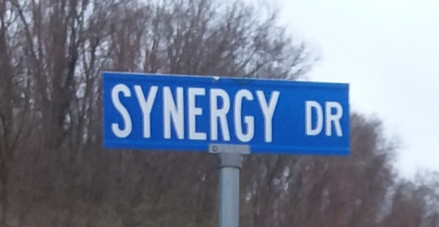
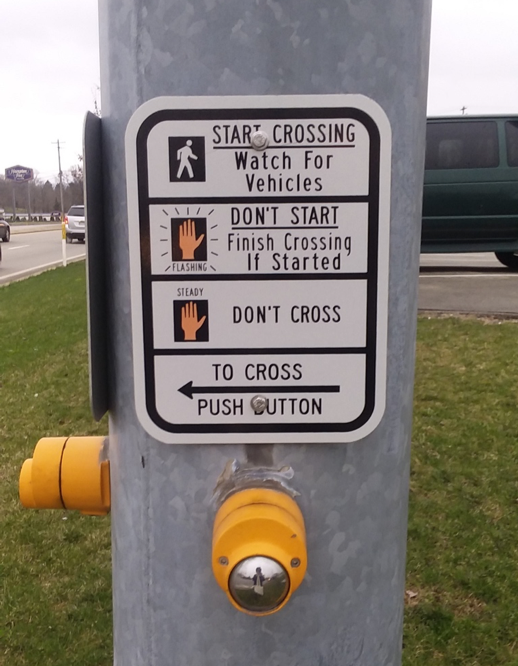
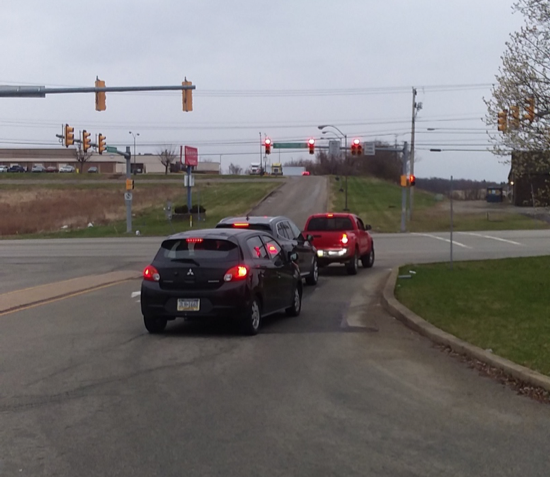
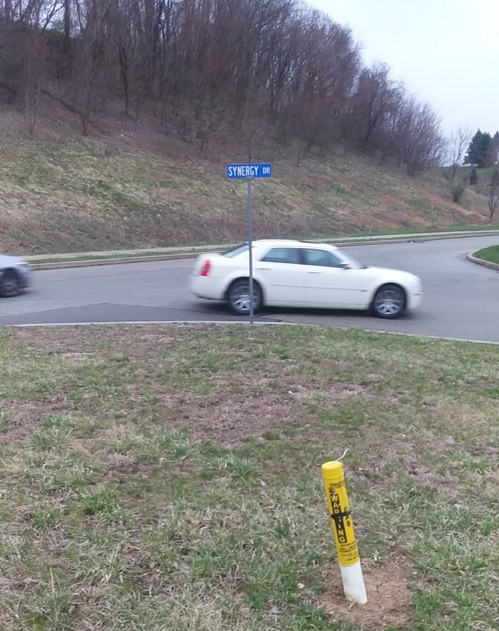
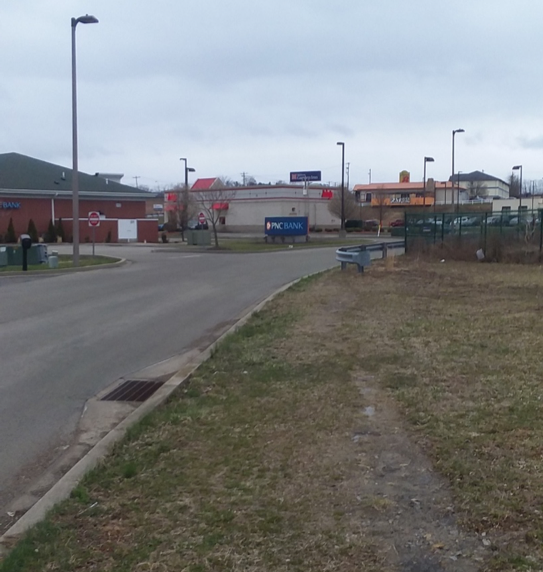
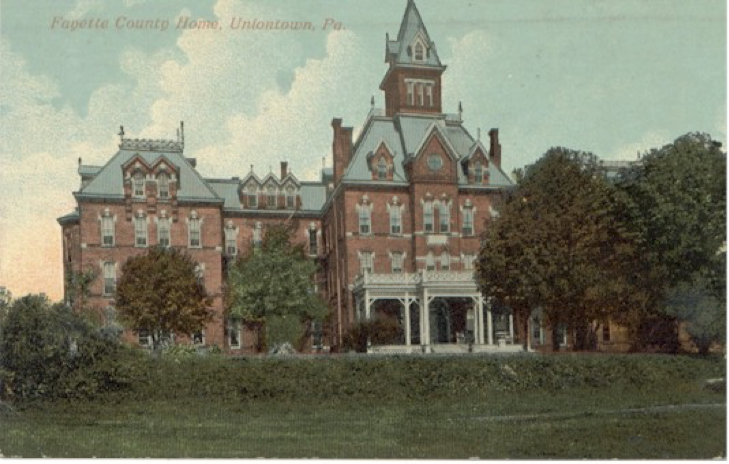
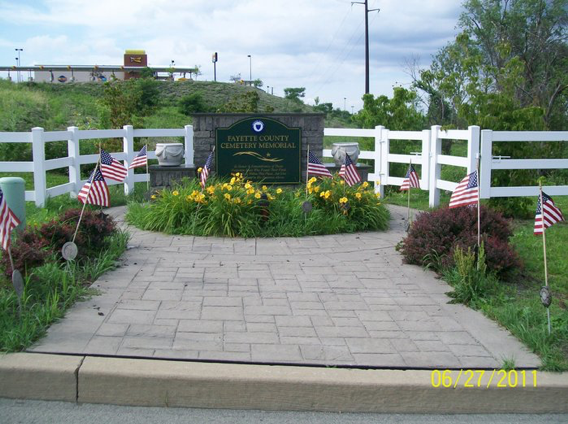
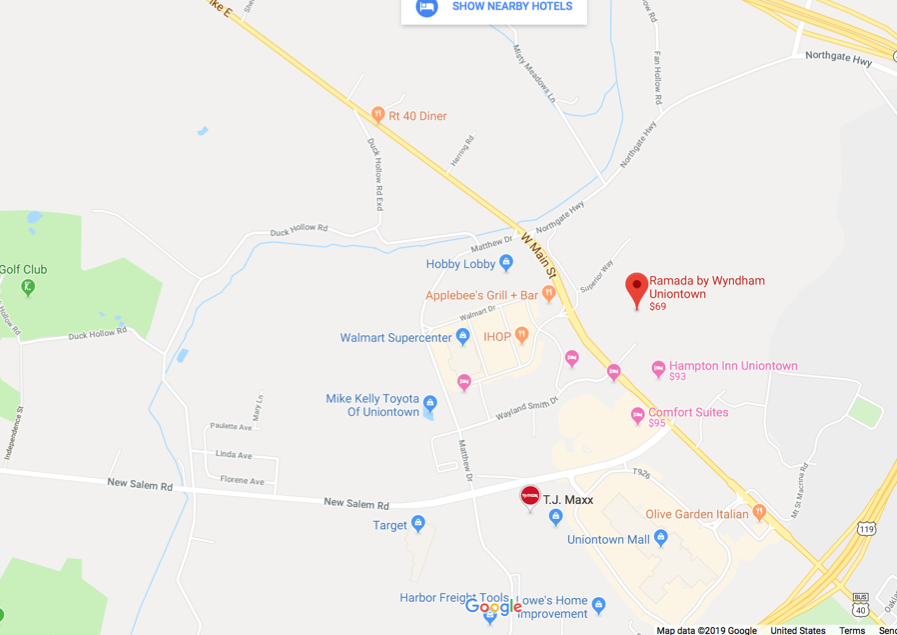
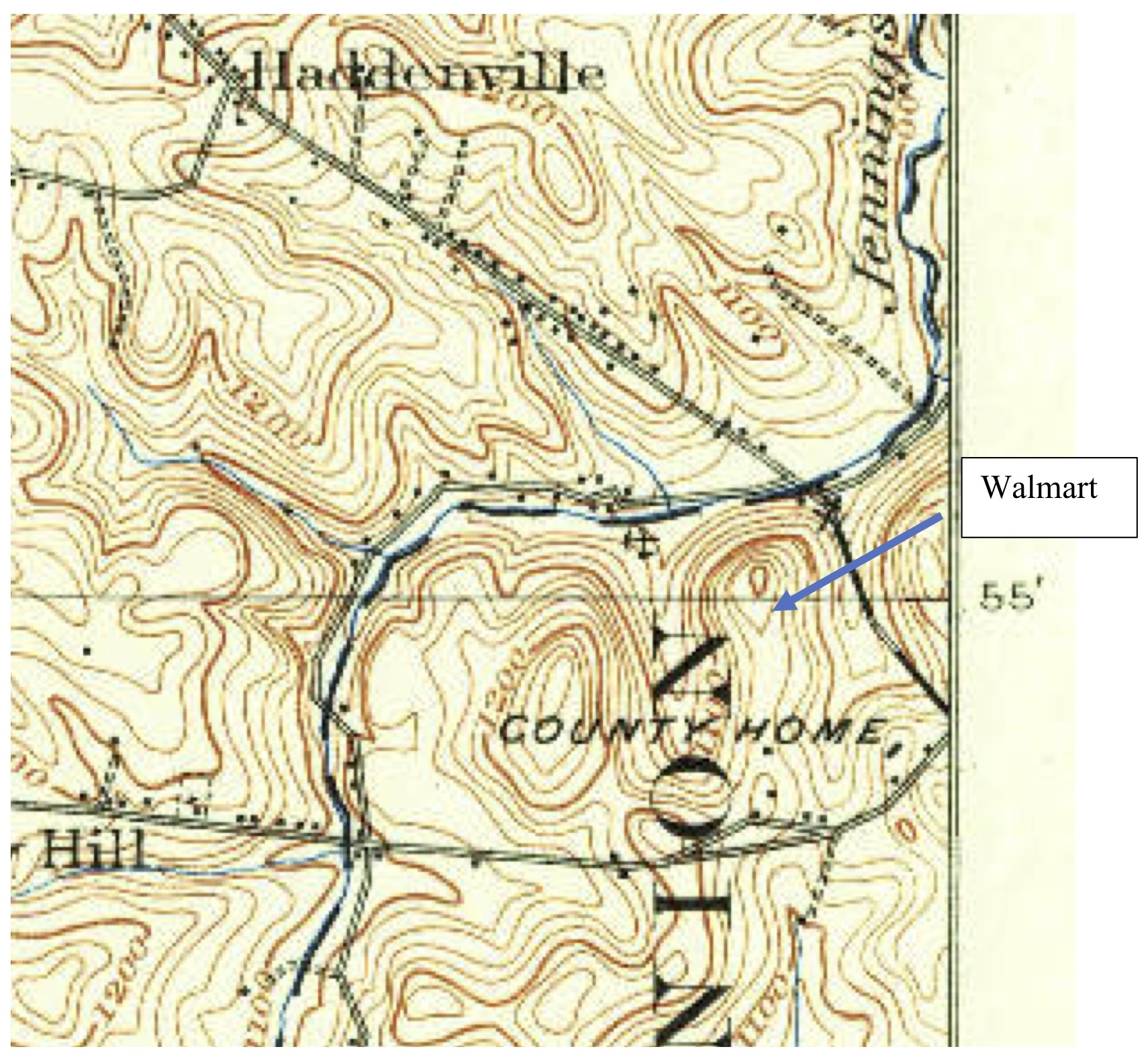
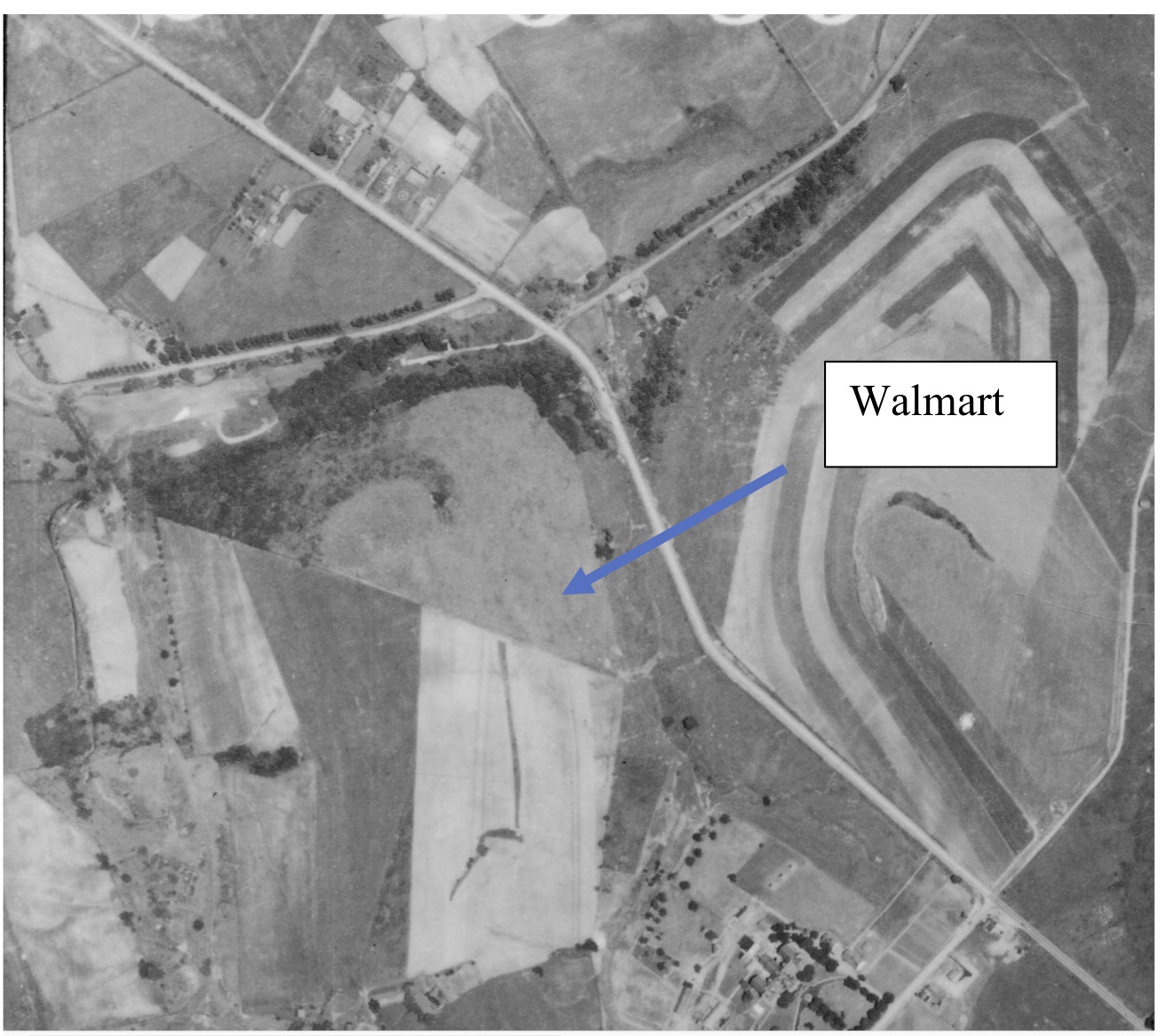


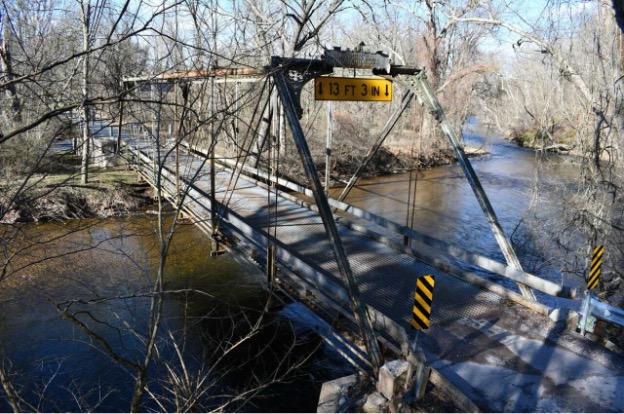
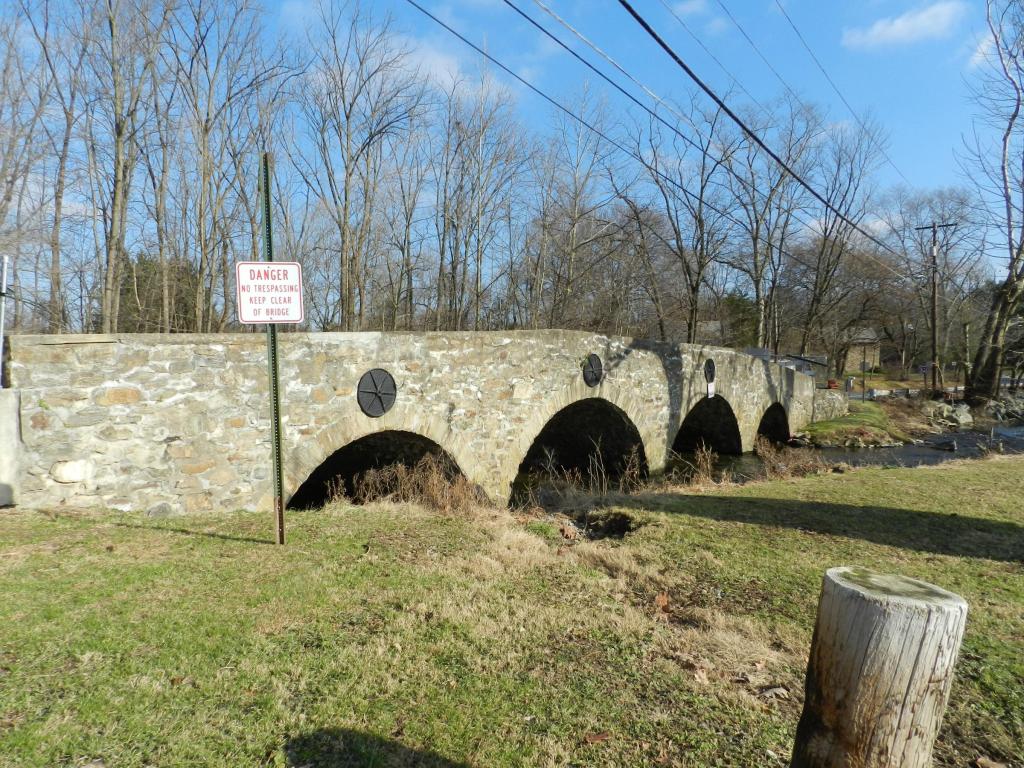
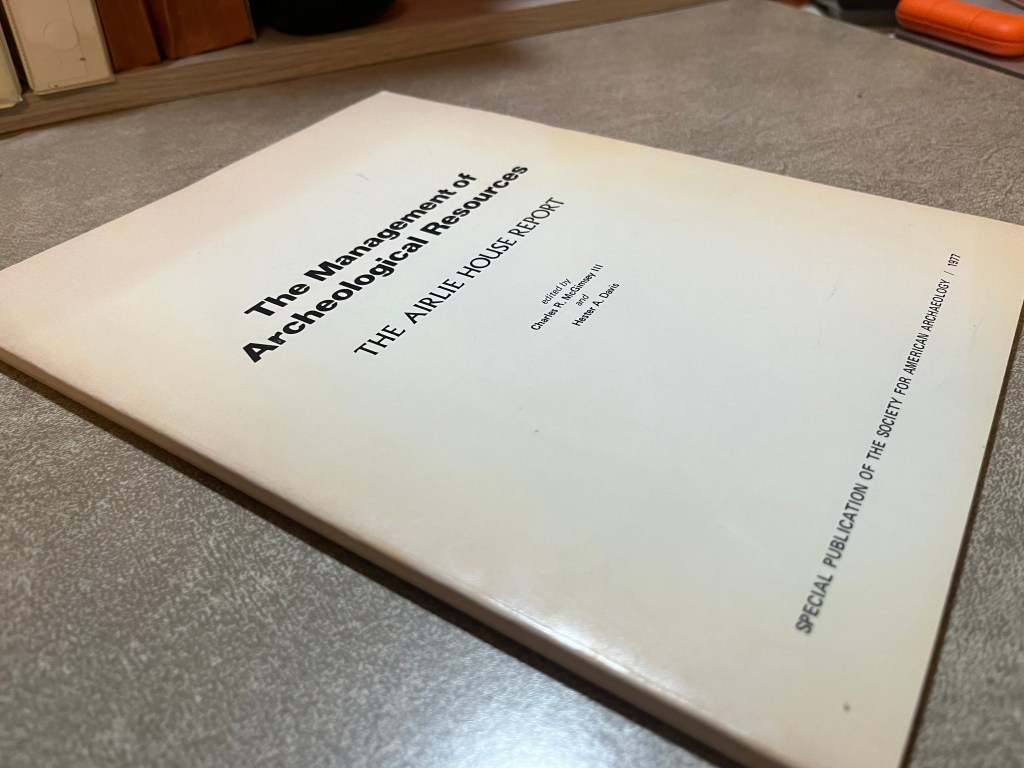
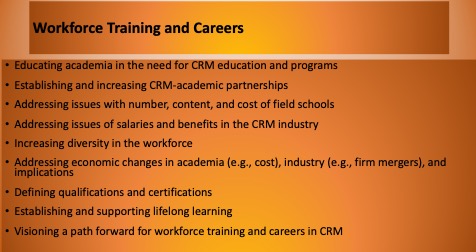

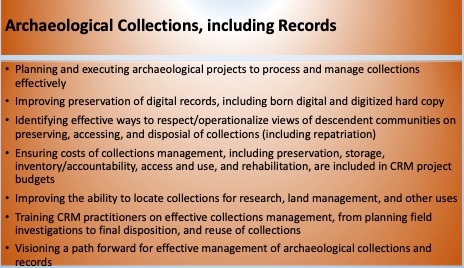
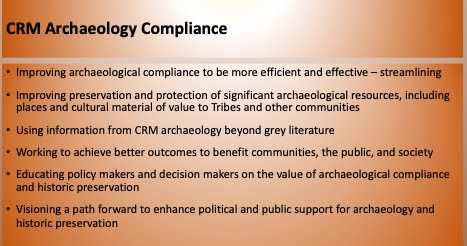
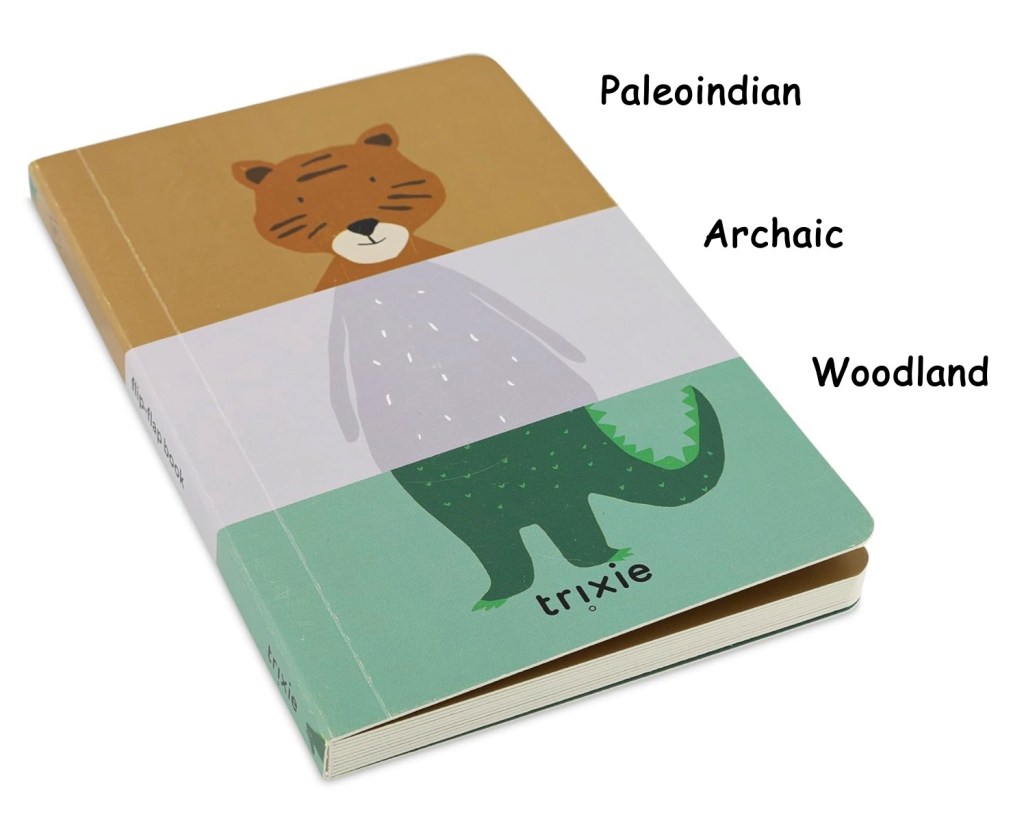
 I, Beckerman, not Robot