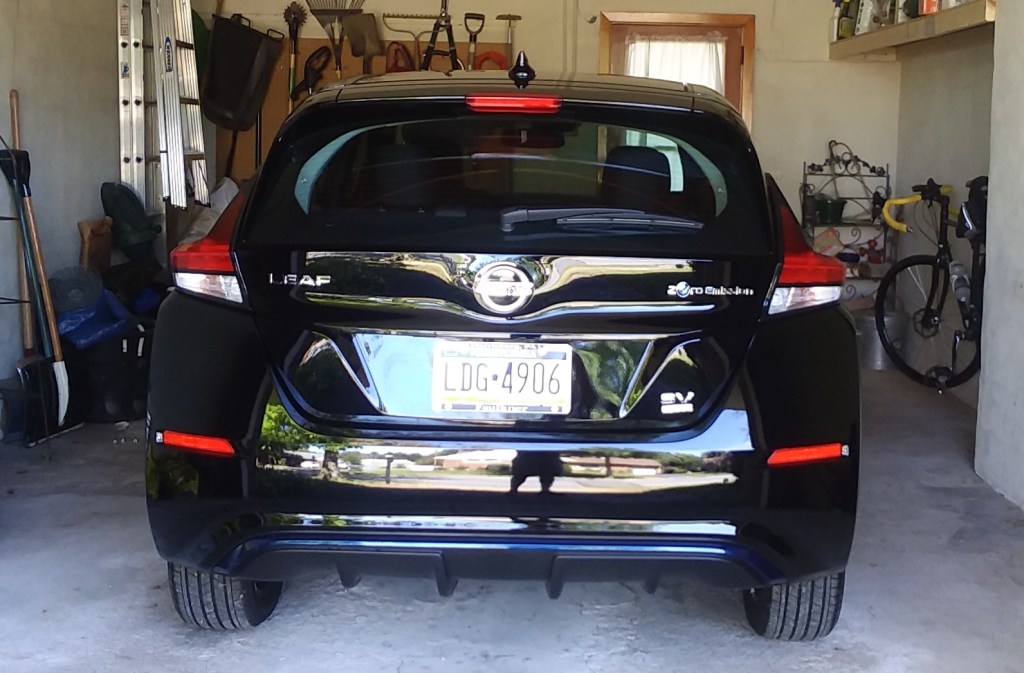
Ford Versus Ferrari? No, Nissan versus Chevrolet.

In Pennsylvania, as in much of the country, the choice of electric cars under $50,000 is sorely limited. Both the Hyundai Kona EV and the Kia Niro EV, which have more than 200 mile range and are both under $40,000, are currently the darlings of the electric car press. Neither are sold in Pennsylvania.  This leaves the Nissan Leaf Plus, the Chevy Bolt, and the Tesla Model 3 as the three contenders sold here at this time.

The Tesla Model 3 comes in 3 levels, with the Standard Plus coming in for a 250 mile range, making it the level that is comparable to the Nissan and Chevy. For the Model 3 specifically, the MSRP is $39,490.  Destination charges and fees are an additional $1,200 and the current Federal Tax Credit is $1,875 through the end of 2019.  There is also a $1,500 Pennsylvania rebate for the purchase of an electric car. All Teslas come with driver assistance features including emergency braking, collision warning, and blind-spot monitoring.  As these were important for us, I am including these features in the comparisons.

The sale price for the Tesla comes to $37,315, not including taxes or other registration fees. Of the three potential electrics, the Tesla was the most expensive.  Much has been written about the Model 3 and we did not test drive it.  We did not consider the Tesla Model 3 primarily due to the higher net cost, and some concerns about manufacturing quality; however, for the reader interested in the Tesla, do not let our judgments cloud yours.

Linda and I had the opportunity to test drive both the Leaf Plus and the Bolt and our comments are listed below.  Although I will be talking about the Leaf throughout, it should be understood that it is the Leaf Plus with the bigger battery and range that is our focus.

Nissan LeafChevy Bolt
Trim LevelSV Plus w/ Technology PackageLT with Driver Confidence Packages I and II
Motor214 hp front wheel drive200 hp front-wheel drive
Battery (kWh)6260
Range (miles)215238
Mpg-e104 combined119 combined
Curb Weight (lbs)3,7803,563
Wheelbase (in)106.3102.4
DC Charge Cable IncludedYes$750 option

There were a number of criteria important to our decision in choosing a vehicle.  Side-by-side, here are our judgments.

Safety Features. We wanted both vehicles to have advanced safety features such as blind spot monitoring and collision avoidance.

Included in the Technology package (which could not be added on to the base S model)-Automatic Emergency Braking with Pedestrian Detection , Intelligent Forward Collision Warning , Blind Spot Warning , Rear Cross Traffic Alert , Intelligent Lane Intervention 

Included in the Driver Confidence Packages I and II – Rear Park Assist, Rear Cross Traffic Alert, Lane Change Alert with Side Blind Zone Alert, Low Speed Forward Automatic BrakingForward Collision Alert, Lane Keep Assist with Lane Departure Warning, Following Distance Indicator, Front Pedestrian Braking, IntelliBeam automatic high beam headlamps

Conclusion: Both Leaf and Bolt have all the safety features we would want.

Instrument:  The layout of the instrument panel is a concern for us.  We need to be able to drive the car and monitor performance and controls without being distracted.  We are concerned that a 100% touch screen approach would not be safe.

Instruments were clearly marked in front of the driver, with the usual range of speed controls, audio, and phone on the steering wheel.  The 8-inch touchscreen in the dashboard to the right contains more information on performance, phone and audio settings, and climate control indicators. The climate controls are actually on a button panel below the screen, but it is intuitive.

Instruments were clearly marked in front of the driver, with the usual range of speed controls, audio, and phone on the steering wheel.  The 10.2-inch touchscreen in the dashboard to the right contains more information on performance, phone and audio settings, and climate control indicators.

Conclusion: Both the Leaf and Bolt instrument panel layouts were intuitive and easy to use without distracting from driving.

Handling and Street Performance

The Leaf handled well and compared to other compact sized cars such as the Corolla or Civic.  We did not use the special e-pedal feature to brake, which would have reduced the distance to a stop.  

The Bolt was more nimble than the Leaf and handled and cornered well, as would be expected from a smaller car.

Conclusion: The Bolt was clearly the better driving experience.  Being lighter and smaller, it handled better than the larger and heavier Leaf.

Seating Comfort

The car could clearly seat 4 adults comfortably; putting in a 5thadult might have been a bit tight.  Leg room and head room both in front or back was good, but neither of us are tall people.

Even though the Bolt was a smaller car than the Leaf, there was still adequate seating room for 4 adults.  The potential for a 5thadult was definitely not there.

Conclusion: For everyday driving, with two adults, both the Leaf and Bolt are comfortable.  Should there be a need for carrying 5 adults, the Leaf could manage and the Bolt could not.

Driver Vision

Vision from the driver’s side to the rear and to the left and right rear was generally unobstructed. Even without the additional safety features, we were able to see around us.

Vision from the driver’s side to the rear and to the left and right rear was generally unobstructed. Even without the additional safety features, we were able to see around us.

Conclusion: Independent from the driver assist technologies, both the Leaf and Bolt had mostly unobstructed 360 degree views from the driver’s side.

Cargo Space

At 23.6 square feet, the Leaf has enough room for two suitcases, or several bags of groceries, without folding down the rear seats.  The folded seats do not go flush with the trunk floor, as there are batteries underneath. This diminishes the overall rear cargo area.

At 16.9 square feet, the Bolt can barely hold two small suitcases or three bags of groceries.  As with the Leaf, the folded down seats do not go flush with the trunk floor.

Conclusion: The Leaf has enough cargo space in the trunk area to do light shopping or travelling.  The Bolt has minimal cargo space in the trunk area, reminiscent of what you get in a two-seater roadster like the Miata.

DC Fast Charger (Level 2). An essential extra to be able to charge on the road.

Included in Trim Level

$750 additional

Cost as equipped

$32,205MSRP of $41,205 less $7,500 Federal Tax Credit less $1,500 Pennsylvania State Rebate

$36,415MSRP of $39,790 less $1,875 Federal Tax Credit (expiring December 31, 2019) less $1,500 Pennsylvania State Rebate

Discussion

Both the Leaf and Bolt appear to be more than adequate cars for in-town driving and short trips.  The Bolt is smaller, but more nimble.  The Leaf has more cargo room and much more usable cargo room than the Bolt.  The Leaf uses the CHAdeMO fast charging standard, while the Bolt uses the more common CCS standard.  Currently, there are more CCS fast chargers out there than CHAdeMO fast chargers; however the caveat for now is that either car is more or less limited to short trips and in-town driving.  Unfortunately, this seems like the old VHS/Beta wars over standards, which hopefully gets resolved before most everyone is driving electrics. For now, place your bets.  

Before rebates and credits, the Bolt is $1,500 cheaper than the Leaf Plus with a longer range.  Because the Chevy Volt took most of the Federal credits sales for Chevy, the Bolt only has a $1,875 tax credit attached to it.  Sales of the Leaf have been slow since the beginning, I believe primarily due to the limited range of early Leaf models.  For now, the Leaf has a $7,500 Federal Credit, and when added to the Pennsylvania State Rebate, offers you a $9,000 discount on the vehicle.  On this basis alone, the Leaf Plus is the better value.

Verdict

What ultimately decided the choice of vehicle for us was the cargo space, with the Leaf winning hands down. As either car would have to be our all-purpose shopping and transport vehicle, cargo space was important.  The configuration of the Leaf cargo space was also more friendly to activities such as grocery shopping.

If you generally have a small family (1 or 2 adults) and are planning to pair your driving with another vehicle for longer trips, go with Leaf Plus.  The 216 mile range takes it to the same class of electric car as other contenders. For now, you have to go to another state or spend much more (Tesla Model 3 or Model S) to get above 240 miles in range.

If you plan to make this your only car and plan to use it for trips and you can live with the smaller cargo space, go with the Bolt.  The charging standard (CCS) is more common and the range is greater.  The cost differential between the Leaf or Bolt is small enough to not be the only criteria

Natural Gaslighting

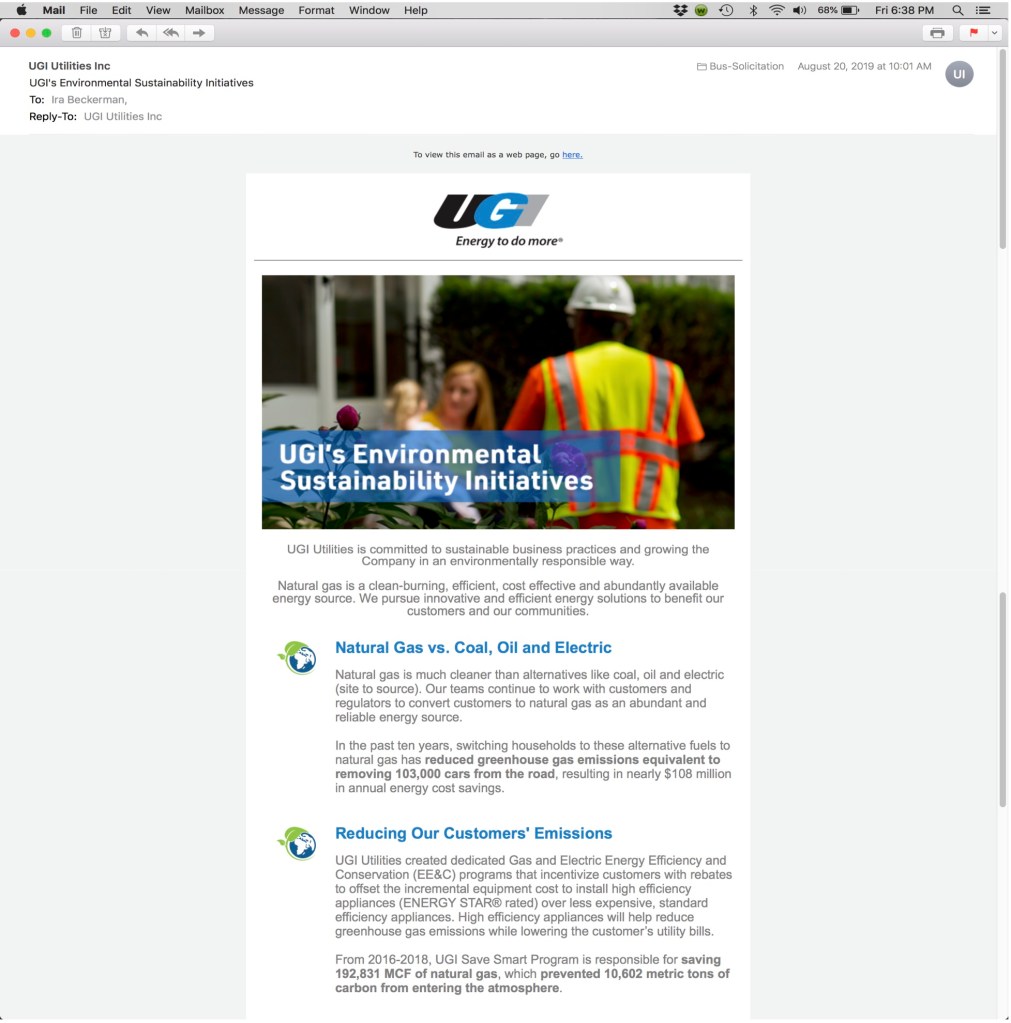
Recently, I received a cheery e-mail from UGI, who provides our natural gas.  They were touting their “Environmental Sustainability Initiatives.” It said, in part: “Natural Gas is much cleaner than alternatives like coal, oil and electric (site to source)…switching households to these alternative fuels (sic) to these alternative fuels to natural gas has reduced greenhouse gas emissions equivalent to removing 103,000 cars from the road, resulting in nearly $108 million in annual energy cost savings.” (My emphasis) (Their emphasis)

Now, I expect to be outright lied to by the current Administration in Washington on matters related to the environment.   I expect to hear about jobs and cost savings from the fossil fuel industry. I did not expect UGI to blow smoke up my behind regarding the purported environmental virtues of natural gas.

An e-mail from UGI

Let’s deconstruct UGI’s statements.  On the surface, once natural gas gets into your home, it is half as bad as coal and oil with regard to CO2 emissions.  CO2 is one of the greenhouse gases that is heating up our planet at an unprecedented rate.  Cutting them drastically is required for our children and grandchildren to have something like a normal existence on this Earth.  If you are burning coal, then your CO2 production will be approximately 205-228 pounds for each million BTU, depending on the type of coal.  Bituminous burns dirtier than anthracite.  If you are burning home heating oil, then you are producing 161 pounds of CO2 for the same energy.  For natural gas, it would be 117 pounds of CO2.

Is this environmentally sustainable?  The short answer is no.  The most optimistic scenarios state that we need to be carbon neutral (no net addition of CO2 into the atmosphere) by no later than 2050 to avoid heating the planet more than 2.7 degrees Fahrenheit above what it is today.  Bad things will happen even if we achieve this goal, but much worse will occur if we don’t.  

Scientifically Accurate Rendering of Earth on January 1, 2100.

To avoid the worst, we have to get to carbon neutral and quickly.  And while natural gas may emit half the CO2 of other fossil fuels, it is not a long-term solution and will not lead to environmental sustainability.  It is like Stalin and Hitler in a room talking to Roosevelt, and, Stalin saying, “Hey, FDR, I’m only half as bad as Hitler.”

Claim 1

How is natural gas cleaner than “electric (site to source)”?  Electric, site to source, means taking into account the fact that electricity is usually generated at a power plant, then transmitted some distance to the home.  In transmission, some electricity is lost, so there is a factor worked in.  Fair enough.  UGI, I believe, is also assuming electric generation is averaged from a combination of coal, natural gas, nuclear, and other (including renewables) some of which are CO2 emitters.  When you figure in the creation of electricity from dirty sources and factor in the loss in transmission, it is probably true that natural gas burned in the home is cleaner than site to source electricity.

However, the statement leaves you with the impression that natural gas is cleaner (in CO2 emissions) than electricity, which is false if that electricity is produced from nuclear or renewables like solar or wind.  Under some scenarios, natural gas is cleaner than electricity, but the statement completely avoids the option of renewables, which I believe was intentional.  Their claim also sweeps under the carpet the issue of site pollution from natural gas production at the well (see below).  We have an apples to oranges comparison here.

Claim 2

Let’s look at the second claim of reducing emissions equivalent to removing 103,000 cars from the road over 10 years.  I’m don’t know what UGI means by that statement.  There is no citation.  Secondly, this claim only makes sense in relation to something.  I could claim reading this blog is equivalent to extending your life by 2 months.  (No, it only seems like the time spent reading this was like 2 months.)

Let’s humor our good folks at UGI.  What is the emissions equivalent of 103,000 cars from the road over 10 years?   We can do a back of the napkin analysis.  First, let’s assume its 10,300 cars a year for 10 years.  The average US car is driven 13,476 miles per year (FWHA’s numbers).  There is no place to find the current gas mileage for the entire US fleet, just new cars (which is 24.7 mpg in 2016).  In 2018, cars and light vehicles consumed 142.86 gallons of gasoline (US Energy Department).  In the US, we drove 2,220,801 million miles in 2017, per the USDOT.  This computes to an average of 15.5 mpg.  To drive 13,476 miles at 15.5 mpg, you would need 869 gallons of gas.  Each gallon produces 19.60 pounds of CO2, so in a year each car would produce 17,032 pounds of CO2, or 8.52 tons (hereon in when we say ton, we mean the 2,000 pound short ton).  Our 10,300 cars a year would end up producing 87,756 tons of CO2 a year.  Sounds impressive…

…Until you realize that Pennsylvania’s total CO2 emissions are 239.1 million tons a year (US Energy Dept.), and that there are 4.68 million cars registered in PA (in 2015).  Against some unknown standard, UGI has reduced Pennsylvania’s CO2 emissions by 0.024 percent and reduced the number of CO2 emitting cars by 0.22%.  103,000 sounds like a large number, until you figure out what it means in the big picture. 

But Wait! There’s More.

To now, we have limited our discussion to source consumption of natural gas (although UGI was more than happy to compare source natural gas to site electricity).  If we squint, we can try to believe that natural gas is only half as bad as other fossil fuels and therefore might be a bridging fuel to the carbon-neutral future. What happens when we look at the site production numbers.  

For years, we have known that methane is a greenhouse gas.  The good news is that methane stays in the atmosphere for only a few decades, as opposed to CO2 which can remain for centuries.  The bad news is that methane is a far more potent greenhouse gas than CO2, something like 34 times a potent.

Furthermore, the calculation of 34 times as potent is comparing methane and CO2 over a 100 year span.  Methane’s greatest impact is in the first 20 years. For the shorter 20-year span when methane is active, the global warming potential (GWP) is 84-87 times that of CO2 (EPA).

So what does this have to do with natural gas? Natural gas is mostly methane.  All wells leak a bit and what they are leaking is methane-dominated natural gas.  Leaking from the well head is not a given and well designed and constructed wells leak very little.  The current EPA estimate is that wells leak about 1.4%.  Unfortunately, a new analysis suggests that the current methane leak rate is closer to 2.3 percent, as reported in the Journal Science

Without running you through another calculation, I think you can see that any small leakage that is magnified 84 times will have a large impact over the next 20 years, totally overwhelming any short-term advantage of natural gas over other fossil fuels.  Clearly others are seeing that methane leakage from natural gas is a problem and in Pennsylvania our Governor Wolf rolled out methane restrictions in 2016.  Unfortunately, those restrictions are limited to new wells. Existing wells continue to remain unregulated for methane.  Ultimately, natural gas is bad for the atmosphere in the short term.  Under current ground rules and regulation, there is no benefit for using natural gas as a bridging fuel. None.

It’s Complicated

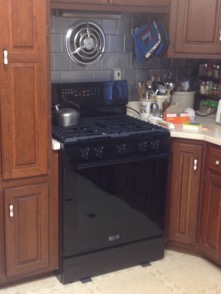
Last year, we finally took the plunge and installed solar panels on our house which will generate clean and renewable energy for 30 years.  Rated at 7.5kw, we are removing 3.2 tons of CO2 from the atmosphere each year.  Good for us.  However, in 2011 we replaced our oil furnace with a high energy natural gas boiler, which produces both our heat and hot water.  Last year we added a gas range for cooking.  On average we have used 97.84 mcf (thousand cubic feet) of natural gas each year.  Yes, we reduced our carbon footprint by changing from heating oil to natural gas, but we did not eliminate it.  Not considering the site sources of methane emission and focusing only on the source CO2, we are putting an average of 5.7 tons into the atmosphere. Not good for us.

Our Natural Gas Boiler

The hot water heating system we have is efficient and effective and keeps our home toasty through the winter.  The hot water is essentially on demand as we have no water heater.  Our 8 year old boiler is working fine and only needs an annual tune-up.  I personally like cooking with natural gas. I think I am a much better cook for it.  Today, we have limited options for switching to an all-electric boiler.  Most of the market for hydronic baseboard heat (the fancy technical term) is premised on natural gas-powered boilers. There is a small market for electric boilers that do the same, so it will come down to a matter of will and finances.

Our (beloved) Gas Range

With regard to our gas range, the logical side of my brain says that cooking is the same – gas versus electric, and electric can be carbon free. The emotional side of my brain says gas is superior, especially on the burners, especially in the ability to micro-control the heat immediately.  Ultimately, I feel we will surrender to modernity and the planet and switch back to an electric range.  It may take some time as the range is less than a year old.  Rather than taking the step of changing our boiler, we are looking into adding insulation to the attic.  Using less natural gas is one good way to reduce our footprint. 

In the meantime, what we can and should do is to pressure our representatives and our gas companies to fully embrace the monitoring of gas wells and pipelines for leakage and to enforce strict regulations on the production of natural gas.  As I speak, the Pennsylvania Environmental Board is vetting proposed rules restricting methane emissions from existing wells. Even fast tracked (it is not) and with the embrace of the General Assembly (I have my doubts), it will take at least another year for the regulations to take effect.

Of course, it would help if UGI would make some attempt to be truthful regarding the impacts of natural gas consumption on the atmosphere and the warming planet.  At least they could stop gaslighting us.

Refrigerator Magnetism

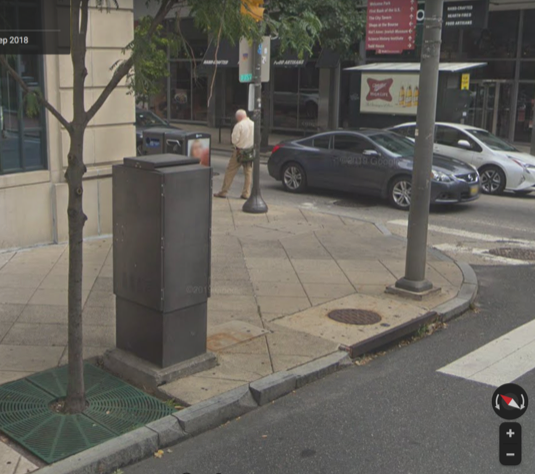
Figure 1. A block from Carpenter’s Hall at Independence Mall in Philadelphia.  (Courtesy of Google)

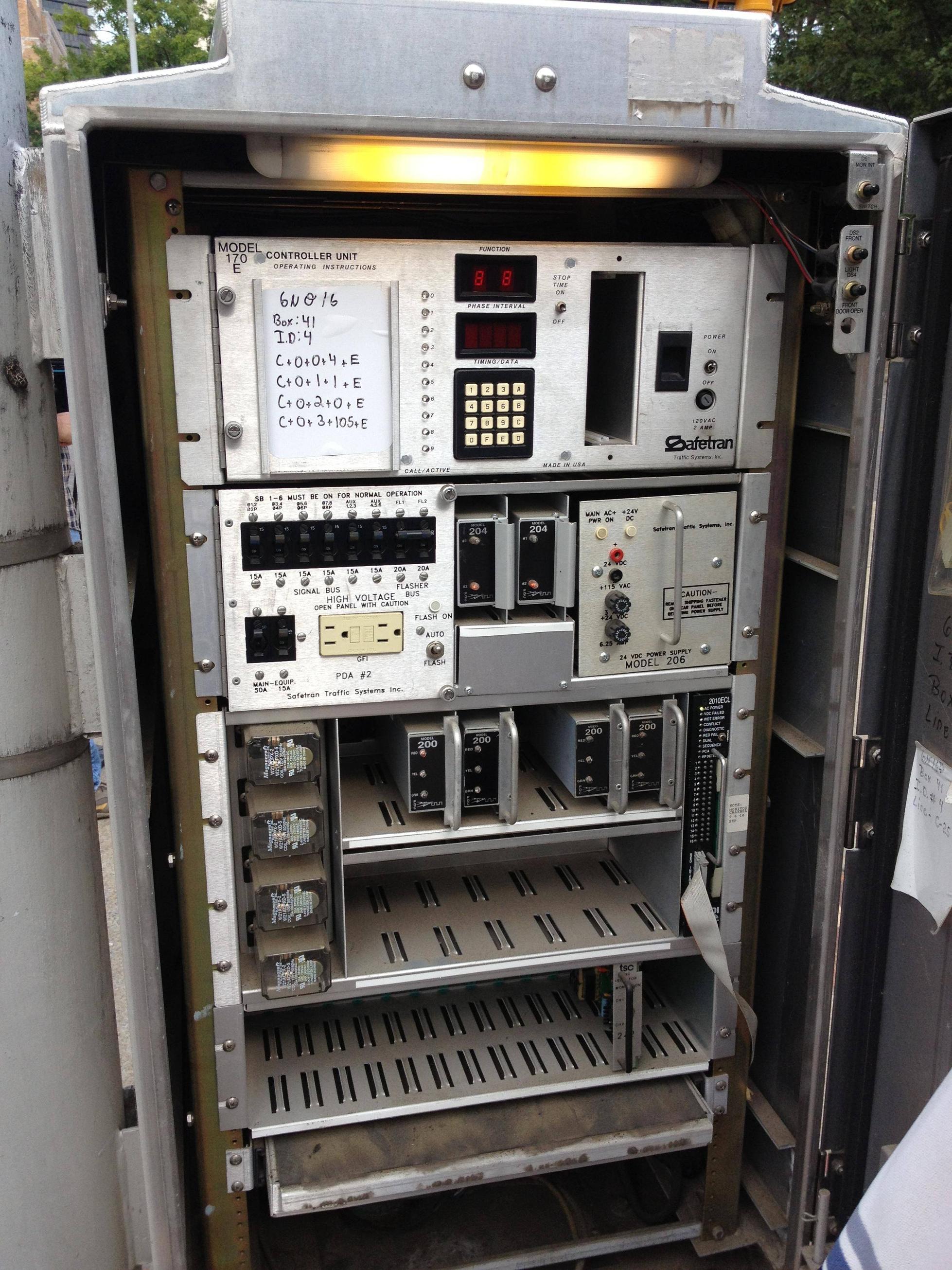
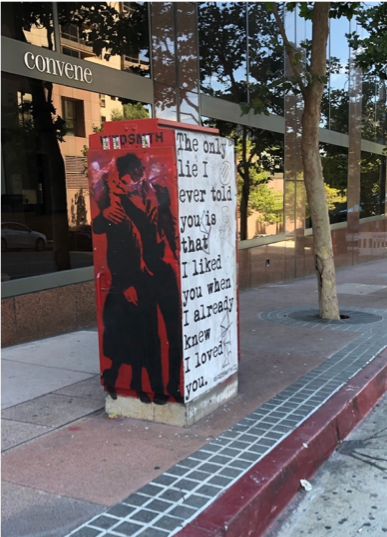
Traffic Control Cabinets are frequently found in urban areas near traffic signals (Figure 1).  These boxes store the switches, cabling, and electronics that operate signals as well as associated cameras.  Over the years, they have become larger and more internally complicated (Figure 2) as our lives have become more complicated and surveilled. The most recent generation of cabinets are the size of refrigerators, and are commonly known as refrigerator controllers, although on aesthetic grounds, this is a slight to refrigerators.

Figure 2. Inside a Controller Box

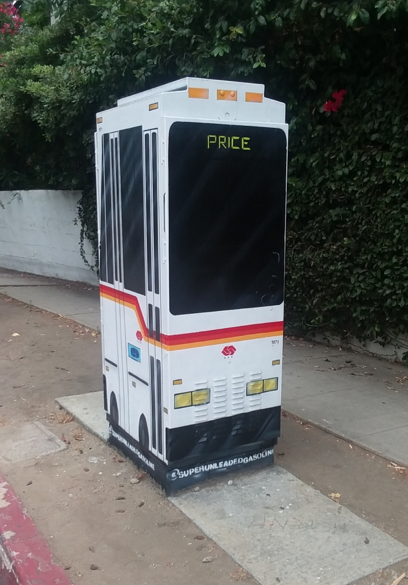
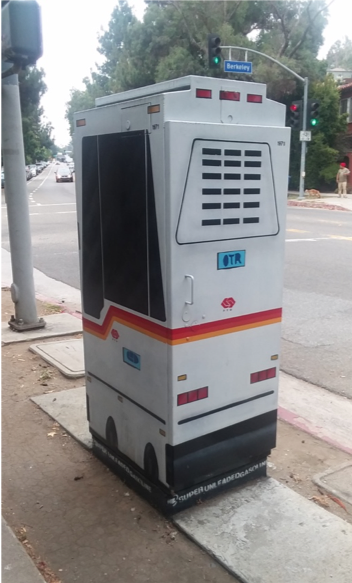
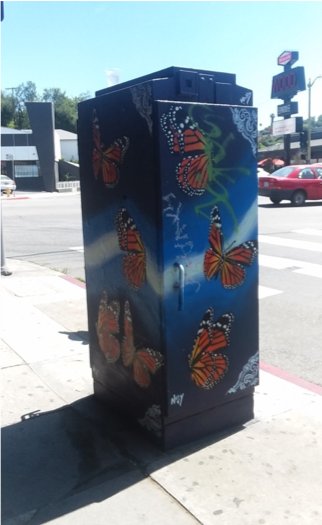
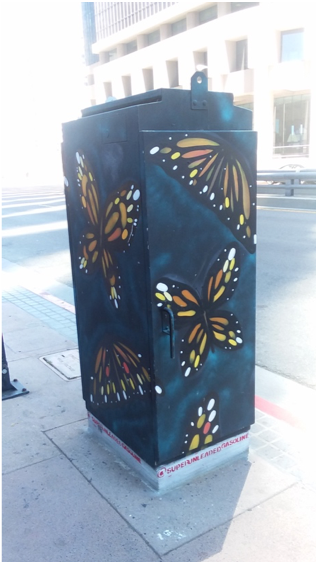
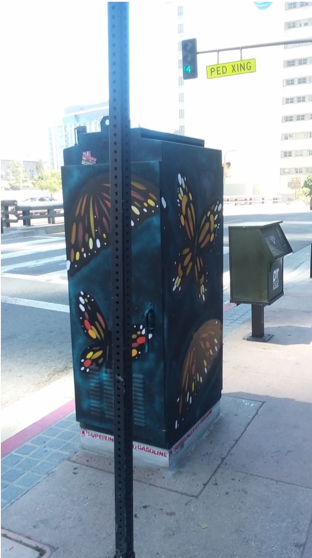
On a recent trip to Los Angeles, we notice a number of these controllers that were decorated and turned into street art. Some were located in the Silver Lake area (Figure 3) and some were downtown (Figures 4-6).

Figure 3. Silver Lake District
Figure 4. Silver Lake District
Figure 5. Downtown LA
Figure 6. Downtown LA

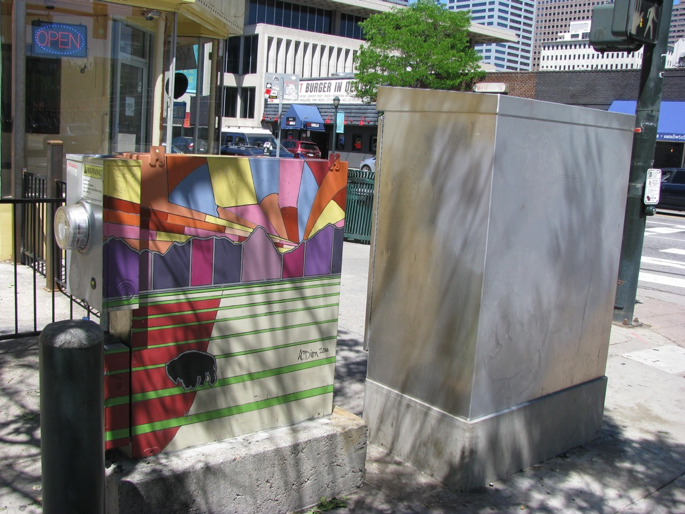
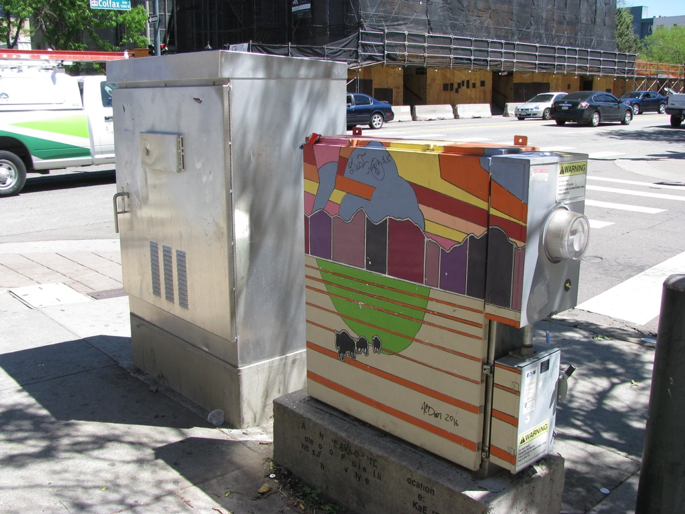
Los Angeles isn’t the only city to take advantage of this free real estate.  Downtown Denver also has had some of their controller boxes painted (Figure 7).  In fact, you only need to go onto the Internet to see example after example of controller boxes that have been turned into street art. Just Google up “Traffic Controller Box Art.”  Make sure to add the word Box or you will get what is shown in Figure 8.

Figure 7. One of two boxes painted, Downtown Denver, 1500 block of Colfax.
Figure 8. Traffic Controller Art

While this is all well and good and perhaps has become a “thing,” I believe there has been a great missed opportunity to use these spaces and surfaces.

What Happened Here

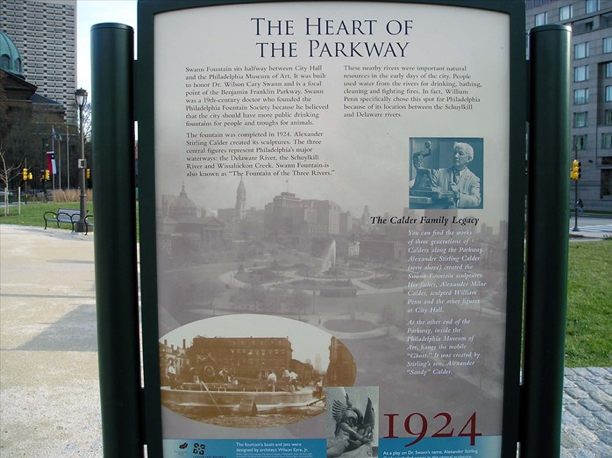
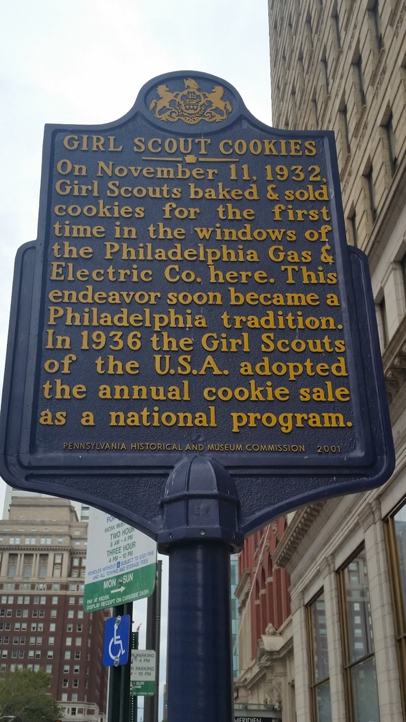
Coming back to Philadelphia, or any urban area or town, you often find history interpreted through signage and place.  Sometimes, you see traditional interpretive signs on posts (Figure 9); sometimes they are PHMC-sponsored historical markers (Figure 10). You even find interpretive signage on the side of buildings (Figure 11). What all of these interpretations have in common is that they are associated with a particular place, a particular subject, and a particular story.  “Let me tell you about what happened here.”

Figure 9. Traditional Interpretive Plaque – Swann Fountain, Philadelphia
Figure 10. State Historical Marker – Philadelphia
Figure 11. Sign on the Side of a Building – National Museum of American Jewish History

These interpretive displays, these stories, come at great cost and sometimes contention.  The gold standard (actually cast aluminum) is the PHMC Historical Marker, and takes an extended period for review and approval and in the city can cost north of $1,600. Interpretive signs on posts are also expensive and often completed as one-offs.  Having been accomplice to several PennDOT provided signs, through historic resource mitigation commitments, I can report that these signs can be into 5 figures, and may last no more than 10-15 years before fading, peeling, delaminating, etc.

Refrigerator Controllers are ubiquitous in urban areas, adjacent to the intersections with traffic lights.  Most of these are plain aluminum, powder coated in an anti-graffiti surface, or  anodized. In historic districts, they are particularly intrusive, and in areas with narrow or historic sidewalks, also a detriment to pedestrian movement.  They are not sympathetic with the urban landscape, relatively permanent, and in a word, degrading.

Is it possible to turn these installations into something worthwhile, and dare we say, attractive?  Clearly, in the examples above, forward thinking municipalities are turning these controllers into canvases and encouraging artists to use them as such.  The effects seem to be highly variable, ranging from amateurish school-kid efforts, to something that would qualify as street-art. Presumably, this is something Banksy might undertake at some point.  So far, the closest the artist has gotten is a repurposed phone box (Figure 12).

Figure 12. (Credited to) Banksy mural in Cheltenham, incorporating a phone box.

In historic districts, the context is different, and an art-infused refrigerator controller canvas might not do the trick.   The surfaces are there, all right, but the approach might/should be different.  It should be possible to take the premise of the interpretive sign, such as demonstrated in Figures 9-11, and put their contents onto the same refrigerator controller canvases appropriated by artists. In fact, in at least two communities, public historians have done just that.

In Eugene, Oregon, an effort to repurpose the refrigerator controllers was started in 2014, coordinated by the Lane County History Museum and the Johnson Shelton McMurphey House, under the “History Here” banner.  Sara Palmer, at the time director of the Johnson Shelton McMurphey House, and Heather Kliever, registrar of the Lane County History Museum developed eleven locations in Eugene for these signs. As a practical matter, the images were attached to the refrigerator controllers via a vinyl wrap, essentially a giant sticker applied to a clean, smooth surface. The project was kicked off by a grant from the Lane Arts Council   Each installation was estimated at $200 to print and install.  

Figure 13. Sara Palmer and Heather Kliever at one of the History Here locations in Eugene, Oregon, 2014.

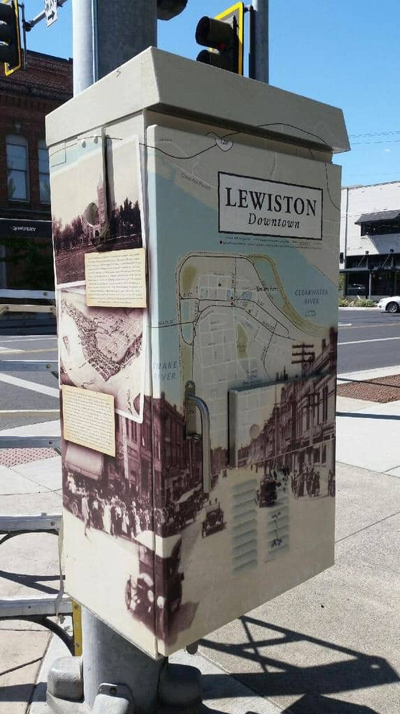
In Lewiston, Idaho, a similar effort was undertaken in 2018. Historian Dr. Amy Canfield used her public history course at Lewis-Clark State College to have students develop 10 locations to host interpretive signs (Figure 14). The first of these vinyl signs was installed in 2018, with 9 more planned, each reflecting the unique history of place at that location.  The estimated cost of the effort is $7,000, and is being crowdfunded. Key to the effort was the coordination of the Beautiful Downtown Lewiston, an offshoot of the Main Street program, and helmed by Courtney Kramer.

Figure 14. First Lewiston installation, at the corner of Main and 5thStreets.

Durability

Although both Lewiston and Eugene have grasped the idea of using otherwise plain refrigerator controller boxes as canvases for interpretive history, the production methods leave something to be desired.  Vinyl is cheap, easy to reproduce, and easy to affix.  However, it does not have any lasting capability and in a matter of time will peel, fade, and cease carrying the value for which they were designed.  Furthermore, municipal traffic departments have the responsibility to maintain their infrastructure, including the traffic controller boxes.  Very high on the list of desirable features of permanent traffic installations is the need for little or no maintenance. 

Most of these engineers will view the vinyl appliques as a nuisance and evidence that this is a flawed idea, since it doesn’t meet the non-maintenance test.

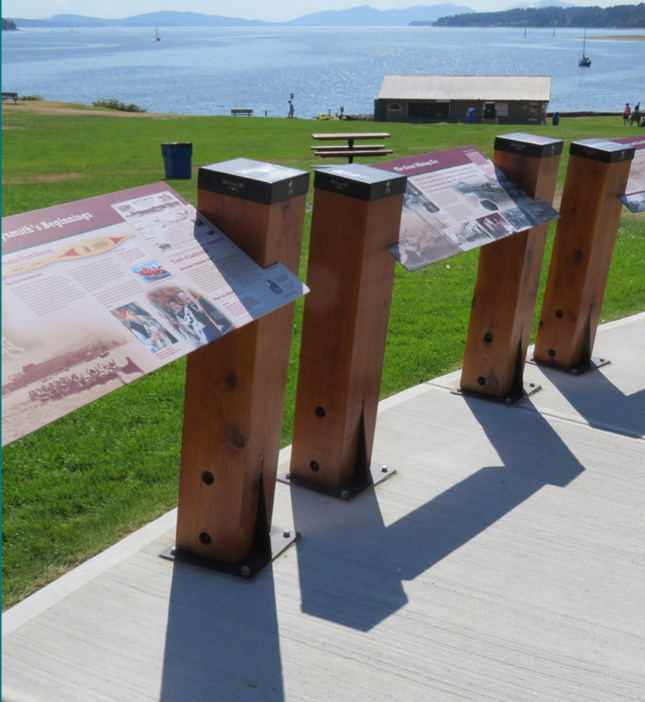
There is one way around the durability issue.  The aluminum covers for these controllers are generally offered in natural (unfinished), power-coated (to prevent graffiti), and anodized.  The same powder coating protection can be modified to accept a fixed image that should last for many years.  One company, Alto, has a proprietary process to merge any high-resolution image into power-coated aluminum, using dye-sublimation process and a heat and vacuum system. Alto uses 5052 Aluminum, an alloy, which also happens to be a popular choice for traffic controller boxes, (see Nema Enclosures). Duraluxe also uses a sublimation process. Although previous uses of this process have been for signs, there is no reason it can’t be used on a controller box exterior.

Figure 15. Alto process interpretive sign at Transfer Beach, Vancouver Island, Canada.

If it is possible to have the controller box exterior panels powder-coated using one of the available processes to fix an image prior to it being assembled into the finished controller, then it would be possible to manage the process during manufacture, rather than after the fact in the field. In theory, during the order of a series of controllers for a traffic improvement project in a municipality, selected locations would be identified for interpretive treatment.  The historic information for each of these locations would be developed into one or more frames and these images would be provided to the controller manufacturer.  The manufacturer would then provide the aluminum outer panels and images to the printing firm, e.g. Alto, who would affix the interpretive images to the aluminum, then provide the finished panels back to the manufacturer to complete the assembly. The contractor completing the project would need only to know which controller goes on which location.  The finished product would have the same initial effect as the vinyl appliques, but would be durable and resistant to ultraviolet light and the other exterior elements, and would require no maintenance.

Cost and Funding

Developing the interpretive panels in this manner will not be as cheap as the vinyl approach; however, it will be durable and will have the additional critical feature of being maintenance-free, which will please the municipal engineers.  Although I do not have a cost estimate for this type of work, the goal in any region is to have a manufacturer develop a working relationship with a powder-coating operation so that jobs can be handed off in a timely manner, and priced appropriately.  Recent information from the Forest Service suggests that the cost for manufacture is around $100 a square foot.

This would suggest each controller box with images on 3 sides would run in the neighborhood of $2,500 per box.  However, the cost of production would likely be less than the cost of research and design of the images.  Partnerships with the local historical society could greatly reduce the research costs.  Design costs could also be reduced if a template approach were taken, using the same format for each of the controllers throughout the municipality.

Earlier in the blog I alluded to the notion that we were talking about historic districts.  Many traffic improvement projects are funded with Federal FHWA funds, which would put them under Section 106 review.  To the degree that these intrusions into historic districts might be considered adverse effects, the projects would could be mitigated with the application of these interpretive panels.  Conversely, it might be considered a no adverse effect standard treatment to use this type of treatment for controller boxes in a historic district within a larger traffic project.  In either case, the costs associated with design and fabrication of the panels as well as the purchase of the controller boxes would be eligible for 80% federal funding, and generally 15-20% state funding.  Given the total costs of many traffic signal improvement projects, the additional costs for 10-20 interpretive controller boxes would be a small percentage of the total, and would likely be a high-value addition to the municipality.

A Final Word on Refrigerator Magnets

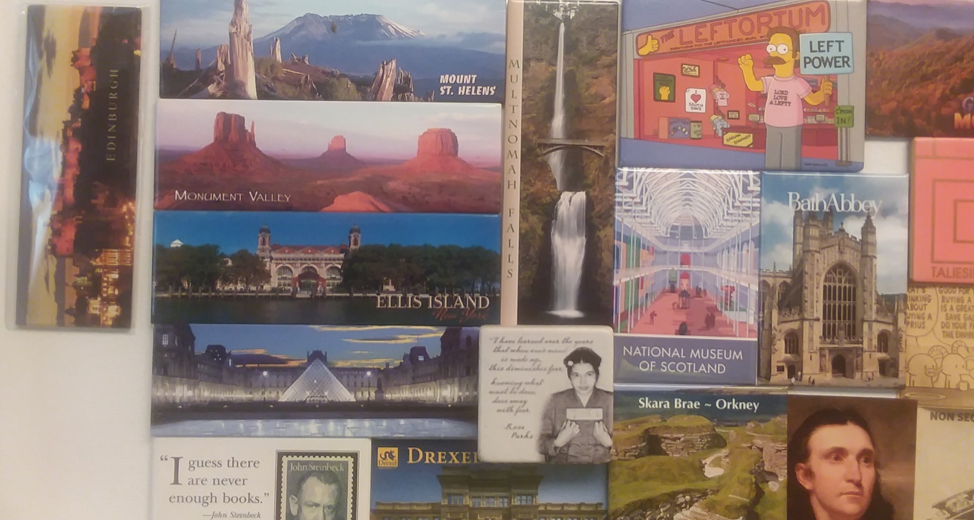
The Title of the Blog, Refrigerator Magnetism, might make no sense given the subject matter.  However, it is inspired by our own refrigerator, which is festooned by many magnets of places we have been, most of which have been historic (Figure 16).  Our refrigerator magnets have always drawn us to places in the past. The refrigerator controllers, properly illustrated, could also magnetically draw the passers-by to the history of that place.

Figure 16. Our Refrigerator, with its historic magnets.

A Cup of Coffee

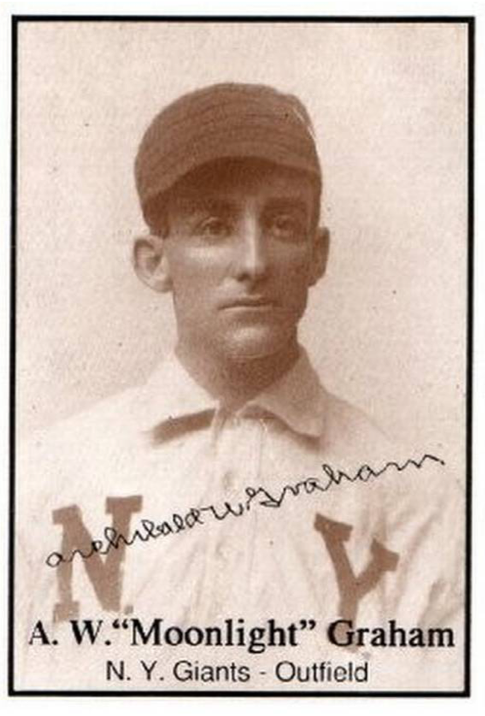
Baseball is a game with a beautifully intricate and colorful language, deeply idiomatic.  The phrase, “a cup of coffee” refers to a short time spent by a minor league player at the major league level.  One of the most famous cup of coffee moments was by Moonlight Graham, who played in one major league game, got no at bats, no fielding attempts, then waited 77 years to appear in W. P. Kinsella’s novel, A Field of Dreams.   This is not that cup of coffee.

My morning ritual is deeply intertwined with the dark, brown stuff. I have deemed it essential for two cups of it, black – no sugar, be poured into me each day in order to function. Beyond the pure sensory pleasure it gives me, I do suspect the caffeine steadies my resolve to face the day, which of late begins with an onslaught of distressing national and local news on all fronts.

Of late, my thoughts have been returning to the impact we humans are having on the environment, and staring at my coffee cup, am beginning to wonder if the act of drinking coffee is hastening that impact? You would think that this would be a relatively simple question to answer. You would be wrong.  Come join me down this rabbit hole in a dizzying array of terminology, mis-direction, accusations and backstabbing, and great lack of clarity.

Let me state my moral goals here.  I still want my coffee and I want to drink it guilt-free.  That means the coffee needs to be sourced from a place where it is not damaging the environment, and, also that the workers who harvest the coffee are not being exploited.

How can growing coffee affect the environment?  Traditional methods rely on growing coffee within a larger forest ecosystem.  The opposite of traditional methods is monocropping, AKA sun grown, using chemicals and fertilizers to boost production.  It came into popularity in the 1970’s, making it the third worst thing to happen to the planet that decade, after Nixon and disco. This is a pattern of agriculture repeated in many parts of the world with many crops.  As you might expect, traditional methods are ecologically much less damaging.

The modern equivalent of traditional coffee farming is shade grown coffee, where plants are interspersed under the forest canopy.  Shade grown is a thing, so some brands of coffee are so marked.  Guess what?  Trees store carbon and are actually carbon sinks.  So any coffee tree will have a negative carbon footprint.  However, the add-ons, the fertilizer, the chemicals, the deforestation all have negative carbon impacts and are harmful to the environment in general, not just in terms of CO2.  It takes about 2 pounds of CO2 per pound of coffee to get it planted and harvested, all in.  This will be approximately the same regardless of method of farming, but the overall environmental consequences are significantly different.

Now that the coffee has been harvested, how does it get to the store?  First, almost all coffee is grown in the Southern Hemisphere. New Cumberland is not in the Southern Hemisphere, so there is significant transport of coffee to the north to reach my cup.  When you figure transport, processing, and roasting the beans, you are talking about adding an additional 3.5 pounds of CO2 per pound of coffee. https://theecoguide.org/examining-carbon-footprint-coffee

Once purchased from the store, I need to brew it and fix it to my liking.  First, it goes into our coffee maker, powered by electricity from our solar panels.  No carbon footprint there.  (If you are not using solar, add 21 g of CO2 per cup for heating water.) The coffee filter and grounds go directly into our mulch pile. So far, so good. And no, we are not going to talk about Keurig machines here. Out of the question.  I drink it black, so I am not incurring the costs of milk and sugar.  Milk production leaves a large carbon footprint.  Adding an ounce of milk to your coffee adds 63 g of CO2. Using soy milk would cut that in half.

In having the coffee the way I like it and in the method of brewing, I am adding about 5.5 pounds of CO2 to the environment for each pound of coffee I consume (equivalent to 65g per cup).  Two cups a day  yields 730 cups a year.  I am generating about 105 pounds of CO2 per year.  This is the equivalent of taking an additional 240-mile trip in our Prius a year.  Which isn’t all that terrible.

As long as I keep drinking it black, and brewing it at home in a traditional coffee maker, I think I may be OK with regard to CO2 emissions. It makes a big difference how the coffee is grown, whether shade grown or sun grown.  In general, coffee certified as organic is much more likely to be shade grown and without chemicals and fertilizers.  So buying organic may be the simple solution to getting an environmentally clean cup of coffee.  On to fairness.

If figuring out CO2 emissions for a cup of coffee was complicated, wait until you get to fairness measures.  Matryoshka Dolls.

Fair Trade.  “A choice for Fair Trade Certified™ goods is a choice to support responsible companies, empower farmers, workers, and fishermen, and protect the environment.” https://www.fairtradecertified.org

Unfortunately, ensuring a living wage only applies to farms that employ more than 20 workers.  Some of the smallholder farms in Ethiopia and Uganda are themselves poor and employ less than 20 workers, who are also poorly paid.  The guarantee of certification is less than perfect.https://www.theguardian.com/sustainable-business/2015/may/29/drinking-an-ethical-cup-of-coffee-how-easy-is-it

Rainforest Alliance. This group adheres to sustainable practices but does not guarantee a minimum price for suppliers. https://www.rainforest-alliance.org

Direct Trade. This is where coffee roasters buy directly from suppliers, cutting out the middlemen.  While direct traders agree to pay 25 percent above the Fair Trade floor price, it offers flexibility in other aspects, including environmental. And because it skirts the other organizations like Rainforest Alliance, there is no explicit certification label. https://www.ethicalcoffee.net/direct.html

Starbucks. Oh, those guys.

“Starbucks is dedicated to helping farmers overcome the challenges facing coffee communities. We are committed to buying 100 percent ethically sourced coffee in partnership with Conservation International.”   https://www.starbucks.com/responsibility/sourcing/coffee

In practice, some groups have questioned whether ethical sourcing is as good as fair trade. This controversy has been brewing for a number of years without clear resolution. In addition, some organic groups are challenging Starbucks on their organic policies. In fairness to this discussion, much of that second controversy is over products other than the coffee sold by Starbucks, e.g. milk additives, etc.

Organic. Not directly related to supporting workers, but most fair trade coffee is organic, so there is some connection there. Organic farming takes greater care and tends to command a higher price. The driver is quality not cost, which probably benefits the farmer. However, to say organic means fair trade does not logically follow.

Organic and fair trade seem to be the answers to the question I posed at the beginning.  However, in my local community, finding these certifications is easier said than done.

The following brands of coffee are sold at my local grocery store:

Folgers, Dunkin Donuts, Café Bustelo  (owned by JM Smucker),– neither fair trade nor organic

Maxwell House, Yuban (owned by Kraft Foods) – neither fair trade nor organic. Yuban is in partnership with Rainforest Alliance to guarantee 30% of all beans are certified by the Alliance.

Eight O’Clock – no evidence of organic or fair trade

Chock Full o’ Nuts – ditto

Levazza, ditto

Starbucks – organic varieties available.  Fair trade available in Europe but not here

Seattle’s Best, owned by Starbucks but does not offer organic or fair trade

Gevalia, owned by Jacobs Douwe Egberts – not fair trade

Peets – direct trade and some certified organic and fair trade

Green Mountain – owned by Keurig – fair trade certified, but as they are owned by Keurig, ouch!

Illy – might not be sustainable, no clear link to fair trade

McCafe – goal of 84% sustainable. Ironically, McCafe could be one of the greener options. https://dailycoffeenews.com/2018/11/30/mcdonalds-may-not-be-saving-the-world-but-its-doing-something-anything-about-coffee/

Newman’s Own – both organic and fair trade

Melita – organic and fair trade

New England Coffee – fair trade coffee available but not in all stores or roasts

The bottom line.  I think I can find some local choices, but the effort was exhausting.  I may need to find some ethically sourced aspirin.

For the Glory of Old State

The views expressed here are entirely my own and do not represent any other group or organization.

At 3:05 PM on March 12, 2019, I received a disturbing e-mail from our Society for American Archaeology President, Susan Chandler.

SAA is aware of the disheartening termination of archaeological staff at the University of Kentucky. We have released a statement, available on our website, and sent emails directly to the University of Kentucky President, Provost, Dean of the College of Arts and Sciences, and Anthropology Chair. If you have a connection to the University, the Kentucky Archaeology Survey, or the Program for Archaeological Research, please consider also sharing your experiences.

I knew some of the staff in the UK Archaeology Survey. My recent experience working with Indiana University of Pennsylvania suggested something was odorous.  Over the next few days, I took to my pen and dashed off a letter to the editor of the Lexington paper and a smidge more civil letter to the Dean of the UK College of Arts and Sciences.  It made me feel good, but had no effect whatsoever.  The News-Gazette did not run the letter and I received a canned response from the University, saying in effect, “We got this. Butt out.”

My indignant and ultimately useless letter to the editor of the Lexington News-Gazette, dated March 14th:

UK’s Plan to reorganize with William S. Webb Museum by eliminating the Kentucky Archaeological Survey is misguided and harmful to the citizens of Kentucky.  For more than 20 years, KAS has provided its students with hands-on experience in Kentucky archaeology.  KAS brought new finds to the public and assisted state agencies and numerous local nonprofits in carrying out their missions. KAS has saved taxpayers money and helped these organizations save the past for the future.

Land grant universities have a special responsibility to its citizens, to improve lives through excellence in education, research and creative work.  Shortly, UK will be walking away from a program that does all of this.  As a resident of Pennsylvania, I can tell you what your future holds.  Pennsylvania’s land grant university abandoned its role in Pennsylvania archaeology 30 years ago.  Its anthropology department now studies every place on the globe except ours and every people except Native Americans.  As a practicing archaeologist, I can tell you now that any promises made by UK regarding the new research program for your history and heritage will be empty promises. And as someone who built partnerships between state agencies and universities that care about their public charge, I can tell you that Kentucky will be poorer for the change, both financially and in its heritage.  William S. Webb spent his life working with TVA and the Civil Works Administration to bring Kentucky’s past to its residents. He would be appalled.

Some of us had various theories as to why this mowing had taken place, but I had my own ideas, as it brought flashbacks of my old, dear Alma Mater, Penn State University.  UK was not acting irrationally within its own paradigm, its own bubble, which can be summarized as, “Research good.  Cultural resource management bad.”  This is the same sentiment as encountered at good, old State.

In the interest of full disclosure, I received my Master’s and Doctorate from Penn State, graduating in 1986.  I had some fine professors, including James Hatch, who did not share the same disdain for practical research as some of his peers. I came to Penn State with a focus on Mesoamerican archaeology and an interest in state formation, two research areas I picked up while an undergraduate at Rice University, under Rich Blanton, Gregory A. Johnson, and Frank Hole then later at CUNY, Hunter College under Blanton and Johnson again.  However, during the middle of my first year, I grew more interested in North America and the formation of ranked societies after discovering Lewis Henry Morgan.

I received a first rate education from Penn State from a group of fine professors who emphasized the 3- or 4-field approach to anthropological archaeology. They prepared me not one whit for my first and second real jobs, working for the Maryland Geological Survey and then at PennDOT, managing cultural resources programs that included archaeology.  It was OJT all the way, learning one mistake at a time. At meetings, when encountering one of said professors, they uniformly gave me the same look a dog owner gives to a puppy that missed the paper.

I have a hard time disliking the professors* that poured knowledge into my head, especially with regard to cultural ecology. But over a career of 40 years, I have grown to feel that their biases against practical research were not only misguided, but harmful.  The second issue I had with the Penn State Faculty (James Hatch partially excused) was a complete disdain for Pennsylvania archaeology.  As Penn State is a land grant institution, and still the premier university in the Commonwealth, and still a recipient of at least some state aid, I find this lack of interest damning.

*with respect to academics and not some of their other behaviors

One incident should make my case.  A few years ago, while at PennDOT, we had a vexing problem with one of our enhancement projects, a bike trail.  It turns out the bike trail would adversely impact a significant archaeological site and there was really no way to design around it.  A data recovery was called for, but the sponsor, in this case College Township in Center County, PA, had not budgeted for the extra work required to get these federal funds.  Whether they had budgeted or not wouldn’t have made any difference as the cost of the archaeology would have been several times the total cost of the project and would have thus killed it in its crib.

We thrashed around for a solution for some time, but since the project was on the Penn State Campus, we decided to approach the Anthropology Department to see if they could mitigate the archaeological site that was on their campus for a project that would benefit mostly their students. After all, that’s where the archaeologists are.  With a field school on campus, they could have had their cup of coffee and gotten in a few units before the first cigarette.  WE WERE LAUGHED OUT OF THE ROOM!

Ultimately, we were able to arrange for Juniata College to do the same field school on the Penn State Campus for College Township benefit, and the project won a Governor’s Award for partnerships (but not with Penn State).

Which brings me to the trigger for this post, and it was not the University of Kentucky debacle.  George R. Milner, a professor of anthropology at Penn State, was recently elected to the National Academy of Sciences.  He has had a distinguished career at Penn State, the PSU press release noting 10 books, a hundred articles, service on numerous boards, and membership as a Fellow of the American Association for the Advancement of Science.  Chopped liver, he is not.

However, in perusing his long curriculum vitae, in over 24 pages of single spaced entries for publications and meetings papers, he has exactly one presented paper on the subject of Pennsylvania archaeology, in 1996, and one book review, in press.  No field work conducted in Pennsylvania, and not one graduate student who made Pennsylvania the subject of their thesis. It’s not nothing, but as close to nothing as you could get in a long and broad career at University Park, Pennsylvania.

I don’t know Dr. Milner well. We are not friends, barely acquaintances, and this is not a knock on his career or distinguishedness. His election to NAS speaks for itself.  I have no reason to doubt he is a good person.  But I do believe he is a symptom of a bigger problem that is rooted in hiring decisions at the “University” and reward criteria at the “Academy.”  Until these are changed, the Dr. Milners of the world will continue to be nourished and rewarded, and the basic precepts of where and why to conduct archaeology will remain unchallenged.

At the Society for American Archaeology Meetings in April in Albuquerque, there was a side meeting of some very smart and very well meaning archaeologists representing the Coalition for Archaeological Synthesis.  

The Coalition for Archaeological Synthesis (CfAS) promotes and funds innovative, collaborative synthetic research that rapidly advances our understanding of the past in ways that contribute to solutions to contemporary problems, for the benefit of society in all its diversity. This is accomplished through the analysis and synthesis of existing archaeological and associated data from multiple cultures, at multiple spatial and temporal scales.

Coalition for Archaeological Synthesis: http://archsynth.org

Basically, these are archaeologists who think that the field can actually do something to better the world, especially if done together with other scientists.  It is a worthy project that shows how archaeology actually adds value to collaborative problem solving, given that we can see the world broadly and through a ridiculously long time period.  The subtext of the concept is that archeology is usually under attack as a field of study and that we all need to up our game to stick around.

Sitting here in Pennsylvania, far removed from the Annual Meeting, and only freshly removed from the State Meeting, I wonder if we are up to the job.  After all, the State Meeting started yet another scrum over where the Monongahela Peoples came from and where they went.  We are still working out basic chronology and culture history stuff here, let alone evolution and culture change.  It’s been this way as long as I’ve been in Pennsylvania and I suspect it will continue for a while.

And why would this be so? Are the archaeologists that study Pennsylvania particularly stupid?  I doubt it. Are they not trying hard enough? Don’t think that’s the problem. Is Pennsylvania such a backwater that there’s nothing worth studying here anyway?  Lewis Henry Morgan didn’t think so and neither do I.  What is missing from here that is not missing out in the Southwest (besides beautiful pueblo dwellings)?

My own theory stems from a brief discussion carried on during the CfAS meeting, specifically dealing with finding a permanent home for the CfAS institution, in other words giving it a place to be.  The leaders of the discussion rattled off a number of premier archaeological research institutions.  Penn State was not among them, not because they aren’t a premier research institution, but because the archaeologists there do not have a stake in the prehistory of their turf nor a desire to raise the flag for applied research to solve real problems.  Note that this is not the case a few buildings down from Carpenter on the University Park Campus, where the College of Earth and Mineral Sciences has just established a dual title doctoral degree program in Climate Science.  Thank you, Michael Mann.

Of course, I’m picking on Penn State and Dr. Milner. They are easy and familiar targets.  The problem is much, much deeper.  Going back 100 years, what higher educational institution has committed to a long-term program of research into the prehistory and archaeology of Pennsylvania?  All of the heavy lifting had been undertaken by Museums, specifically the Pennsylvania Historical Commission and later the State Museum, and the Carnegie Museum. This is the quintessential early 20thcentury model – prior to the era of university trained archaeologists, the museums took the lead.  Every so often, there is a flash of interest at a local university, which lasts a generation (one professor), then fades. Mostly state schools, by the way, and Temple occasionally, but not currently.  The heavy hitters – Pitt, Penn State, Temple, Penn– are absent from the field of battle and have been absent since day 1. The long-term institutional commitment has simply not been there. Whether this is a chance artifact of history, it’s hard to say, but it still influences everything done today.  This is critical, since real archaeological progress is expensive, requires people, not just one scientist, and long-term commitment from the administration, and I mean long-term by archaeological standards, not 2-3 years.

The future of American Archaeology is not pretty, despite recent advances in technology and DNA.  Universities are churning out PhDs in record numbers despite a shrinking job market.  The only field that has shown stability, if not growth, has been in cultural resources management, but most programs do not prepare their students for careers there. That was the case in 1986, when I got out, and sadly is the case 30 years later. The arms race in academic research rewards the exotic, the sexy, the new, not basic knowledge building and certainly not local prehistory.  Students do not get the important hands-on practice that professional archaeology demands. I have hired my share of staff archaeologists.  It is shocking the number of highly educated PhD’s I have reviewed and interviewed who are unable to perform the basic duties of the job.  

The bottom line is that the hiring decisions by universities and the reward systems for tenure and recognition need to change radically.  Local archaeology needs to be given the same respect as the highlands of some distant land. Cultural resources management needs to be the integral part of training for the jobs that will be out there.

Of course, all of this can be laid at the feet of Abraham Lincoln.  He created the Land Grant Universities in 1862, but forgot to give them courage. He created the National Academy of Sciences in 1863, but forgot to give it a heart.  The university administrators of the world appear to operate without a brain among them. The Imperial Wizard would be appalled.

The Penn State Alma Mater

by Fred Lewis Pattee

For the glory of old State,
For her founders strong and great,
For the future that we wait,
Raise the song, raise the song. 

Sing our love and loyalty,
Sing our hopes that, bright and free,
Rest, O Mother dear, with thee,
All with thee, all with thee. 

(Softly) 

When we stood at childhood’s gate,
Shapeless in the hands of fate,
Thou didst mold us, dear old State,
Dear old State, dear old State. 

(Louder) 

May no act of ours bring shame
To one heart that loves thy name,
May our lives but swell thy fame,
Dear old State, dear old State. 

Synergy Drive

Synergy– NOUN

Def – The interaction or cooperation of two or more organizations, substances, or other agents to produce a combined effect greater than the sum of their separate effects, i.e.,‘the synergy between artist and record company’ (English Oxford Living Dictionary)

Here we are in a country with more wheat, and more corn, more money in the banks, and more cotton, more everything in the world. There’s not a product that you can name that we haven’t got more of it than any country ever had on the face of the earth and yet we’ve got people starving. We’ll hold the distinction of being the only nation in the history of the world that ever went to the poor house in an automobile. – Will Rogers (1931)

Some weeks ago, I had the opportunity to attend professional meetings in Uniontown, Pennsylvania.  Uniontown is a delightful old community, the seat of Fayette County and a waystation for the original National Road, now Route 40.  Founded on July 4th1776, the town now has 10,000 inhabitants and a rich history which intersects with The French and Indian War, the underground railroad, coal and mining history and labor unrest.  Arguably its most famous son was George C. Marshall, Eisenhower’s boss during WWII and the architect of the eponymously named Plan that saved Europe from economic catastrophe after said war.

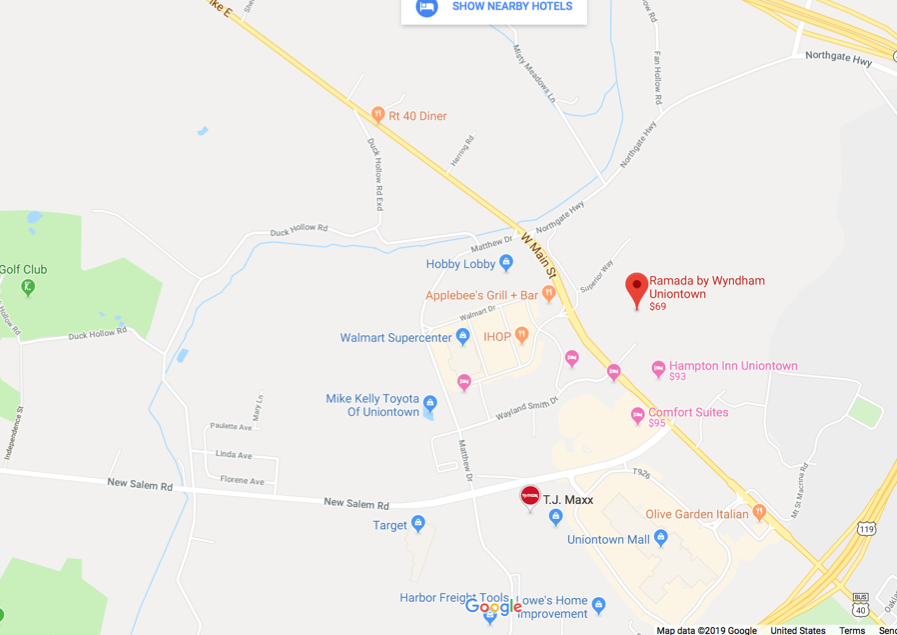
The meetings were held at a hotel a few miles west of town and outside of the Route 119 belt in what could be best described as a 10-year old Miracle Mile-type development including a Walmart, shopping centers, chain restaurants, and two other hotels.  At least that’s what I could see perched on the front entrance of the hotel overlooking US 40 below. (http://www.racfpa.org/news/2008/030808WalmartOpens.pdf)

I was on my own for dinner and decided in the interest of time to take a meal at the Applebee’s off in the distance to the right.  I also thought I might get something for breakfast at the Walmart, which my laptop assured me was also a grocery store.  Those of you that know me, know I am a stubborn person and in fear of having my 66-year old legs lock up during long meetings, I decided that I needed to walk.  The total distance was only about a mile, so off I went.

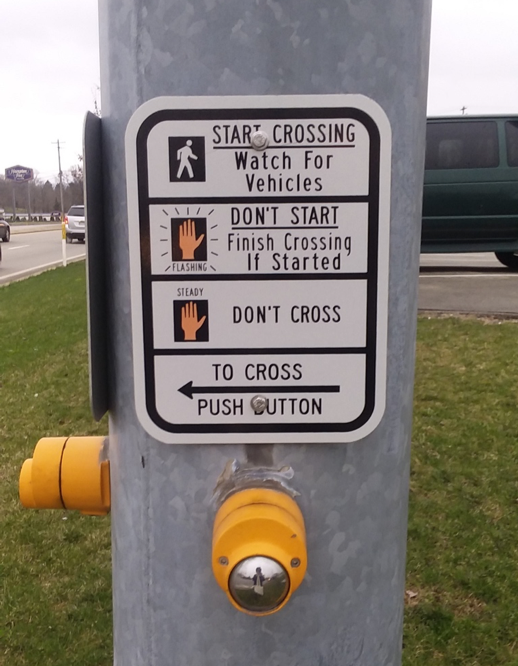
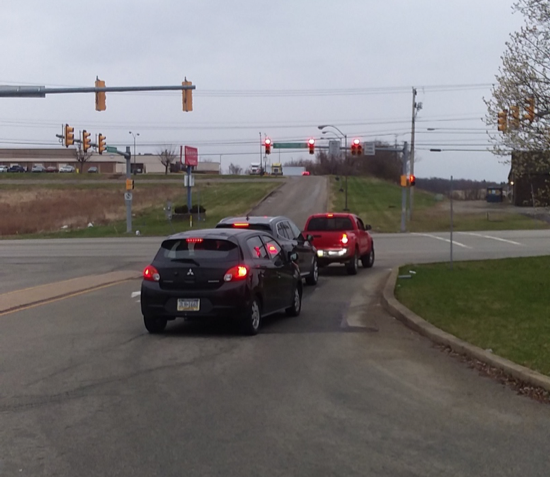
Once I had left the lobby of the hotel, I discovered the sidewalks disappeared.  No problem.  I marched down the side of the potted and cracked entrance road, looking like a poor man’s I-78.  Reaching US 40, I availed myself of both the crosswalk and the pedestrian signal crossing, reaching the other side of the road with no concerns and no knowledge of what awaited.

Our helpful signal crossing
My hotel on the upper left. Sidewalks anyone?

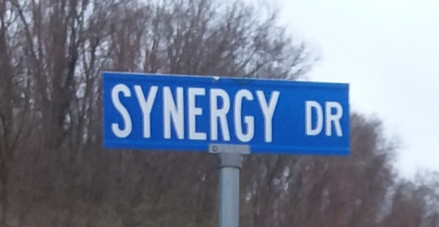
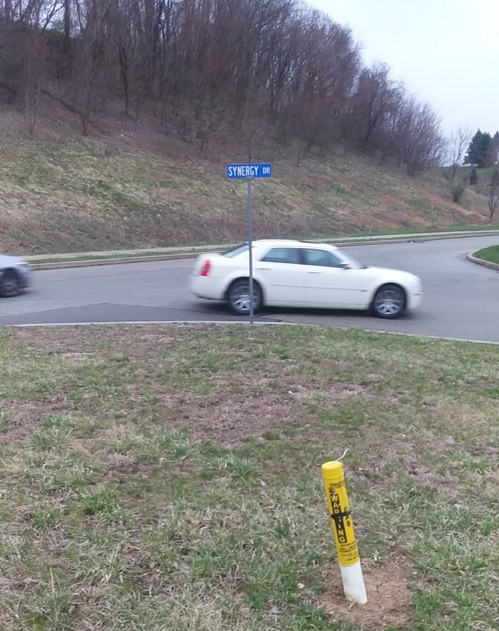
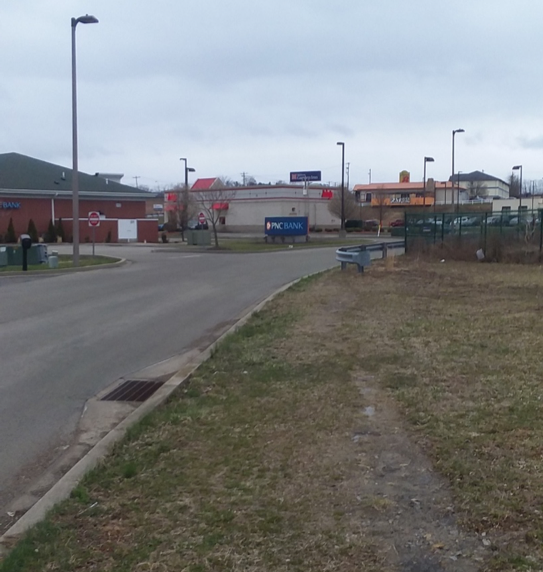
Oddly, the sidewalk I expected did not appear immediately, but about 20 yards ahead. Putting my feet firmly on concrete and off the road, I continued my foray toward dinner and groceries. Gazing ahead, there was a side road that seemed to be in the direction of my planned meal, along Synergy Drive. That sounded promising. After all, Synergy Drive is what Toyota calls their hybrid system we have on our Prius.  As I made my turn into Synergy Drive, I searched for a sidewalk, or at least a path to be had.  Actually, on the side facing traffic where you would normally walk, there was a guiderail protecting cars from driving into a ditch, but also protecting any perspective pedestrians from perambulating into that portion of the path. Stubbornness put me into an unsafe situation, so of course I pressed on.

Our Synergy Drive

In addition to walking in the road that had no shoulder, it was dusk, no lighting except for the businesses, and I wasn’t all that visible.  Cars seemed to see me though and I made it to the crossroad with my destination and dinner on the other side.  Crosswalks anyone? Nope.  Traffic island? Nope.  Cars zipping in both directions in and out? Yep.  Patience bought me time to get across safely and take my meal.  I have nothing against Applebee’s but that is not my usual choice.  When placed against All-Star Asian Buffet, Arbys, Bob Evans, IHOP, and Sonic, it became my least worst choice.  I was looking for a beer and something lighter, like a salad.

What passes for a sidewalk

Having eaten, I wormed my way further into the shopping center, toward the Walmart and breakfast foods.  In addition to the Shopping Center having no sidewalks and no crosswalks, the roads had been neatly and carefully gridded so that each street was separated vertically from the next, much like the terraced fields in the highlands of Mexico.  Each road had no shoulder, only a guiderail keeping you from a 10 foot drop. Thoughtful for driver safety, but not traversable on foot.

Because you are reading this after the fact, you can assume I made the trip to the Walmart and back to my room.  Cheese, fruit, yoghurt.  Mostly retracing my route, I did find remnants of worn grass where other adventurers had ventured.

I would summarize the trip as essentially impassable on foot.  No pedestrian access, no sidewalks, no crosswalks, no shoulder, no lighting.  This was surprising as there were two other hotels in the same complex as the shopping center.  On the trip down and back, I saw exactly one other pedestrian on foot. Actually it was a teenager on a skateboard and therefore not a pedestrian. How did any of the other guests get their meals?  Were they all hermetically sealed into the hotels?  Were they on complimentary breakfast-only diets?  I didn’t want to think that they would drive the couple hundred feet from their lobbies to these establishments.

And what establishments – chain restaurants notable for high sugar, high fat, high carbohydrate meals.  When checking out potential places to eat near the hotel, I came across the Route 40 Diner, less than a mile from the hotel.  Real diners are a gift from the gods and I had it penciled in for at least 5 of the 4 meals I had planned to take.  A (historic) diner meal on the National Road.  What the map failed to disclose was the most recent review was 5 months old and the place had closed,  probably from competition from the chains.

For me, the whole episode equates to what we used to call a first world problem.  I was minorly inconvenienced.  But I do wonder what logic prevents groups of guests in the three neighboring hotels from being able to walk a short distance to their amenities, my polite choice for these chain restaurants and Walmart? And logic was in play as this was clearly not an accidental development.  Everything was organized for vehicular traffic flow and I’m sure it never occurred to the planners and developers that people might want to not be in their vehicles 24/7.

Synergy – The interaction or cooperation of two or more organizations, substances, or other agents to produce a combined effect greater than the sum of their separate effects.

Nowhere in the definition does it require that the combined effect of synergy be positive. America has an obesity crisis (among many crises).  In Pennsylvania, Fayette County is ground zero. 2015 health data has Fayette County’s obesity rate at 41%, highest in the state.  Fayette Countians exercise less and smoke more.  Should I add that Fayette County with a 17.9% poverty rate is the third poorest in the State. Only Philadelphia and Forest Counties have a higher poverty rate.  

That same 2015 survey measured the Food Environment Index, which is a combined measure of access to healthy foods and food insecurity.  Fayette County was second only to Philadelphia as having the worst Food Environment Index.  Leaving aside the fact this new development was a “good food” desert, the Walmart grocery was completely packed.  But the produce and dairy selections were somewhat limited, highly prepackaged, and non-organic, although I could find the basics. 

So to address poverty, obesity, and food insecurity, the planners and developers in Fayette County throw out another strip mall development to accommodate visitors and offers service jobs for the locals. The same poor planning that fosters obesity, food deserts, and the low paying jobs that keep people poor.  The Commonwealth of Pennsylvania also participated with almost $20 million in redevelopment funds and an extension road to connect the development to the Mon-Fayette Turnpike Road.  Synergy Drive.

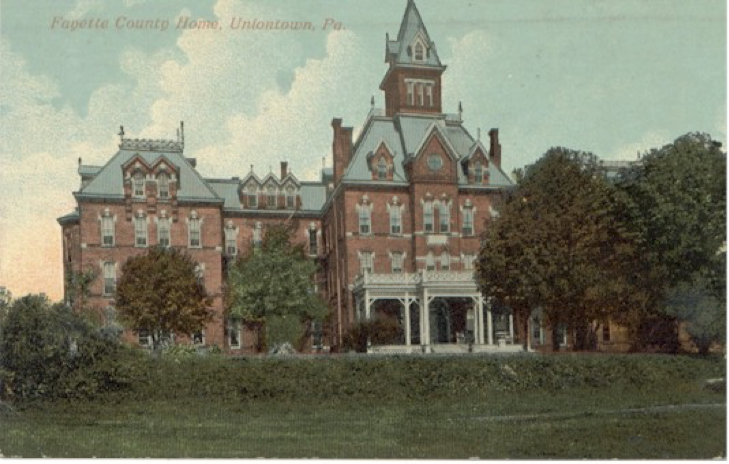
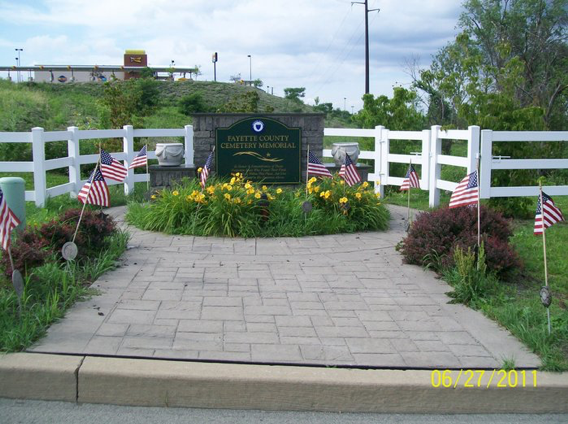
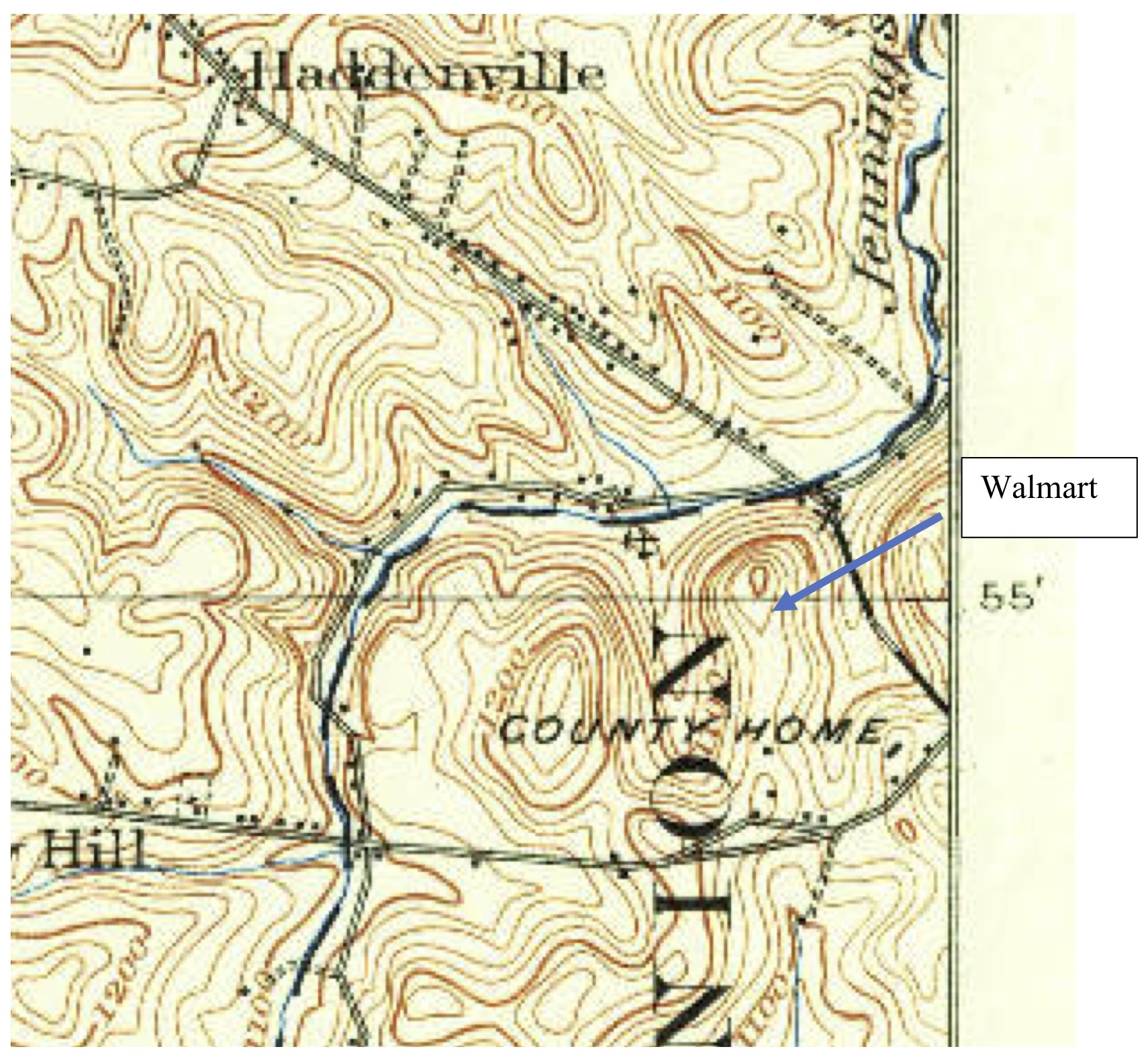
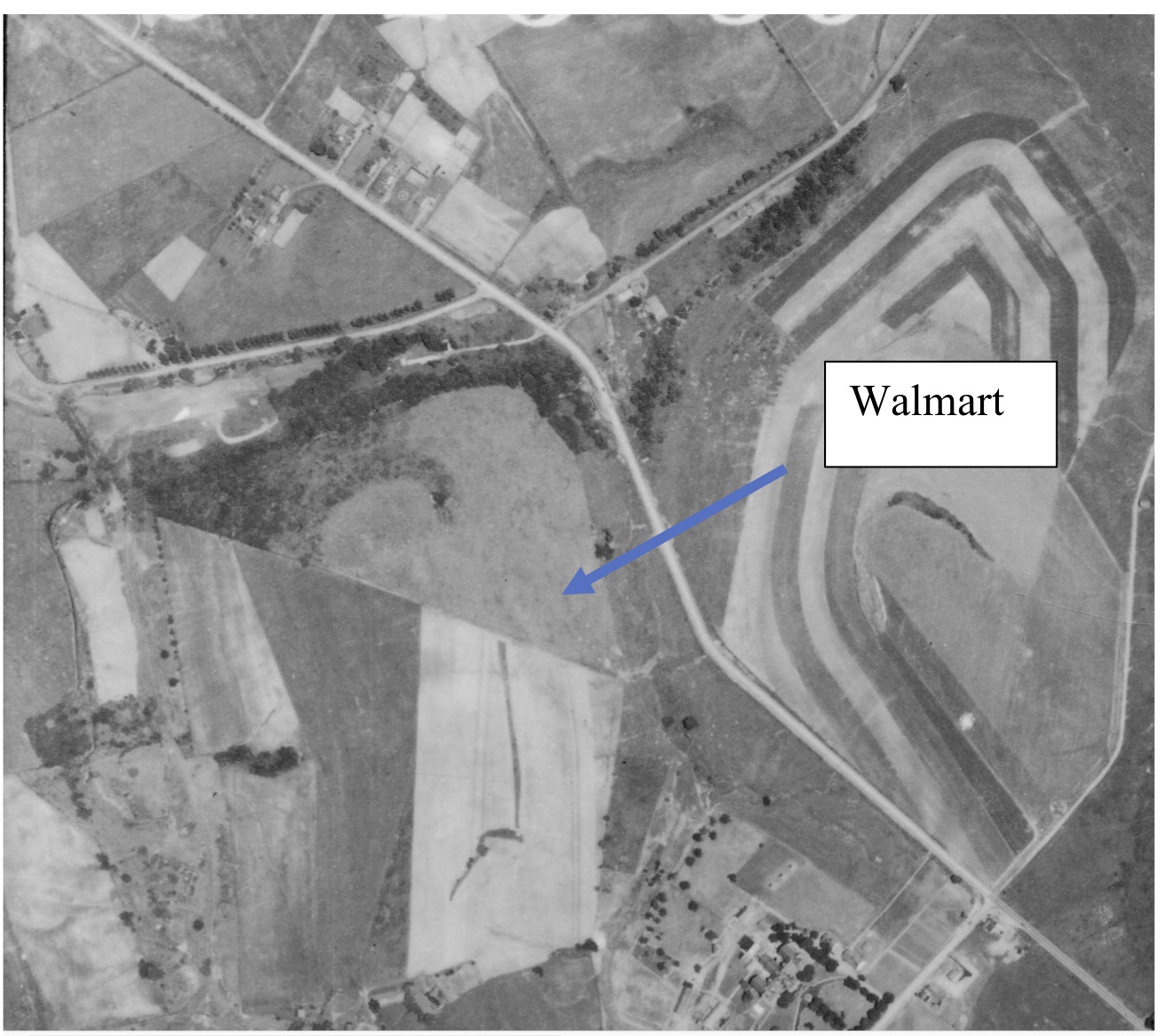
The tradition of screwing the poor is a long one. On the site of this 2008 shopping center development was the County Poor House and Farm, built in 1825.  The imposing building appears to have been torn down, and the farm with it. The complex also contained a burial ground most likely for those unfortunate individuals who died at the Poor House or could not afford a decent Christian burial.  Most of the graves were unmarked but this did not deter the County Redevelopment Authority, who owned the land from redeveloping it.  Were all of these unmarked graves with no apparent descendants or advocates carefully located and reburied?  As an archaeologist in Pennsylvania, I would say unlikely, especially referencing the cryptic statement from Larry Golden (see link below on US Cemetery Project).  You might say that this redevelopment not only succeeded in creating jobs and putting Fayette County’s best foot forward, but also succeeded in erasing the past, specifically the history of the county poor. 

Fayette County Home, early 20th Century
Fayette County Cemetery Memorial

The United States Cemetery Project

The wealthy always have options, whether it’s eating at one of the good restaurants in Uniontown or having the time to drive to the better supermarkets.  The poor will always be with us.  But between the poor houses of the 19thcentury and the poor planning of the 21stcentury, why do we have to be so systematically and cooperatively oppressive? Synergy Drive, indeed.

2019 Vicinity
1931 Vicinity
1939 Vicinity

Rural Agricultural Landscapes – Part III

What is the Resource being Affected?

Crossings

As noted in the MPDF overview, “the full flowering of distinctive agricultural regions in Pennsylvania occurred only in the mid-19thcentury” (McMurry 2012a: 7) and that “the widespread transition to a relatively specialized monocrop or single-product system did not really take hold until after the Second World War in Pennsylvania” (p. 4). Fortunately, this century is well documented in maps, first with county atlases in the 19thcentury, followed by early USGS 15 minute and 7.5 minute topographic maps beginning at the end of the 19thcentury and early 20thcentury, and followed by rather detailed and frequent Department of Highways Type 10 maps beginning in the early 20thcentury and continuing today.  It should be axiomatic that earlier roads, and early, improved roads are indicators of principal roadways.  Invariably, investments in roads follows need, particularly when through local funding.  The dichotomy between earthen and improved roads, whether they are concrete, brick, macadamized, and even bituminous macadamized over chipped stone, can speak to whether the local communities considered any individual road important, or principal.  Furthermore, if the history of the Landscape is well known and the peak development of specific agricultural system is marked, then roads improved after that date might not be principal, even if they are within the period of significance.

Adams County 1916 Type 10 Map
Adams County 1916 Type 10 map legend and key
Adams County 1941 Type 10 map key

The upshot of this mapping exercise is that bridge crossings on principal roadways within the Landscape can be identified.  With a reasonable history of the Landscape, principal roadways to market can also be identified, and with them, the associated bridge crossings.  Crossings on principal roadways defined for the period of significance that still retain the integrity of location would be considered contributing,

Substructure

It is anticipated that the types of abutments and/or piers that might be found within rural areas and Landscapes would be stone of local origin, stone quarried from outside the Landscape, or concrete. Stone of local origin, with vernacular construction techniques should be readily obvious on inspection and inspection of nearby stone buildings and structures.  Provided there are no significant later modifications that would substantially diminish the integrity of the substructures (from a NR perspective), then we should assume the substructure would be contributing to the Landscape. For concrete material or quarried stone from outside the Landscape, unless there are local design elements imposed, it would be reasonable to argue the substructure would not be contributing as it would not reflect the local workmanship, methods of construction, materials, stylistic influences, and vernacular forms.

Superstructure

As with the superstructure, the material of construction could be local or exotic.  The design could also be vernacular or state-standard. Again, the test of the superstructure would be whether the materials and construction reflect the local workmanship, methods of construction, materials, stylistic influences, and vernacular forms.  In most instances this would exclude superstructures undertaken by the Department of Highways after WWI (possibly earlier) that followed a state-standard design. The exception to this “rule” would be where a local authority within the Landscape authorized a locally funded and undertaken road and bridge program to improve movement of goods to market that positively relates to the evolutionary trajectory of the farm system in that region.

Practical Issues for the Transportation Historic Preservationist

How Do we Know We are in a Rural Historic Landscape?

More often than not, the transportation historic preservation specialist is working from a project perspective rather than a resource perspective.  It’s the nature of the game.  So what happens when the professional drives into the middle of a rural valley, passing farms, a grange, a cemetery, a Walmart, and a housing development along the way?  Reaching the bridge project, the professional does a 360 and sees all of the above within view.   Is the project in a rural historic landscape or not?  And is the bridge contributing to that rural historic landscape, if present?

In a number of instances, the consideration of a bridge as contributing/non-contributing is taken within a fully evaluated Landscape.  However, this may be the exception rather than the rule.  In the short term, some shorthand may need to be developed to reflect a minimum level of work to ascertain whether a Landscape is likely or not. Use of the MPDF will be helpful in that regard.  As suggested by the Pa SHPO, use of historic aerial mapping to determine levels of intrusion and loss of integrity may be one approach, but one that lacks an adequate historic context.

The longer-range solution might be to take all bridge projects on the Long Range Transportation Program and look for concentrations that may be in potential Landscapes; then prioritize those potential Landscapes for evaluation based on the number of upcoming projects.  Field views would augment research, with an on-the ground evaluation in the vicinity of the bridge project.  This way more bridges projects can be evaluated with less work.  Ultimately, a statewide effort along the lines of the Agricultural Context may be needed to assess potential rural historic districts statewide in some systematic manner.

Possible Tools

The above analysis leaves open the possibilities for numerous bridges in rural agricultural regions that might now be considered contributing to a rural historic landscape.  If a DOT were to treat these individually, then this could become a major impediment to a state’s bridge program.  Certainly in Pennsylvania, and I suspect in other states as well, the largest expansion of bridge building was in the first half of the 20thcentury.  Many of these bridges, which would be standard design concrete stringer bridges of modest length, would have reached their use life and in many cases would not be suitable candidates for rehabilitation, certainly not to SOI standards. Rather than treating Section 106 (and 4f) on a case by case basis, this class of action would be a good candidate for a programmatic approach.  To that end, I am adding a link to a sample programmatic agreement for bridges in rural historic landscapes.
Sample Section 106 Programmatic Agreement

For DOT’s, Section 106 is only part of the equation. There is also Section 4f. And if you don’t normally deal with 4f, I would strongly urge that you stop reading now and find something more useful for your time. For those of you who are involved with 4f, there is a potential glitch in the application of the Nationwide Programmatic 4f for Historic Bridges.  When the project does not use any historic resource other than the bridge itself and the bridge does contribute to a historic district, then the current Nationwide PA for Historic Bridges is the right tool for the right job.  However, if the project requires any right of way from any portion of the rural historic district/landscape that is contributing to the District as well as the bridge itself, then depending on which FHWA division you are in, you may be in a bind. Because the Nationwide PA for Historic Bridges only covers the bridge and not other contributing properties, you might find yourself completing an individual 4f for the project, much more work.  Some FHWA Divisions have work arounds and avoid this issue, but if yours does not, then I am providing a sample text for a state-level programmatic 4f to cover the situation.  I hope you never need to use it.

Please note the language in both programmatic agreements are as generic as I could manage; however, if you do plan to use them, I would highly recommend that you run the language by both your FHWA division and your own lawyers, even before you bring this to the SHPO for further discussion.

Sample Section 4f Programmatic Agreement

Rural Agricultural Landscapes – Part II

Roads and Bridges in a Landscape

There are many resources within a rural historic landscape (District), some of which are bridges, and these are the specific resources in which we are interested.  How is a bridge part of a landscape and how would we determine what is contributing or not from a significance standpoint?  In considering the landscape characteristics outlined above, a bridge is part of a road system and represents the process of a pattern of spatial organization (McClelland et al, n.d.,p:4).  One feature that is relevant to the landscape characteristic is the pattern of the circulation network, which is further described as “paths, roads, streams, or canals, highways, railways, and waterways.” (p. 16).  For roads and bridges, the documentation is to “describe the principal forms of transportation and circulation routes that facilitate travel within the landscape and connect the landscape with its larger region,” and, to “identify principal roadways and other transportation routes and classify as contributing or noncontributing” [emphasis provided by Bulletin] (p. 16).

This is a critical statement in separating contributing from non-contributing resources.  As part of the circulation network, principal roadways – and their associated components – would be considered contributing.  Roadways that are not principal in the context of the Landscape’s evolutionary history would be considered noncontributing.   This statement also undercuts a view that since agriculture depends on a road system to bring goods to market, the entire network should be contributing.  Methods for considering what roadways are principal are presented below.

The second relevant characteristic is the physical component of Buildings, Structures, and Objects, which in this case, includes the bridges and highways.  The documentation in part is to “identify patterns and distinctive examples of workmanship, methods of construction, materials, stylistic influences, and vernacular forms”, as well as to “describe the principal and most important buildings, structures, and objects, by name, type, location…methods of construction, materials, stylistic influence, and if known, builder” (p. 17) (my emphasis)

Specifically for rural historic landscapes that achieve their significance under Criterion A for agriculture, these physical components as well as the boundary demarcations, the vegetation related to land use, the “clusters,” archaeological sites, and even small-scale elements need to relate to the agricultural land use and activities, agricultural adaptations, and agricultural response to the natural environment.  The historic context within which these physical components should be interpreted has largely been established by the MPDF, but for specific landscapes, telling the story of that farming system’s specific evolutionary trajectory requires that each physical component’s contributing or noncontributing status be filtered through that particular lens. For landscapes in particular, contributing resources provide tangible evidence of that evolutionary trajectory, i.e. they must help tell the story.

Looking at the bridge as reflected in both the circulation network and the physical component of the structure within the Landscape requires that we clarify what we mean when we talk about a “bridge.”  Bridge is a shorthand for multiple features, each of which is relevant to the discussion of whether the “bridge” would be contributing or not.  First, within the circulation network, the bridge is a crossing that connects pieces of the road network.  If we are to concede that the circulation network is an important characteristic of what makes a Landscape significant and what helps define its integrity, we must separate the crossing from the other “bridge” features.  In addition, if we are to assess whether the crossing contributes or does not contribute to the Landscape, we also need to assess which are the principal roads within the Landscape.  It is reasonable to assess principal in terms of which roads and which part of the network were most important to the agricultural functioning of the Landscape, both as an internal system, and, also as an external connection, i.e., bringing products to markets.  A crossing on a non-contributing road would not be contributing to the Landscape.  Crossings on principal roads would be contributing and although this seems a trivial statement, it does factor into matters of effect if a bridge project seeks to close off part of the roadway, or is part of a road relocation that substantially changes the network footprint, such as in a bypass.

The second and third features of the bridge represent the physical component, representing the superstructure andthe substructure.  It is necessary to consider these features separately, because there can be separate construction episodes, as a bridge substructure may be re-used while the superstructure is replaced.  This parsing of the bridge into two pieces requires that each piece be considered separately.  In doing so, the bridge has the ability to more precisely reflect what part contributes and what does not.  

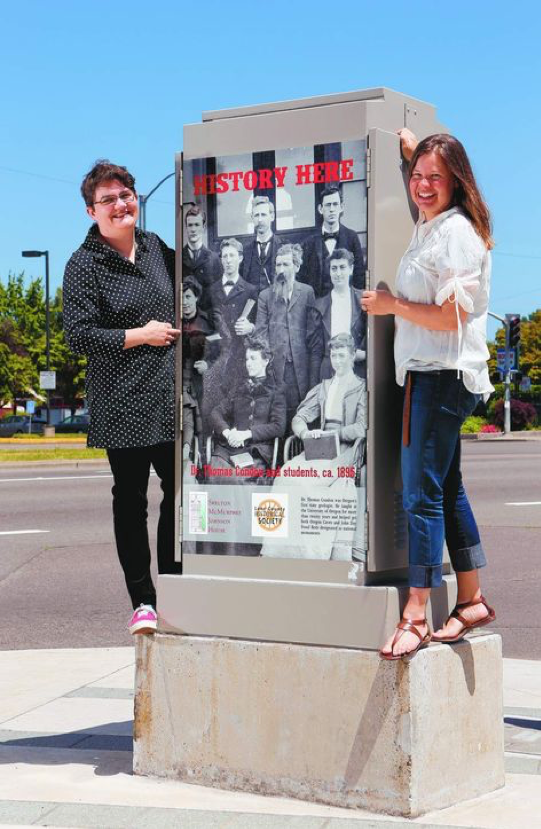
Starting with the substructure, the central question becomes “how does the construction and operation of the substructure, e.g. abutments, wing walls, piers, etc. tell the story of the agricultural evolutionary trajectory of that particular landscape?”  In almost all instances, the substructure of a rural bridge would be composed of stone, or concrete, or a combination of the two.  A stone substructure made of local stone would more likely be able to represent the workmanship, methods of construction, materials, stylistic influences, and vernacular forms that express the Landscape in which it is set.  A stone substructure composed of quarried stone from outside the Landscape, or a concrete substructure, built following a state standard design, would be less likely to express that local workmanship, local method of construction, local material, local stylistic influences, and local vernacular forms that are significant in the landscape’s agricultural evolutionary trajectory.  The difference between stone and concrete could be the difference between contributing and non-contributing elements.  Looking at the substructure by itself, it may also be reasonable to assess whether pieces of the substructure are retained or whether they have suffered the loss of integrity of design, materials, or feeling. For example, if a locally designed substructure has been so modified in repair that it is no longer recognizable, with regards to design, materials, or feeling, the substructure may lose sufficient integrity to no longer be contributing.

Likewise, the superstructure as a physical element can express the landscape’s agricultural evolutionary trajectory or not. Superstructures constructed under the design of a local bridge engineer, or of local (stone) materials, could be argued to help tell the story of the landscape’s agricultural evolution, through local workmanship, local method of construction, local material, local stylistic influences, and local vernacular forms.  These structures would not necessarily have to be early.  During the CCC era, local engineers and workman built bridges out of local material using local knowledge.  These structures might tell the story of an agricultural trajectory of that period, buttressed by an emergency wage economy.  In wealthier regions, the local government might have undertaken a program of bridge construction to improve transportation of goods to market, locally led and locally funded.  These bridges might also tell the story of an agricultural trajectory of that period.

Conversely, a concrete state standard design bridge superstructure (and maybe substructure, too) that is constructed within a Landscape through a statewide bridge building program might be considered non-contributing, as it fails to demonstrate the local, vernacular form, even while maintaining a crossing on a principal roadway. 

Looking at the superstructure by itself, it may also be reasonable to assess whether pieces of the superstructure are retained or whether they have suffered the loss of integrity of design, materials, or feeling.  Commonly in rural settings, the bridge superstructure is invisible to the travelling public and the barriers along the bridge have been replaced several times since original construction.  In this circumstance, the superstructure might not be able to convey the locally important (workmanship and vernacular design) landscape characteristics associated with the circulation network.

Considering all three elements in a bridge, it is possible that any of the three could be considered a contributing resource.  A crossing on a principal road within the Landscape might be contributing, although the substructure and superstructure were state standard-design of non-local concrete.  The substructure might be contributing, having been constructed out of local stone, while the superstructure was a state-standard design that was placed 50 years after the substructure but still within the period of significance.

Determining Contributing/Non-Contributing

The approach outlined here offers an opportunity to closely align decisions about bridges being contributing/non-contributing with both the NR guidance and the MPDF for agricultural Landscapes.  The approach also resolves a certain fuzziness that arises when consideration of a bridge is taken as a simple all or nothing decision that tries to push the arguments into a simple yes/no format, e.g. roads and bridges are a necessary part of any rural historic district, leaving the only unresolved matter is determining whether the bridge was built during the period of significance.  Separating substructure from superstructure allows consideration of construction events and structures that may be different over material, design, and time. It avoids conflating both sub-and super-structures into one potentially dis-unified whole, where we are forced to dismiss abutments and piers that might be wholly consistent with local materials, construction, vernacular design, etc. because the overlying superstructure is relatively modern and not in local harmony, having been imposed as part of actions wholly outside of the local landscape.

The downside of the approach outlined here is one of information and knowledge, specifically the work required to obtain the information and knowledge to put each bridge through this 3-part analysis. Presuming we understand we have a rural historic district present and know for what it is significant (a big presumption), we still must figure out whether the crossing is on a principal roadway, and whether the substructure and superstructure are part of the important story that this Landscape tells.

Next: Part III

Rural Agricultural Landscapes – Part I

Rural Agricultural Landscapes and the Bridges Therein

Pennsylvania is a large and old state with a sizeable agricultural presence, and loads of older bridges that connect these farms to market. As PennDOT attempts to maintain its infrastructure, the need to address these rural bridges is clear, but as historic resources they can be important not only individually, but as contributing to a larger rural historic landscape.  This blog explores some of the issues related to considering rural historic landscapes (RHL) within the National Register, and how to parse out whether a rural bridge should be contributing or not contributing to that RHL, i.e., a large historic district.  As a historical note, this was and I believe still is a live issue between PennDOT and FHWA, and the SHPO, which started over a woodlot up in Centre County.  Although this discussion is focused on bridges and eastern rural historic landscapes, I think there may be some larger generalizations that can be drawn. Enjoy.

One of the partnerships that PennDOT, FHWA, and the SHPO entered was in the creation of a statewide rural agricultural context.  Pennsylvania was and is an agricultural state, with agriculture and its associated industries provide a $135.7 billion annual economic impact, representing close to 18% of Pennsylvania’s gross state product. This massive multi-year effort was led by Dr. Sally McMurry, a Penn State History Professor with special expertise in the history of agriculture.  She divided the Commonwealth into 16 distinct regions, each with its own agricultural signature.  Dr. McMurry and the SHPO then developed Registration Requirements for both farmsteads and (smaller) rural historic districts, which form the Multiple Property Documentation Form (MPDF).

http://www.phmc.state.pa.us/portal/communities/agriculture/index.html

This MPDF has been in operation since 2012 and as would be expected from a MPDF has provided a roadmap to assessing eligibility, especially in application to individual farmsteads. It gives some guidance on how rural historic districts could be considered under Criterion A. (McMurry 2012a, 2012b). The MPDF describes a historic agricultural district as “a group of farms, which share common architectural and agricultural landscape features; are linked together by historic transportation corridors… and together express characteristic features of local historical agricultural patterns.”  Registration Requirements statewide for Criterion A, Agriculture notes the following for individual properties:

…Criterion A significance should be assessed in relation to how a given property typifies a farming system, not in relation to whether a property is exceptional or unusual. A property should exemplify a farming system in all its aspects.  The totality of a property’s representation in the areas of production, labor patterns, land tenure, mechanization, and cultural traditions will determine its National Register eligibility. (McMurry 2012b Section F:1)

Characterizing a Landscape

Unfortunately, the MPDF is better developed for individual properties or what appears to be McMurry’s conception of an archetypical district, i.e. a group of farms clustered together.  When considering a rural historic landscape, however, a different set of rules may be needed.  The National Register defines a Landscape as:

a geographic area that historically has been used by people, or shaped or modified by human activity, occupancy, or intervention, and that possesses a significant concentration, linkage, or continuity of areas of land use, vegetation, buildings and structures, roads and waterways, and natural features. (p. 3)

Eleven characteristics have been developed for “reading” the Landscape and understanding the forces that shape it – four of the characteristics are processes; the remaining seven are physical components.   The processes link to the physical components to form a unified whole (p. 4). 

The process of evaluating Landscapes entails “three major activities: defining significance, assessing historic integrity, and selecting boundaries” (p. 12).  Furthermore, “significance, integrity, and boundaries depend upon the presence of tangible landscape features, and the evidence of the processes, cultural and natural, that have shaped the landscape” (p. 12).

Can we build on McMurry’s work to scale up what is defined as a rural historic district or further to a Landscape?  It is reasonable to use the same Criterion A significance statement as the Registration requirement.  [Obviously, there are 3 other main Criterion for significance than A, but this is our starting point.  Perhaps at a later date, we can review RHLs under the other three frames.]  The MPDF defines a farming system as the framework for understanding how agriculture in Pennsylvania evolved, each agricultural region containing a distinctive evolutionary trajectory for a farming system, with its own chronological development and distinguishing characteristics.  In the same way that individual farms or McMurry’s district could express the farming system in its region, a Landscape could also express the region’s evolutionary trajectory, or story.

Significance

The majority of rural historic landscapes that would be considered here are significant for agriculture, under Criterion A (See p. 21 for Areas of Significance for Rural Landscapes). Significance for a Landscape under Criterion A is understood within the historic context of the region’s farming system trajectory through its landscape characteristics.

Many rural properties contain landscape characteristics related to agricultural land uses and practices. Eligibility for significance in agriculture on a local level depends onseveral factors:

  • First, the characteristics must have served or resultedfrom an important event, activity, ortheme in agricultural development as recognized by the historic contextsfor the area. 
  • Second, the property must have had a direct involvementin the significant events or activities by contributing to the area’s economy,productivity, or identity as an agricultural community.  
  • Third, throughhistoric landscape characteristics, theproperty must cogently reflect the period of time in which the importantevents took place. (McMurry 2012b:13)

When working within the MPDF, importance often hinged on productivity measures, i.e., was the farm successful.  In the frame of a large rural historic landscape, is that even a useful measure?  And if not, what would be?  

The basis for significance for the farmstead is whether the production values were above average. This doesn’t really work in evaluating rural historic landscapes, but there may be a surrogate methodology that compares one valley against the next in terms of prosperity.  When looking at a landscape as a potential historic rural agricultural district, if we bring forward the notion of the district as as system, then we can open a door to surrogate measures of prosperity.  One is the richness of functions within the (agricultural) system.  Does it have a grange, a general store, a mill, a saddlery, churches, a hotel?  Is there a hierarchy of settlement within the district, i.e., does it have a village or town as well as crossroads communities?  We would expect that the more prosperous historic districts would have these features and that the less prosperous ones have a stripped down functional environment, maybe reduced to single farms and a mill.  It may be possible to set registration requirements for different landscapes within each of the agricultural regions and within each time period, to compare in a more effective and quantitative way one landscape to the next.

Integrity

McClelland, et al (n.d.) offers a reasonable and useful approach to assessing historic integrity (pp. 21-24).  For rural agricultural landscapes, qualities of location, setting, and design are less likely to be affected by modern development, although design could be significantly altered by modern agricultural practices.  Comparsions of modern and historic aerial photography can provide clues as to whether a landscape has undergone significant transformation.

Materials and association could also be vastly different from the period of significance especially if the farming systems have radically changed.  In fact, the trajectory of the history of farming in Pennsylvania is one of several major transformations statewide, from regionalism and the local mix of crops and husbandry, to a 20thcentury modernization and homogenization and pull toward external markets, to an ever increased specialization and concentration as farms become less self-reliant for animal feed, pasture, fertilizer, and family provisions.

And of course, development in the form of farms subdivided for housing, resource extraction (such as natural gas), public utilities, and other industrial development can also diminish historic integrity.  At the end, the landscape has the same challenge that smaller rural historic districts have. Can it retain the general character and feeling for its period of significance?

Next: Part II

Bibliography

McClelland, Linda Flint, J. Timothy Keller, Genevieve P. Keller, and Robert Z. Melnick

n.d.              Guidelines for Evaluating and Documenting Rural Historic Landscapes. National Register Bulletin 30. U.S. Department of the Interior.

McMurry, Sally

2012a          MPDF Introduction and Overview. Agricultural Resources of Pennsylvania, c.1700-1960.  Multiple Property Documentation Form, U.S. Department of the Interior.

2012b          Agricultural Resources of Pennsylvania, c.1700-1960. Multiple Property Documentation Form, U.S. Department of the Interior.

Sebastian, Lynne

2004            What is the Preservation Payoff? Remarks presented in a session entitled An Alternate View of the Section 106 Review Process, Appendix D, A Working Conference on Enhancing and Streamlining, Section 106 Compliance and Transportation Project Delivery, Santa Fe, NM February, 2004. SRI Foundation

U.S. Department of the Interior

1991a          How to Apply the National Register Criteria for Evaluation. National Register Bulletin 15. U.S. Department of the Interior.

1991b          How to Complete the National Register Registration Form. National Register Bulletin 16A. U.S. Department of the Interior.

The PennDOT and IUP Partnership: A Personal History – V

The PHAST and the PHURIOUS: The Third IUP Contract (2007-2012)

In the fall of 2005, IUP floated a proposal to begin a Master’s Degree in Applied Archaeology.  In July, 2007, MOU 430647 for collections processing expired; however, the work had not yet been completed, given the vast number of collections still needing processing.  Both PennDOT and IUP felt that the partnership was worth continuing, for the collections processing, the Byways to the Past Conference and associated publication series, and the other possible joint activities.  On August 27, 2007, another 5-year MOU (431034) was executed. This time the collections processing was folded into the main MOU and going forward from 2007, PennDOT and IUP operated under a single MOU.

Beginning in early 2007, we began discussing a new way to conduct geomorphological studies.  Geomorphological studies would be conducted prior to an archaeological investigations so that we could confirm that any floodplain was stable and not active during the period of human occupation.  If we could determine that the floodplain was active, then there was no need for further archaeological study as there would have not been a stable land surface for archaeological deposits.

While this was good in theory, the economics weren’t necessarily practical.  Keeping in mind that most applications of this pre-archaeological work would be for bridge replacements in a limited footprint, it still cost upwards of $10,000 to conduct and had maybe a 50-50 chance of eliminating the need for an archaeological investigation that would cost in the neighborhood of $12,000-20,000. The high cost of geomorphology was linked directly to the design consultant bringing in a subconsultant specialist, with the prime’s overhead and profit.  Was there a way to cut the middle man out?

Indeed there was.  At that time, one of the foremost geomorphologists working in Pennsylvania was Frank Vento, who was a professor at Clarion University, also a State-Related University and therefore a state agency.  As an experiment, IUP added Dr. Vento to the IUP agreement, essentially hiring him, for the purposes of conducting geomorphological studies.  That opportunity came at Hunter Station in 2008, and demonstrated proof of concept.  We then turned around and created an MOU with Clarion University and Dr. Vento to conduct geomorphological studies going forward. Our partnership with IUP and the existing MOU permitted this proof of concept to be tested with little effort. At that time, IUP did not have a geomorphologist on staff, so there was no conflict over activities, and the task assignment did not diminish our active list of projects with IUP.  Over time, the Clarion University MOU proved to be enormously cost-effective, providing studies at approximately $2,500 each. Having a cost-effective solution for conducting geomorphology really opened this technique as a tool for our staff archaeologists, making its use much more common.

2008 brought changes to the Byways to the Past Conference. 2007 would be the last year that the Byways Conference would be held on the IUP campus, and as an explicit task assignment through the MOU.  By 2008 it was felt that the remote location of the Conference was a barrier to bringing more people together.  That year the Conference was successfully held in Harrisburg, demonstrating that the Byways Conference could be held outside of IUP.  Attendance from 2007 to 2008 was up 80% and costs were down, as (free) Commonwealth venues were selected.  The story of the Byways Conference after 2008 is worthy of its own story, full of drama, intrigue, treachery, and state government at its most incompetent.  I will leave that story for another day, largely to protect the guilty.

In 2009, IUP conducted a Phase I archaeological survey for a Wetlands Bank in Greene County.  This was unusual as generally we would have archaeological surveys conducted and paid for by the projects through the prime engineering design firm and subconsultants.  In this case, the proposed bank was not yet a programmed project, but there was a need to determine whether the proposed wetland site contained archaeological resources. If it did, the bank would be designed around the resources.  If the resources were large enough, the entire site might be abandoned as a banking location.  This was an opportunity for Central Office to perform a favor for the District by absorbing the costs of the archaeology, and more importantly, by providing the contracting instrument to get the work done.

Coincidentally, in 2009, IUP finally launched its Master’s in Applied Archaeology Program, and in the following Spring PennDOT launched the PHAST program – PennDOT Highway Archeological Survey Team.  The concept, developed by Joe Baker, paired an advanced graduate student from the MA program with 3 IUP summer interns and a cultural resources professional (CRP) archaeologist provided by PennDOT. (Note that by this time, the descriptor QP had been supplanted by CRP so this terminology will be carried forward.)  This IUP team of 4 would be scheduled around the state to conduct quick-hit archaeological surveys, mostly Phase I’s and small Phase II’s, under the direction of the CRP.  The advanced graduate student would serve as field director over the interns and under the CRP, who would oversee the work and sign off as principal investigator. Angela Jaillet-Wentling was the first field director.  Roughly 15 projects were completed in that first year, 2010.  After a fashion, PennDOT finally had its own in-house archaeology program.

I bear the responsibility for this not happening sooner, and I certainly had my reasons.  In my prior job at the Maryland State Highway Administration, I oversaw both the management of archaeological consultants and the conduct of archaeological studies by my staff for SHA. These were often in conflict as projects needed to get done regardless of who did them and there simply wasn’t enough time to both manage the consultants, review their work and reports, and simultaneously conduct archaeological surveys, analyze the results and write the reports.  To make matters worse, there was project creep as the Project Managers thought we could conduct larger and more complex field projects each time.  I vowed that at PennDOT we would not make the same mistake and discouraged any attempt to set up a program for the conduct of archaeology in-house.  Joe Baker, who had come from the Commonwealth Archaeological Program (CAP) within the SHPO, had both the skill and inclination to continue to conduct archaeological studies, as did most of the staff archaeologists, as do most archaeologists in general.  It is the old definition of the profession, “Archaeology is what archaeologists do.” In a catch as catch can manner, some of the CRPs did do archaeology for their Districts, but never officially sanctioned by me or Central Office.  It provided some friction, and until the PHAST program emerged, no real resolution in the conflict.  What finally swayed me was the fact that the proposed program was well-defined and limited in scope.

The mutual benefits of the PHAST program were immediately recognizable.  First, PennDOT got over a dozen projects a year completed at a fraction of the cost from by our regular design consultants and subconsultants.  We were saving $250,000 a year.  Secondly, it benefitted the IUP MA program by giving a student hands-on experience supervising crew, which is not only an important skill set for becoming a professional archaeologist but also is one of the requirements for meeting the Secretary of Interior Standards for a professional archaeologist.  It cannot be taught in the classroom.

IUP gained a useful lab for training its students.  As a state-related institution, IUP is also measured on how well it partners with other state agencies. The partnership with PennDOT clearly helped the Anthropology Department in street cred. And not insignificantly, the paltry (paltry when compared to contracting with private consultants, for sure) sums PennDOT paid IUP in overhead was hard currency in a university that counts its pennies.

PHAST fed and sustained our summer intern program, ESTI (Engineering, Scientific, and Technical Interns) sponsored by PennDOT. In a way, the interns provided to PHAST were free even though they were paid, and paid well I might add. ESTI interns made roughly $4 an hour more than regular students on campus.  The budget to fund ESTI came out of a different budget from ours, so we were literally using other people’s money, even though it was all PennDOT.  The field director’s salary and budget came out of the IUP MOU, so those individuals worked for IUP while the interns and Principal Investigator worked for PennDOT. Field and travel expenses for the field director was picked up by the IUP MOU, but travel expenses for the PennDOT-paid interns was covered by PennDOT.  Administratively, the arrangement was more than complex.  Joe Baker supervised the program, but as he was not classified as a supervisor, he could not technically supervise the interns, which involved matters of signing travel expense vouchers and time sheets. I picked those up during the Summer, as well as officially supervising the other interns working with the PHMC. 

The 3 PHAST student interns gained real on-the-ground field experience for the summer, again another valuable skill that is also captured in the Secretary’s Standards.  In addition, when these students could find their way to Harrisburg on a Friday, Joe Baker would add them into the seminars he gave to the other class of interns during the summer.  It was an enriched cultural resources management education.

The PennDOT ESTI program ostensibly exists as a recruiting tool for future PennDOT engineers.  We in the cultural resources unit would routinely laugh when talking about that aspect of the intern program, but perhaps the laugh was on us. Since cultural resources started working with the intern program, we have hired 3 cultural resources professionals that were former interns, including one who was the PHAST field director. In addition, a number of IUP graduates of the MA program who had worked for us as interns through PHAST are now working for our consultants and sometimes working directly for our office.  So in the end the intern program seems to be doing what it was intended to do.  And to vindicate Joe Baker’s arguments for setting up an internal field program, the Federal Highway Administration saw fit to award the PHAST program an Environmental Excellence Award in 2017.  This prestigious national award is given out every other year to about 12 projects or initiatives. In the history of the program, spanning 20 years, PennDOT has won 5 times, this being the latest.

2010 also brought PennDOT two major changes to its program.  First, the Minor Projects Programmatic Agreement that was signed in 1996 was supplanted by a revised and expanded Programmatic Agreement, which further delegated responsibilities to PennDOT CRPs and District Designees.  Secondly, PennDOT in partnership with Preservation Pennsylvania launched Project PATH, which became our online site for Section 106 consultation. I mention Project PATH because IUP played a key role in its implementation.  A premise of Project PATH was that all supporting documents would be publicly available in close to real time.  This meant the web platform was simpler and transparent.  However, it also meant that archaeological reports couldn’t be housed there.  Archaeological reports often have sensitive information and this information, primarily site locations, is specifically exempted from the Freedom of Information Act. We still needed to be able to share these reports with the SHPO and certain consulting parties and Federally recognized Tribes, and relying on a paper environment betrayed the non-print philosophy behind the Project PATH site.

IUP came to the rescue (again).  The offered up an FTP server for our use, on which we housed our sensitive archaeological reports in a secure password-protected manner. We registered and provided access and passwords to those consulting parties that needed the information.  In that way, we essentially kept two platforms going simultaneously, one fully public, and one (sensitive) that was fully private.  Section 106 work in mysterious ways, and IUP’s assistance was invaluable in getting the full solutions to electronic Section 106 launched.  IUP provided that service until 2017 when PennDOT developed and promoted a Microsoft Sharepoint environment.  At that time, IUP students helped us migrate all of the reports over those 7 years onto that new platform.

Next: Steady, Podner, Steady: The Fourth and Fifth IUP Contracts (2012-)